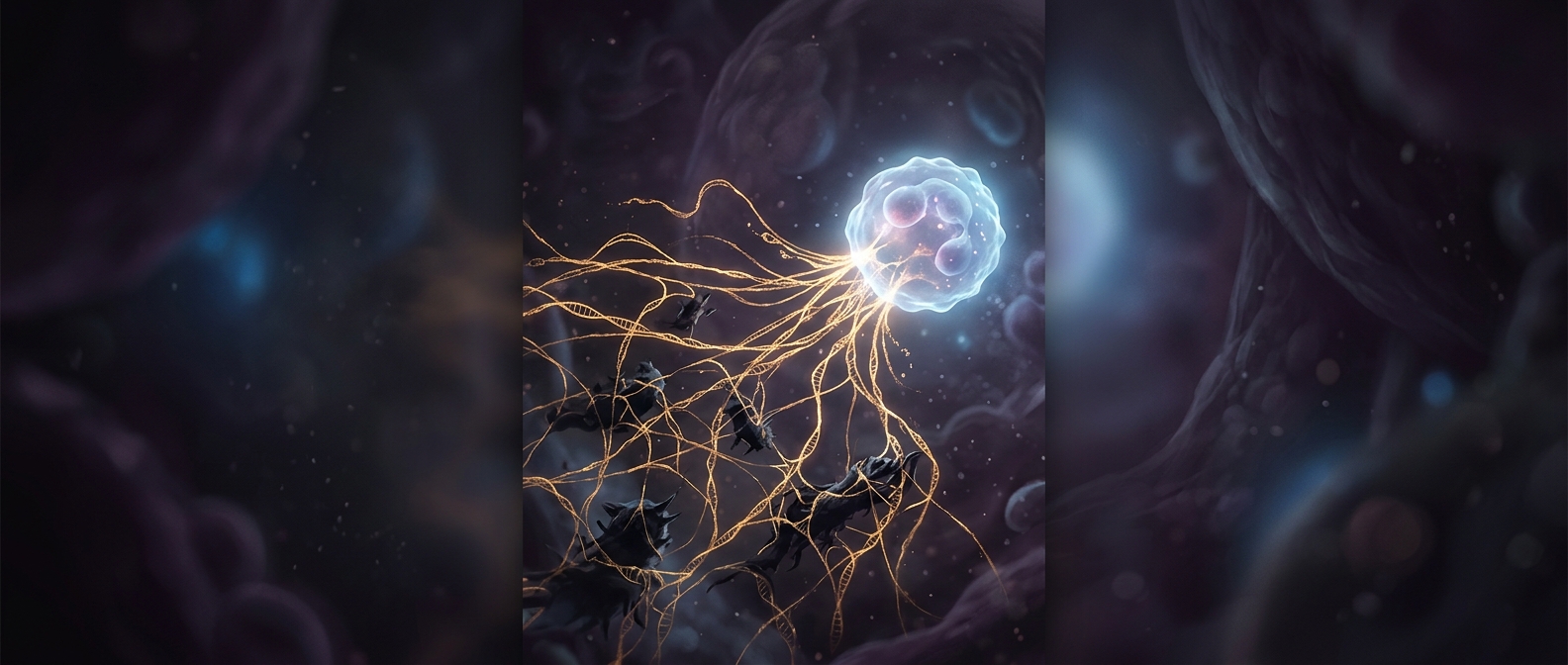
Why some aging cells linger
When a cell is badly damaged or reaches the end of its normal working life, it may stop dividing. This protective shutdown can help prevent damaged cells from multiplying. But the immune system does not always remove every stopped cell. Some remain in tissue and release chemical signals that can intensify inflammation and alter how nearby cells behave. Researchers often call these cells senescent cells; “zombie cells” is an informal nickname, not a separate kind of cell.
How senolytics are meant to work
A senolytic is a drug intended to selectively kill senescent cells. The challenge is that these cells are not all alike, and many rely on internal survival mechanisms to resist dying. Senolytics aim to interfere with those defenses, tipping targeted cells toward self-destruction while leaving healthy cells relatively unharmed.
Dasatinib, a drug used for certain cancers, and quercetin, a compound found in some plants and foods, are being studied together for this purpose. The combination is a research strategy—not a proven way to remove aging cells throughout the body. A treatment would need to reach the relevant tissue, identify harmful cells amid healthy ones, and avoid causing damage of its own.
What researchers still need to establish
Finding senescent cells in aging tissue does not by itself show that clearing them will improve health. Researchers must determine when these cells are harmful, whether removing them changes meaningful outcomes, and what risks follow. Senescence also has useful roles, including stopping damaged cells from continuing to divide, so indiscriminate removal could be counterproductive.
The key question is therefore not simply whether senolytics can kill these cells, but whether they can do so in the right place and at the right time. For now, dasatinib and quercetin remain under study rather than an established anti-aging treatment.