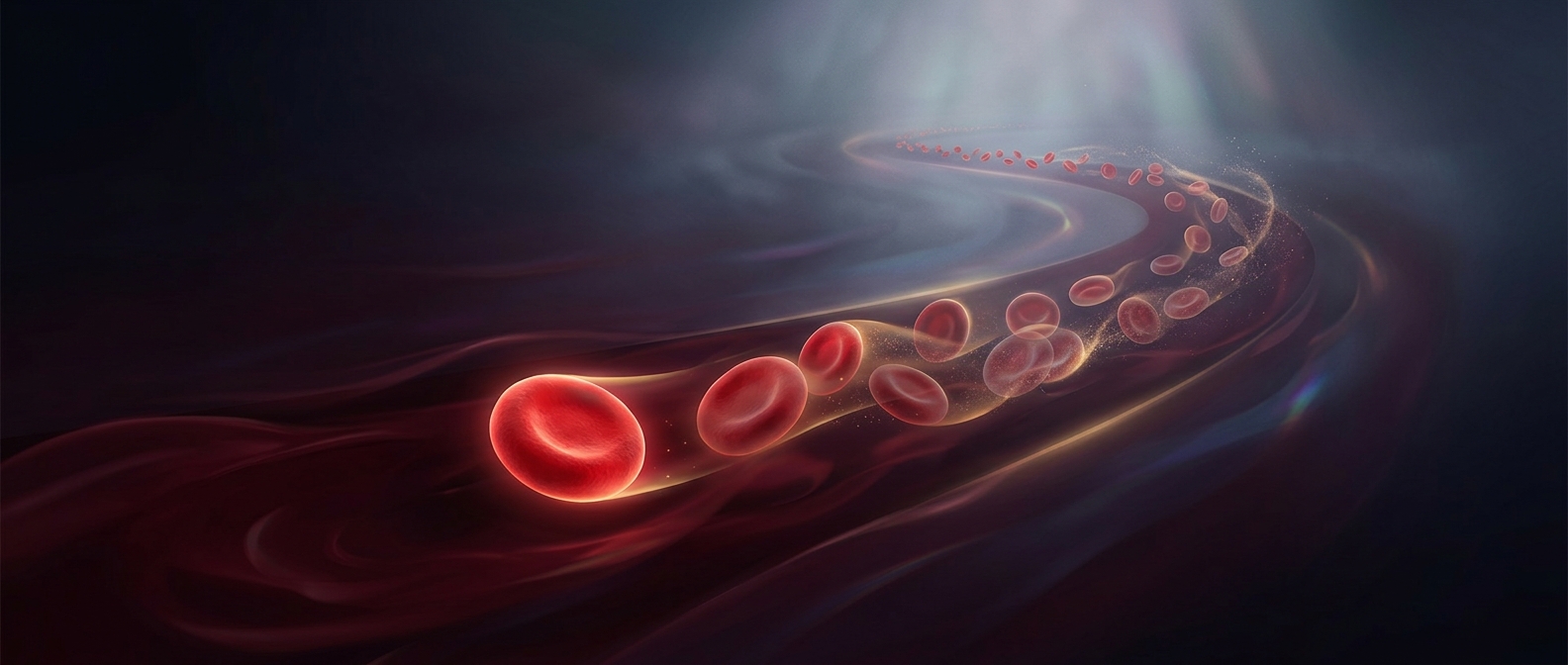
How heparin slows the clotting cascade
A blood clot forms through a chain reaction: activated proteins switch on other proteins until the enzyme thrombin helps turn liquid fibrinogen into strands of fibrin, which mesh into a plug. Heparin interrupts this process by strengthening the action of antithrombin, a natural blood protein that disables key clotting enzymes, including thrombin and factor Xa.
Basophils, a rare type of white blood cell, store heparin in tiny internal packets called granules. When a basophil is activated, it can release the contents of those packets nearby. In that immediate area, heparin can make it harder for clotting reactions to build momentum.
A local effect, not a whole-body switch
This is a localized influence, not a mechanism that keeps the entire bloodstream from clotting. The body needs clots to seal damaged vessels; the challenge is to confine clotting to the injury rather than let it spread unnecessarily. Basophils are best known for their role in allergic and inflammatory responses, and their heparin release is one part of a broader set of chemical signals they can deliver.
The useful image is a microscopic brake applied close to an activated cell: heparin helps restrain clot-forming chemistry in its vicinity, while the body’s other controls determine where a clot actually forms and how large it becomes.