Why the dermis holds on to tattoo pigment
A tattoo needle carries ink past the epidermis—the outer layer of skin that continually sheds and renews—and into the dermis beneath it. That deeper layer is more stable, but it is not inert: immune cells patrol it, removing debris and responding to foreign material.
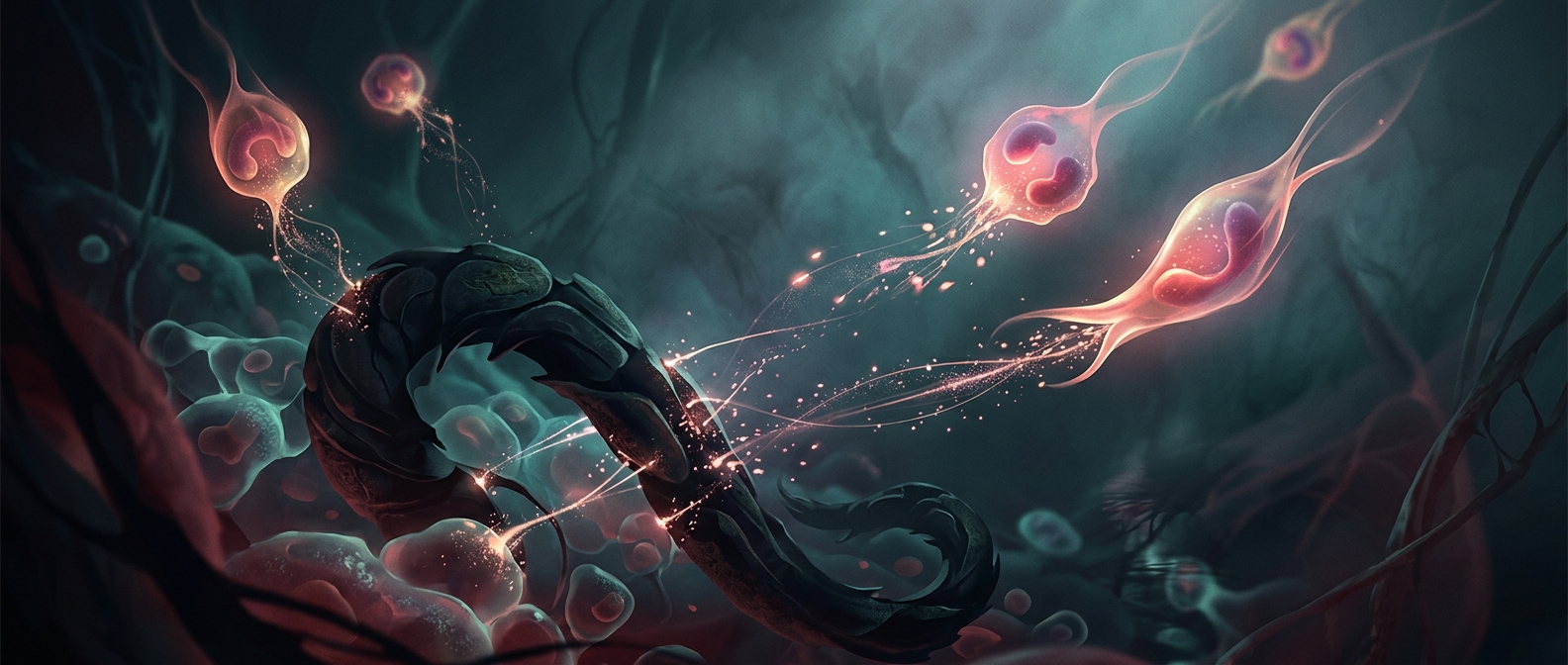
Many ink pigments persist because the particles are difficult for the body to break down or carry away. A macrophage, a cell that engulfs unwanted material, can take up a particle without being able to digest it completely. The pigment may remain trapped inside the cell for a long time. Some pigment also ends up in other skin cells and surrounding tissue.
A relay that preserves the mark
Macrophages do not live forever. When an ink-filled one dies, its contents can spill into the surrounding tissue. Nearby macrophages can then engulf the released pigment, keeping much of it in the same small area. The cells are replaceable; the hard-to-clear pigment is not.
This is not a perfectly still or permanent arrangement. Over time, some particles can shift or spread, which helps explain why tattoo edges may soften. The same persistence creates a challenge for removal: laser treatments break pigment into smaller pieces that the body can clear more easily. Until then, the dermis’s repeated cycle of capture and recapture helps keep the ink visible.