How an Immune Cell Attacks From the Outside
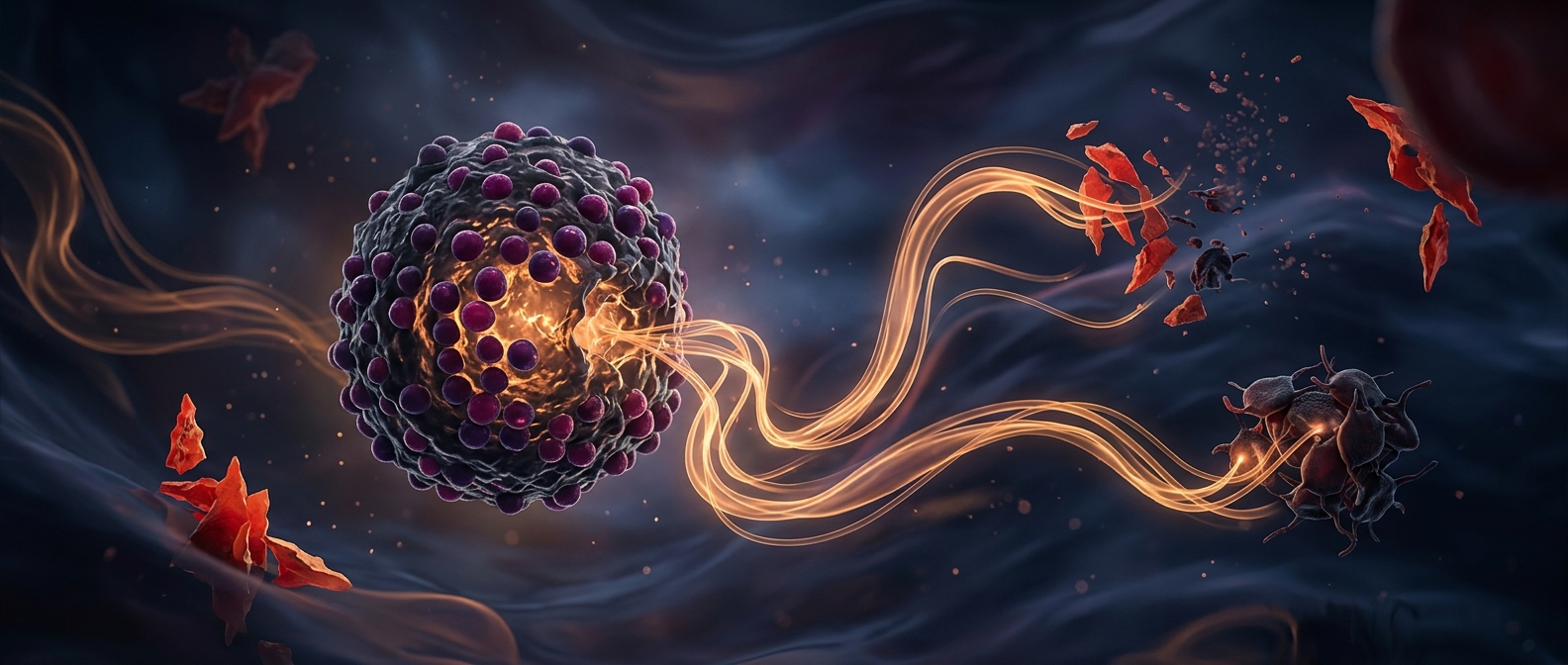
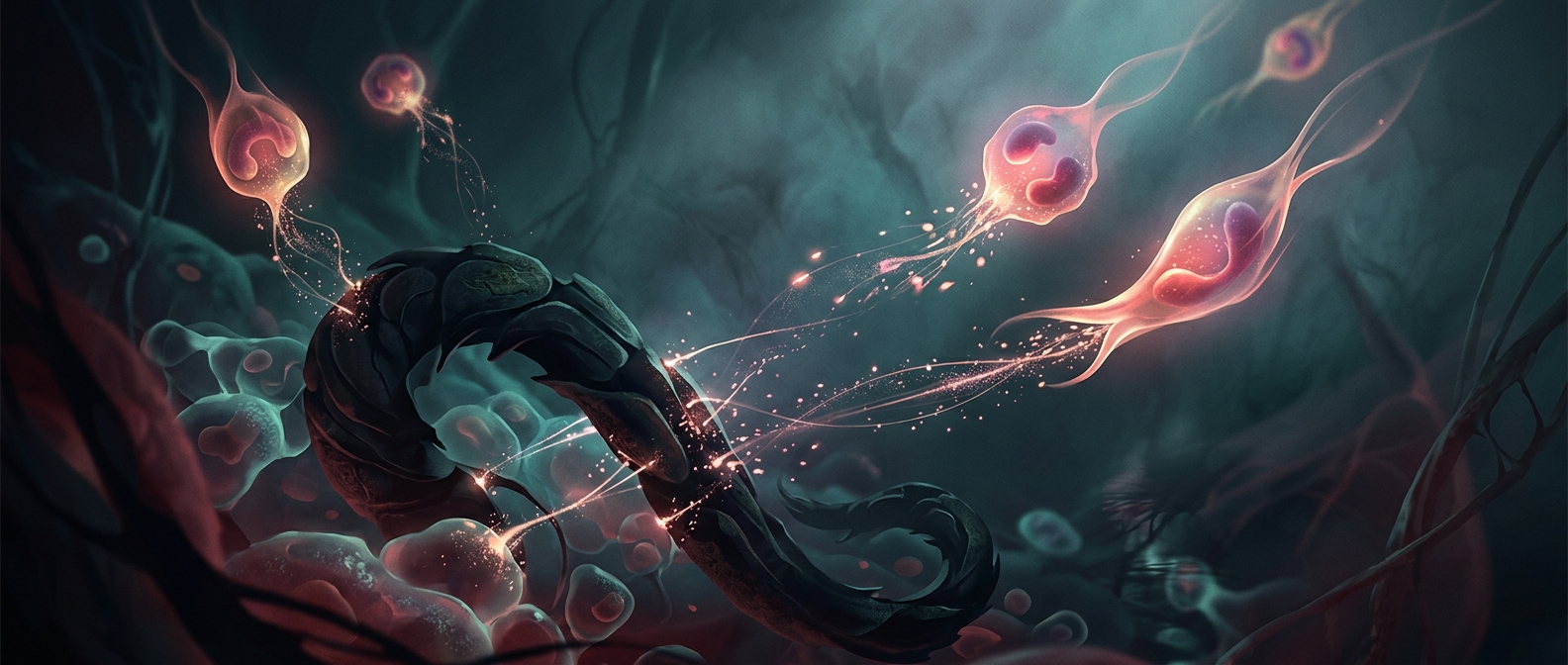
Many parasites that trigger eosinophil responses—especially worms—are far larger than a single immune cell. A white blood cell can engulf a bacterium, but it cannot swallow a worm. Eosinophils instead gather around the parasite and release the contents of small storage packets, called granules, onto its outer surface.
Those packets contain damaging proteins and enzymes. In the right conditions, their concentrated assault can injure the parasite’s protective covering and help kill it. This is a form of extracellular attack: the target is harmed outside the immune cell, rather than being enclosed and digested inside it.
The Cost of a Broad Chemical Attack
Eosinophils do not simply identify a worm and fire on their own. Signals from other parts of the immune system help recruit and activate them; antibodies can also help mark a parasite for attack. The response is useful because a large target cannot be swallowed, but the released substances are potent rather than delicately selective. If eosinophil activity persists or is poorly controlled, nearby body tissues can be injured too.
That tradeoff explains why eosinophils are both defenders and contributors to inflammation. Their outside-in strategy gives the immune system a way to attack an organism too big to engulf—but the same chemicals that damage a parasite can harm the host if the response spreads beyond its target.