How a cell turns its DNA into a trap
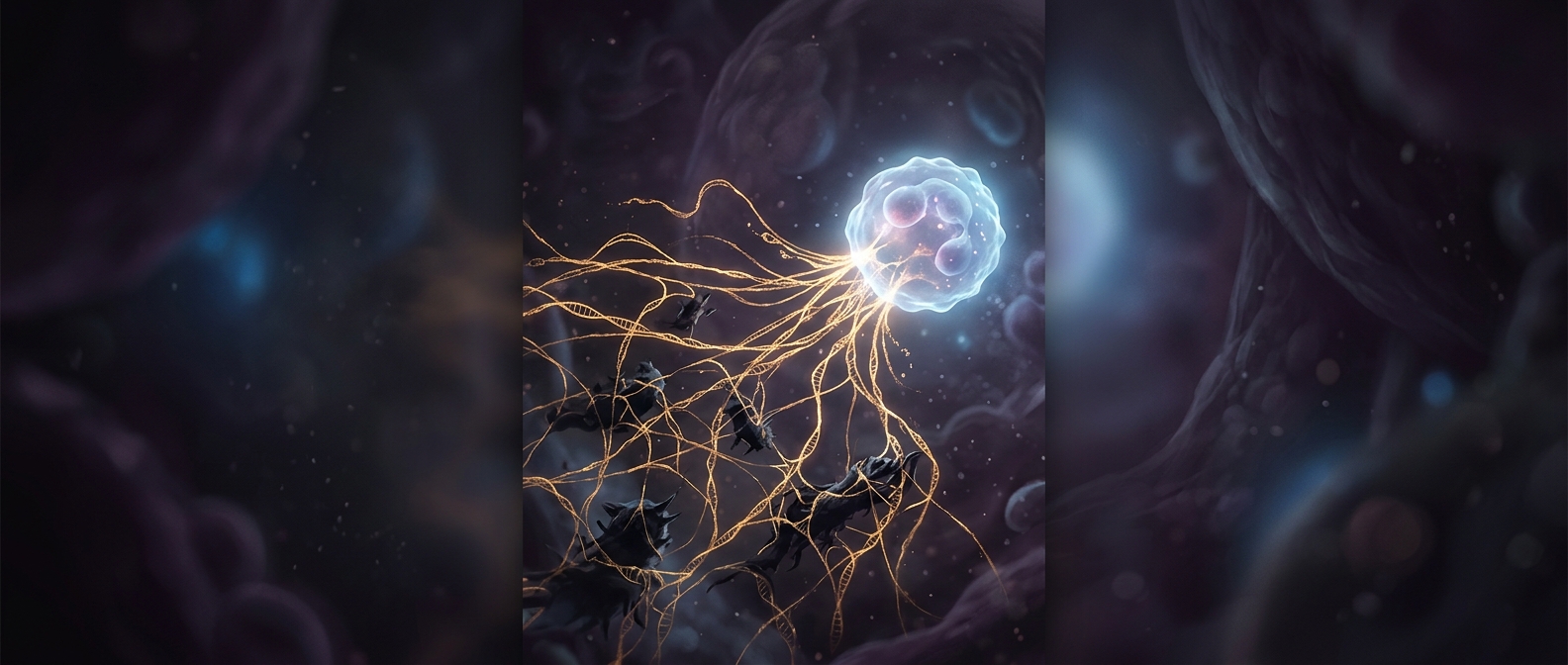
Some white blood cells, especially neutrophils, respond to microbes by releasing neutrophil extracellular traps, or NETs. The material is not bare DNA: inside the cell, DNA is wound around proteins, and the released strands carry antimicrobial proteins and enzymes that can damage or restrain microbes.
In one form of this response, the cell’s internal compartments break down and the DNA uncoils. The cell then ruptures, spilling the strands into its surroundings. What had been tightly packed genetic material becomes a sticky mesh spread across the site of infection.
Immobilizing microbes has a cost
A bacterium caught in the mesh has less room to move and spread. The proteins attached to the strands can also help attack it, while the net holds microbes where other immune defenses may reach them. The cell is not carefully laying a net and stepping away: in this process, it dies as it releases its contents, trading one mobile defender for a barrier made from its own remains.
That tradeoff is useful but not harmless. The same enzymes and sticky material that help contain microbes can also irritate or injure nearby tissue when the response is excessive or prolonged. A NET is therefore a local emergency measure: it can slow an infection, but its effects depend on where and how much of the mesh forms.