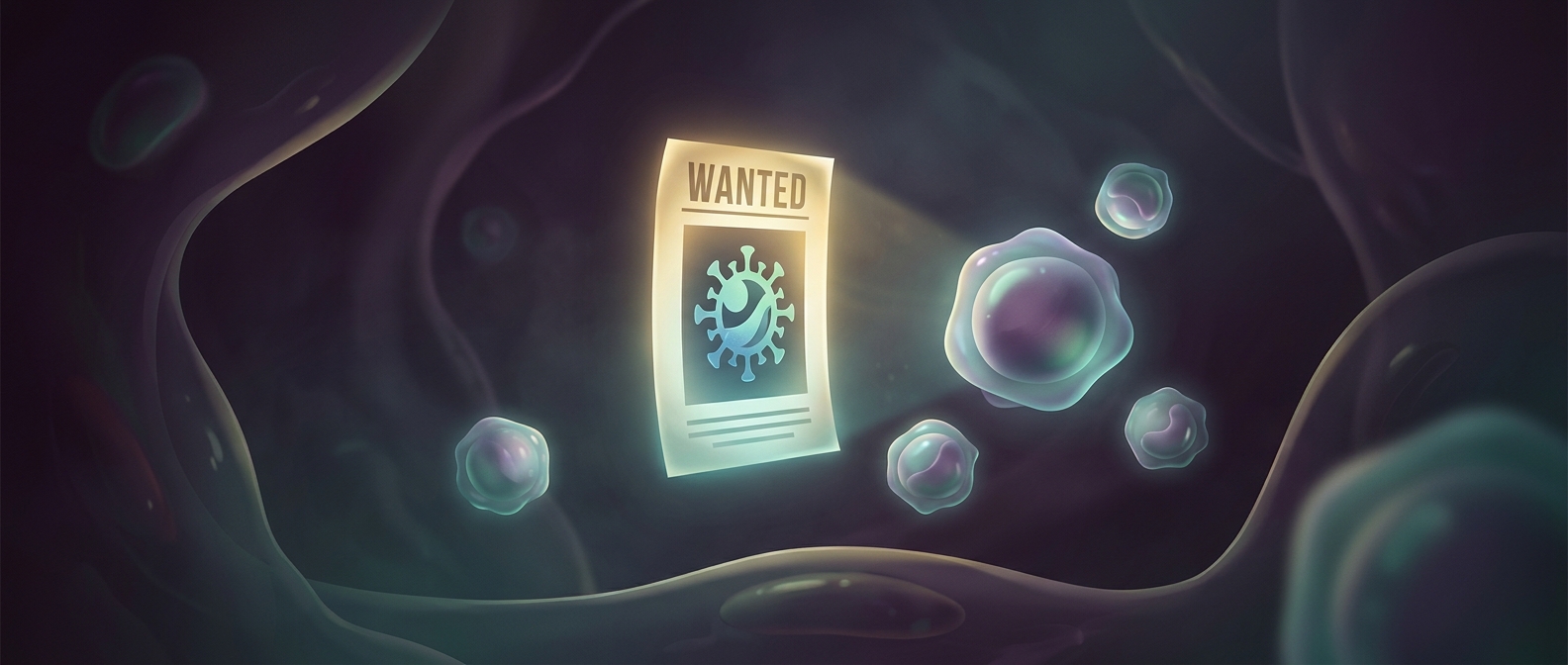
How the immune system builds a memory
A vaccine gives the immune system something recognizable to inspect: depending on the vaccine, that may be a weakened or inactivated germ, a harmless component of it, or instructions that let some of the body’s cells briefly make a target protein. The material is chosen to trigger recognition without causing the disease the vaccine is meant to prevent.
Immune cells called antigen-presenting cells collect pieces of that target—known as antigens—and show them to other immune cells. This sets off a coordinated response. B cells can make antibodies, proteins that attach to the target and help block it or mark it for destruction. T cells can help organize the response or kill infected cells, depending on their role.
Why protection can last
After the initial response, most of the activated immune cells fade away. Some, however, become memory B and T cells. They remain ready to recognize the same target later, and some memory B cells can quickly produce antibodies if it appears again.
That faster, stronger response is the practical payoff of the immune system’s rehearsal. If the real pathogen enters the body, defenses may contain it before it causes serious illness. Protection is not always complete: immunity can wane, and pathogens can change. That is why some vaccines require additional doses or updates.
The key is that a vaccine does not need to reproduce the whole disease to prepare the body. It needs to give immune cells a target they can remember.