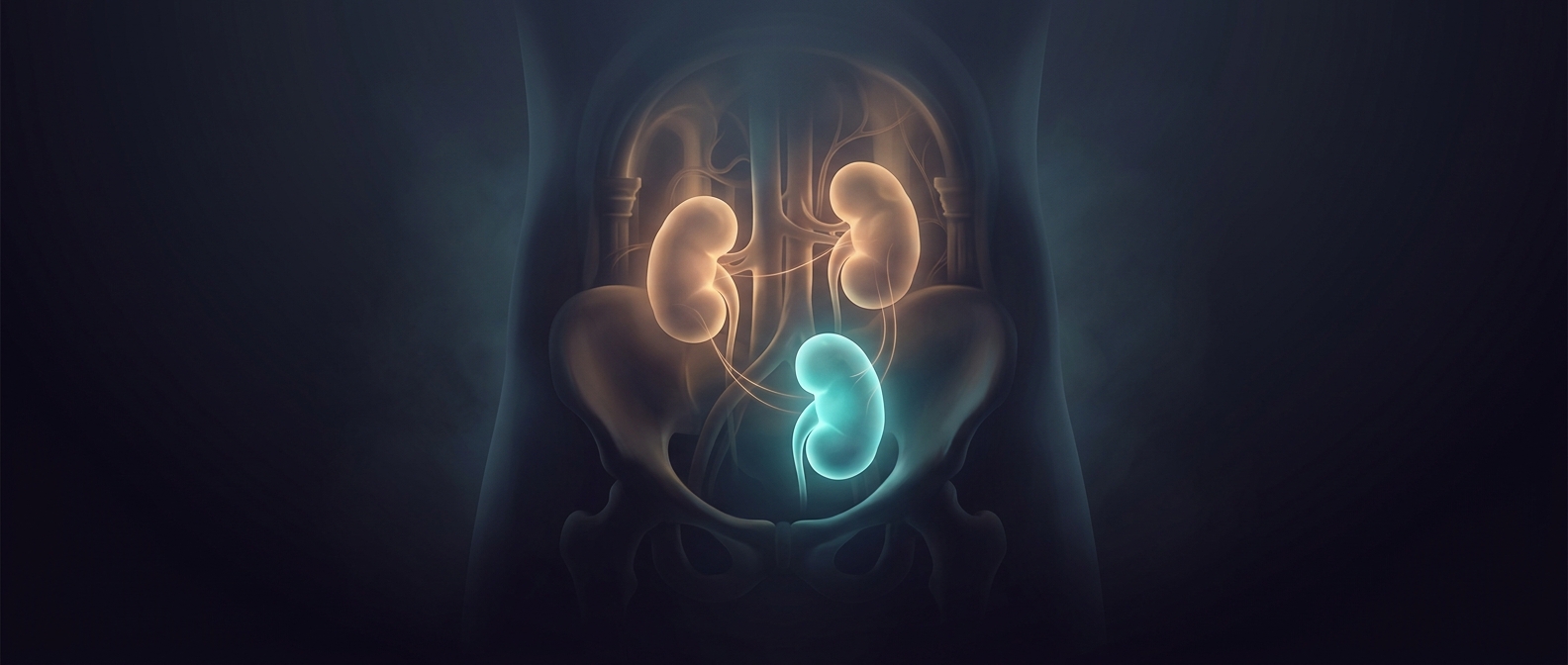
The old kidneys usually stay where they are
In most kidney transplants, surgeons do not remove the patient’s failing kidneys. They leave them in their usual position, toward the back of the abdomen, and place the donated kidney lower down, in the pelvis.
That can sound like an odd bit of surgical housekeeping, but removing the originals would add work without usually helping the transplant. A kidney that has lost much of its function can remain in the body without causing trouble, and taking it out requires another operation in a region close to major blood vessels and other organs.
Why the new kidney goes in the pelvis
The donated kidney is usually tucked into the lower abdomen, where surgeons can reach it through an incision. They connect its blood vessels to large vessels in the pelvis and attach its ureter—the tube that carries urine—to the bladder. The donor organ does not need to occupy the old kidney’s exact spot to filter blood and make urine.
Placing it there also makes the connections accessible for surgery and later monitoring. The patient’s original kidneys can remain behind while the transplant takes over most of the filtering work.
When surgeons do remove an original kidney
There are exceptions. Surgeons may remove a native kidney if it is causing a specific problem, such as a persistent infection, cancer, uncontrolled blood pressure related to the kidney, or severe enlargement that leaves too little room for the transplant. The decision depends on the patient’s condition; removal is not a routine step of transplantation.
So the striking image is not a pair of kidneys being swapped out. In a typical transplant, the new kidney is added in a more accessible place, while the old ones are left in place unless there is a clear reason to take them out.