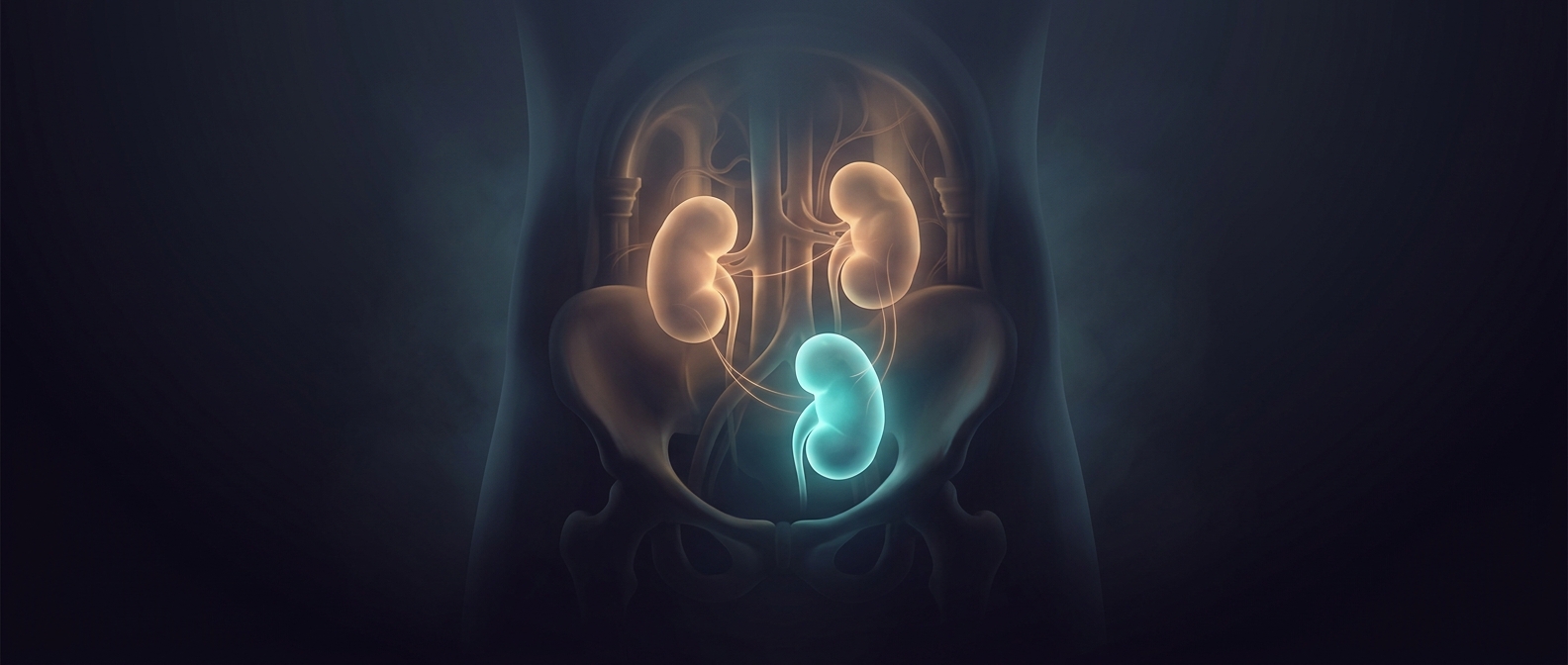
A transplant kidney takes a new route into the body
A transplanted kidney usually sits in the lower abdomen, near the hip—not in the spot occupied by the original kidneys, which lie deep toward the back, beneath the lower ribs. The pelvic location gives surgeons access to large blood vessels and the bladder through one incision. They connect the donor kidney’s artery and vein to nearby vessels, then attach its urine-carrying tube, the ureter, to the bladder.
That arrangement lets the new kidney work without first removing the old ones. Even if the original kidneys have lost most or all of their function, they can remain tucked in their usual place; they do not block the transplant simply by being there.
Removal adds risk without automatically helping
Taking out a native kidney means another operation in a deeper part of the abdomen. It can add bleeding, infection, and recovery risks, so surgeons generally avoid it when the kidney is not causing trouble. The transplant can provide the needed kidney function while the original organs remain in place.
Removal may make sense when a native kidney creates a specific problem—for example, repeated serious infections, a tumor, persistent bleeding or pain, or, in some people with very large kidneys, too little room for the transplant. The decision depends on the patient’s condition, not on a rule that failed organs must be taken out.
The practical consequence is striking: a person can receive a functioning donor kidney while still carrying both original kidneys. The new organ is added where it is easiest to connect and monitor, rather than replacing an old one in its original location.