A Screw Turned the Instrument Into a Third Hand
A vaginal speculum is designed to do something a blade cannot: keep an opening visible and accessible while a practitioner works. In the Pompeii example, turning a screw spread the instrument’s parts apart and held them in position. That meant the operator did not have to keep widening the opening by hand throughout an examination or procedure.
The mechanism is simple, but its purpose is revealing. The tool was built to control access to a particular part of the body, not merely to cut or puncture. Its presence points to practical knowledge of how an instrument could make a difficult task more manageable.
Different Tools, Different Jobs
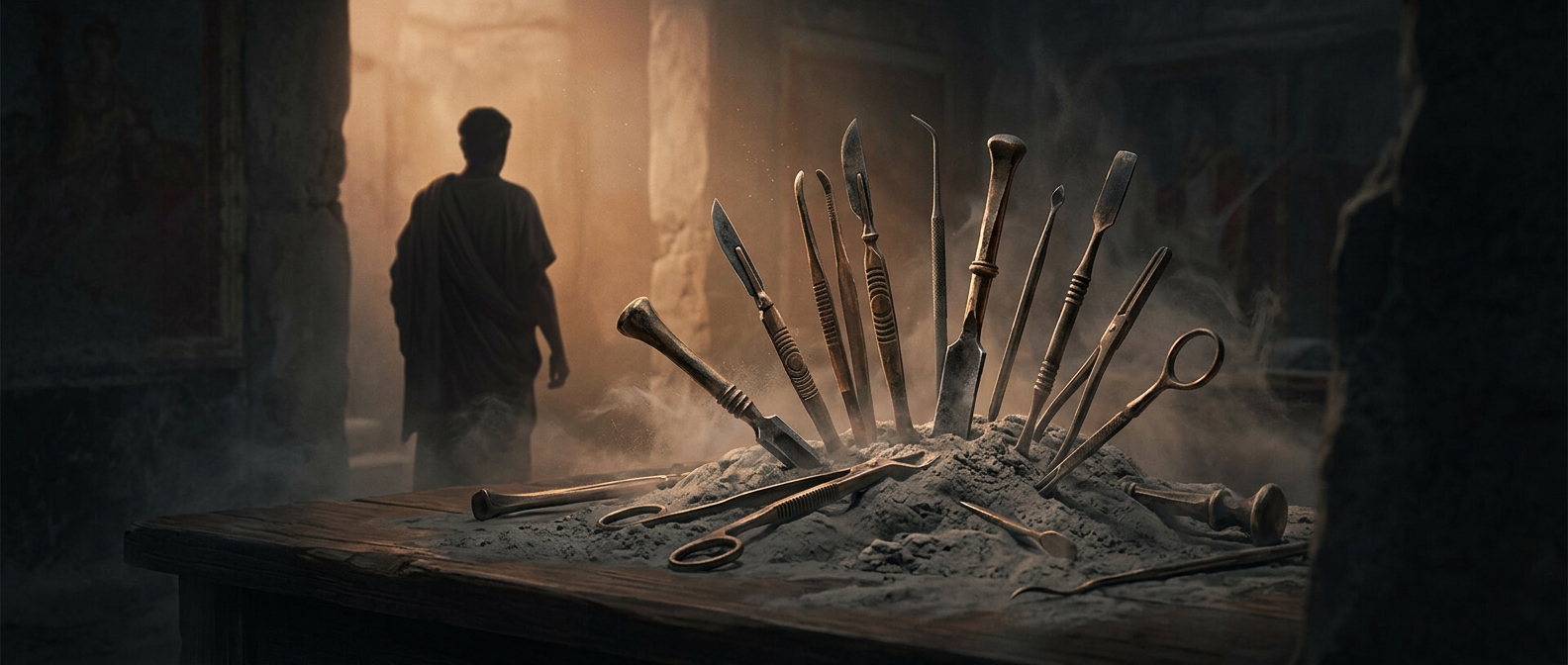
The bone forceps and scalpels found with it served other kinds of work. Forceps let a practitioner grip and manipulate tissue or other material; a scalpel provided a controlled cutting edge. They were not interchangeable tools, and their different shapes reflect different actions that surgery could require.
Together, the instruments suggest a set of techniques rather than one dramatic operation. A practitioner might need to expose an area, hold or move something, and cut—though the objects alone cannot tell us which procedures were performed or how often.
Specialized Does Not Mean Modern
These tools make ancient surgery easier to picture as skilled, hands-on work. But a sophisticated mechanism is not evidence that the surrounding care matched modern medicine. The instruments do not reveal how pain was managed, how clean the tools were kept, or what outcomes patients experienced.
What they do show is that surgical practice could be organized around specific problems. A screw that held tissue open freed the operator’s hands for the next task—a small engineering choice with an immediate consequence in the operating space.