How an ant could hold a wound closed
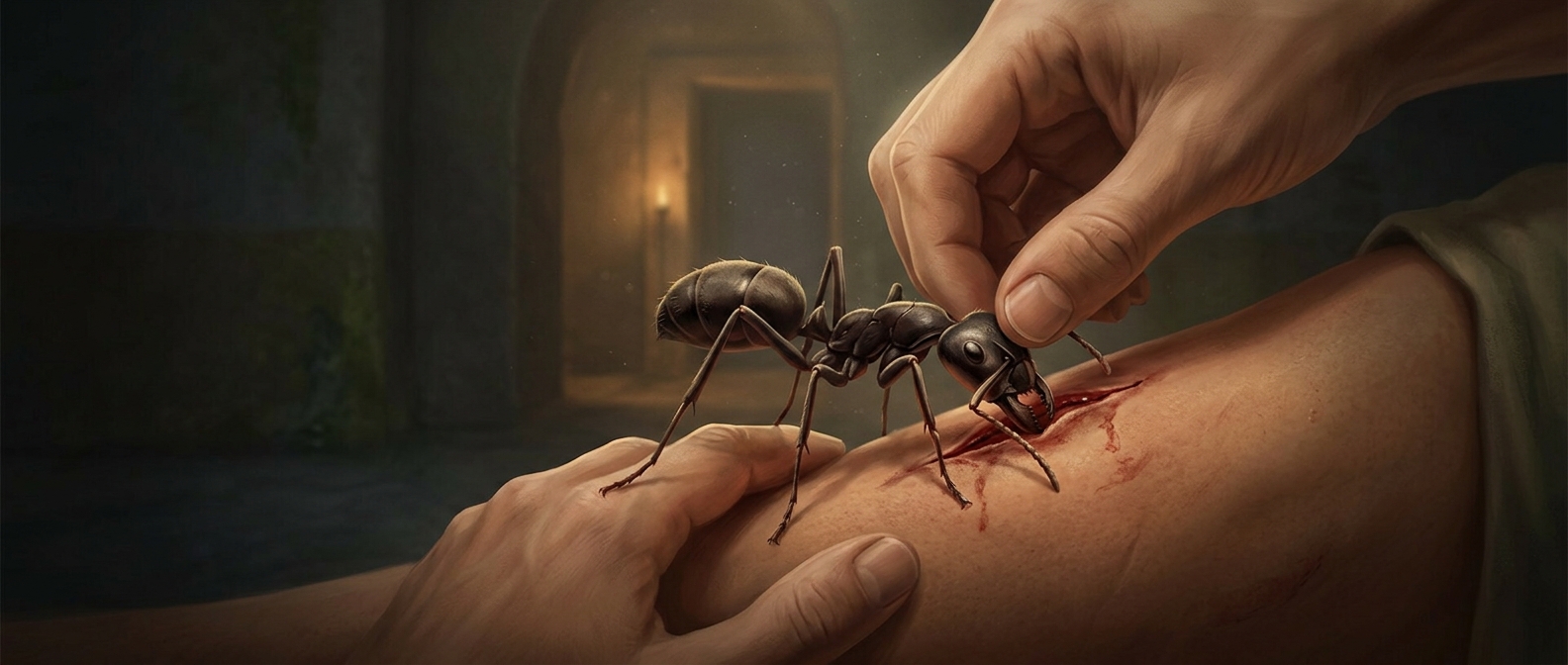
A stitch works by bringing the two sides of a cut together and keeping them there while the tissue begins to heal. An ant could do that job with its jaws: the surgeon positioned the insect across the wound so its mandibles—its paired biting parts—clamped onto both edges. Once the grip was secure, the ant’s body was twisted away, leaving the jaws pinching the skin together.
The result was a small biological clamp rather than a thread passed through tissue. Each ant fastened one spot; several could be placed along a cut to hold more of its length closed. The method turned the ant’s strong, gripping jaws into a ready-made fastener.
A quick fix, with limits
The technique depended on the jaws staying locked after the rest of the insect was removed. That made it useful as a temporary way to keep wound edges aligned, but it was not the same as a modern suture: there was no thread to tie, and the ant did not repair the tissue. Healing still had to happen in the body.
Its most striking feature is also its practical logic. Instead of threading a needle through delicate skin, a practitioner could use a living creature’s bite to clamp the edges together—and leave behind only the part doing the work.