Passing the Exam Was Not the Same as Being Welcomed
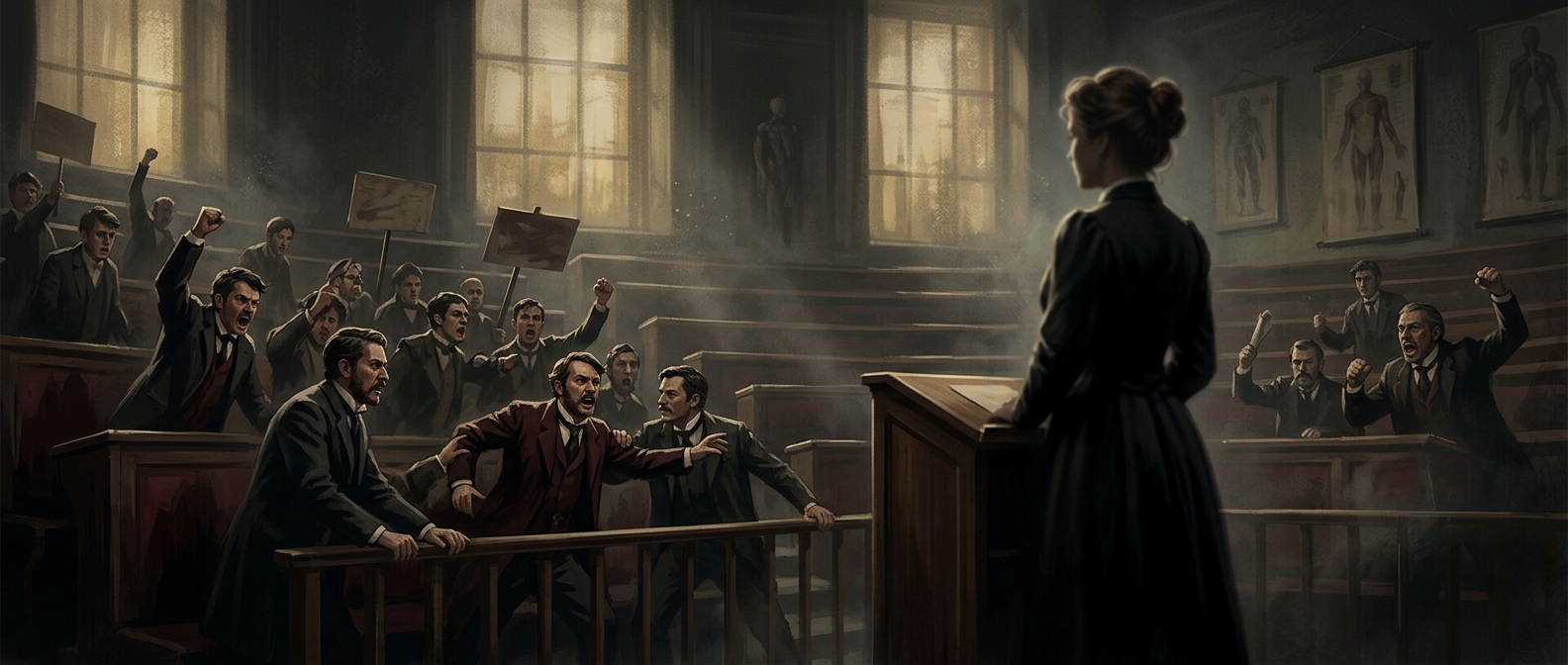
In 1870, the Edinburgh Seven—women studying medicine at the University of Edinburgh—went to sit an anatomy examination amid a hostile crowd. Anatomy required students to learn the body’s structures, a foundation for diagnosing illness and performing surgery. The crowd’s attempt to disrupt the exam turned the entrance to Surgeons’ Hall into a scene of mud, rubbish, and a live sheep.
The disturbance could obstruct the women’s route to the exam, but it could not decide how well they had studied. They passed. That result made the central conflict hard to dismiss: the women had done the academic work, while opponents tried to keep them from demonstrating it.
A Pass Could Not Open Every Door
The Edinburgh Seven’s access to medical education remained contested even after the exam. Passing anatomy was one step in a longer course of study, not a medical degree or a guarantee that the university would treat women as equal students. In 1873, a court ruled that the university was not required to graduate them.
That gap between competence and recognition is what made the exam more than a test. The students could show they had mastered the material; they could not, by passing, force the institution to grant them the qualification they sought. The riot’s mud and spectacle were temporary. The question it exposed—whether women who met the academic standard would be allowed to become doctors—remained unresolved.