A wound that made digestion observable
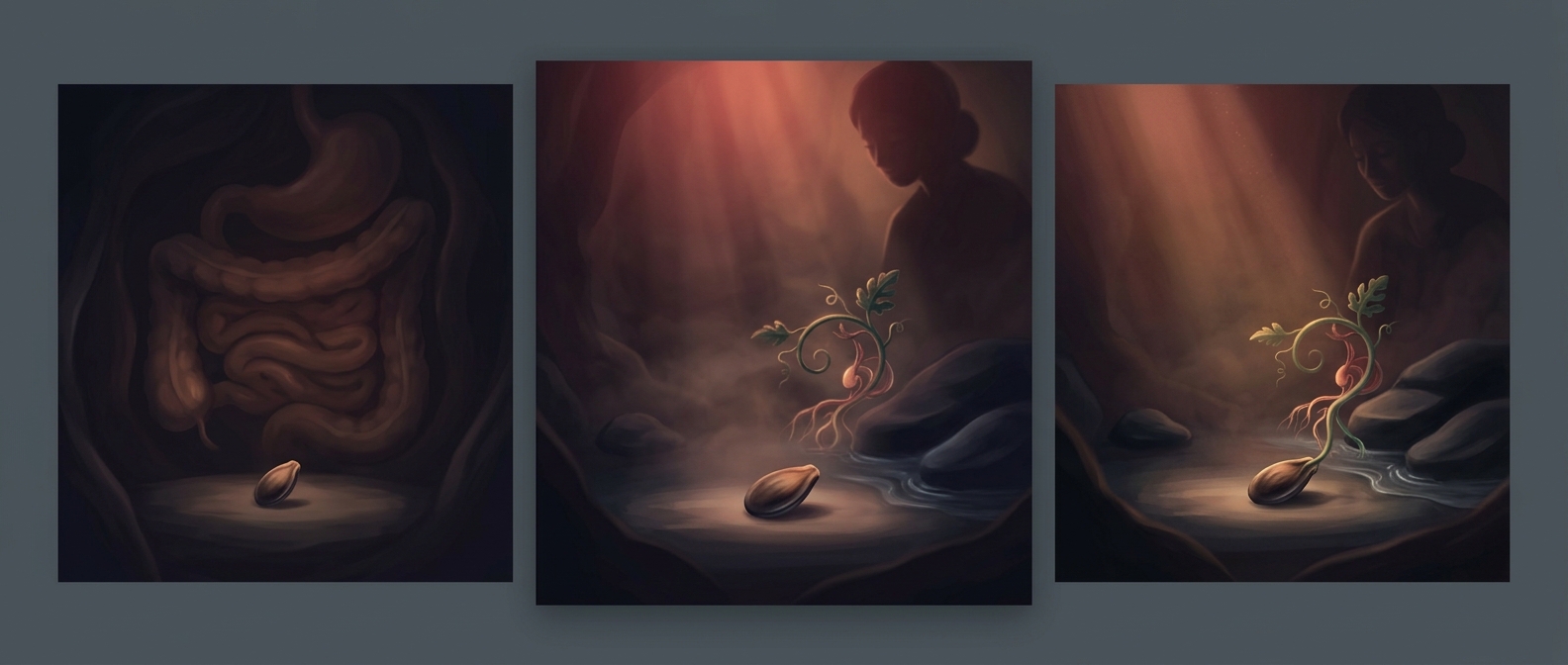
In 1822, a musket blast injured Alexis St. Martin so severely that it left a lasting passage between his stomach and the outside of his body. Dr. William Beaumont, an army surgeon treating him, eventually found that the opening—called a gastric fistula—allowed him to see and sample what was happening inside a living stomach. It was an extraordinary opportunity created by a grave injury, not a procedure Beaumont could simply repeat in other patients.
From observation to experiment
Beaumont could lower pieces of food tied to a thread through the opening, leave them in the stomach, then draw them back out to see how they had changed. He also collected gastric juice—the stomach’s digestive fluid—and examined its effects outside the body. Together, these methods let him distinguish the work of the fluid from the stomach’s physical churning. The stomach was not merely a container that mashed food: its secretions helped break food down chemically.
The access also gave Beaumont a rare chance to observe digestion over time in a living person, rather than infer it from animal dissections or examinations after death. But one person’s unusual injury could not represent every stomach, and the opening itself made St. Martin’s situation unlike ordinary digestion.
A landmark with human limits
Beaumont published his findings in 1833, helping establish the study of digestion through direct observation and experiment. St. Martin’s body became a source of scientific knowledge, but the conditions that made that knowledge possible were inseparable from his injury and dependence on the surgeon caring for him. The striking detail is also the unsettling one: some of the earliest close observations of a living human stomach were made by retrieving food through a wound.