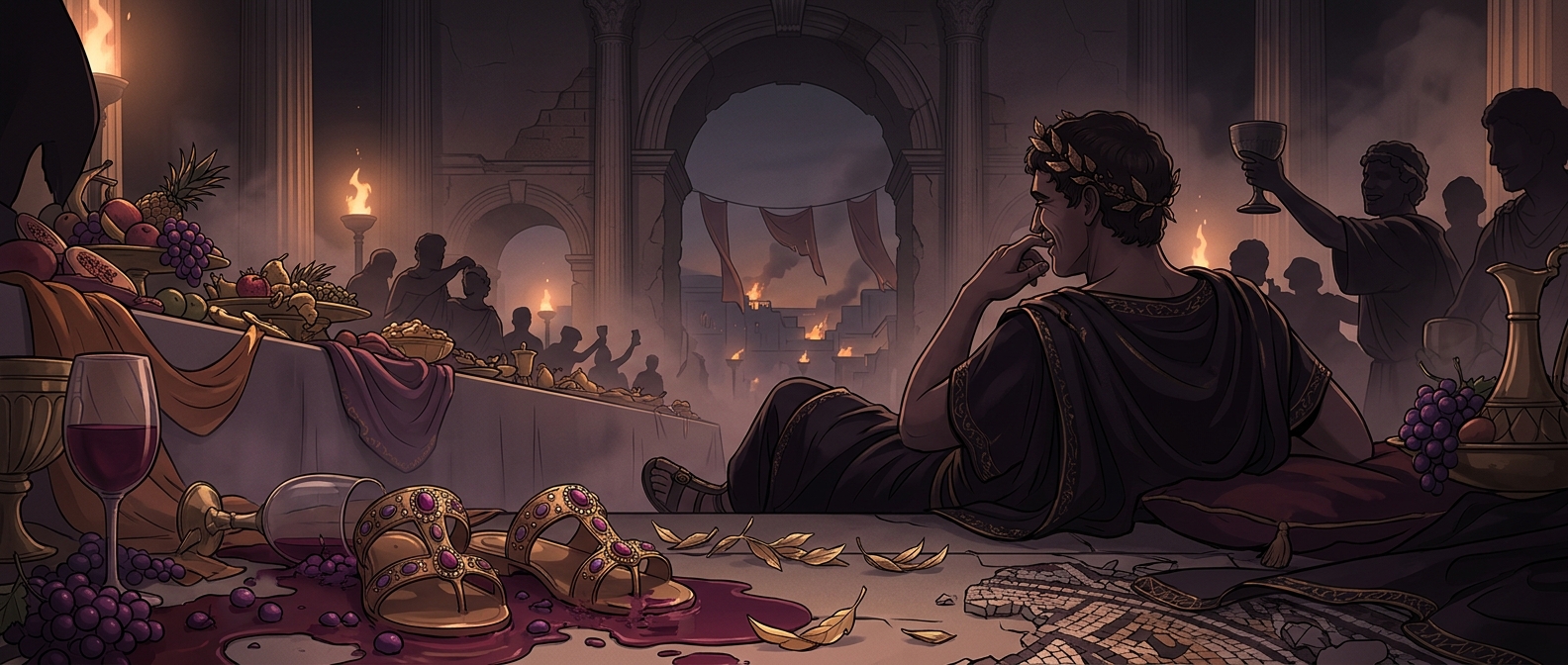
The banquet as a political budget
A royal feast spent more than the price of its food. Exotic ingredients had to be acquired and transported; kitchens, servants, musicians, and decorated halls all drew on the resources of a court. Those costs competed, at least indirectly, with the money, supplies, and administrative effort needed to keep soldiers equipped and frontier posts functioning.
But a banquet also did political work. A ruler could use abundance to impress visiting officials, reward allies, and make the court’s power visible. Rare dishes and elaborate displays signaled that the ruler could command resources from across a large realm. Cutting back might save money, but it could also look like weakness or deny influential courtiers a familiar reward.
How display could become a liability
The danger was not that one extravagant meal could bring down an empire. It was that repeated spending could reflect—and reinforce—a court’s priorities. Resources and attention flowed toward performances of power even as distant defenses required steady funding, supplies, and oversight. When armies faced pressure, the gap between what the center displayed and what it could reliably support became harder to ignore.
That imbalance mattered because imperial security depended on more than soldiers at the border. Officials had to move provisions, collect revenue, and respond to trouble across long distances. A court absorbed in prestige could make those less visible tasks easier to neglect. The feast was therefore both a cost and a signal: it showed where the ruling elite chose to spend, and what kind of power it wanted others to see.