How neighboring tree crowns leave seams in the sky
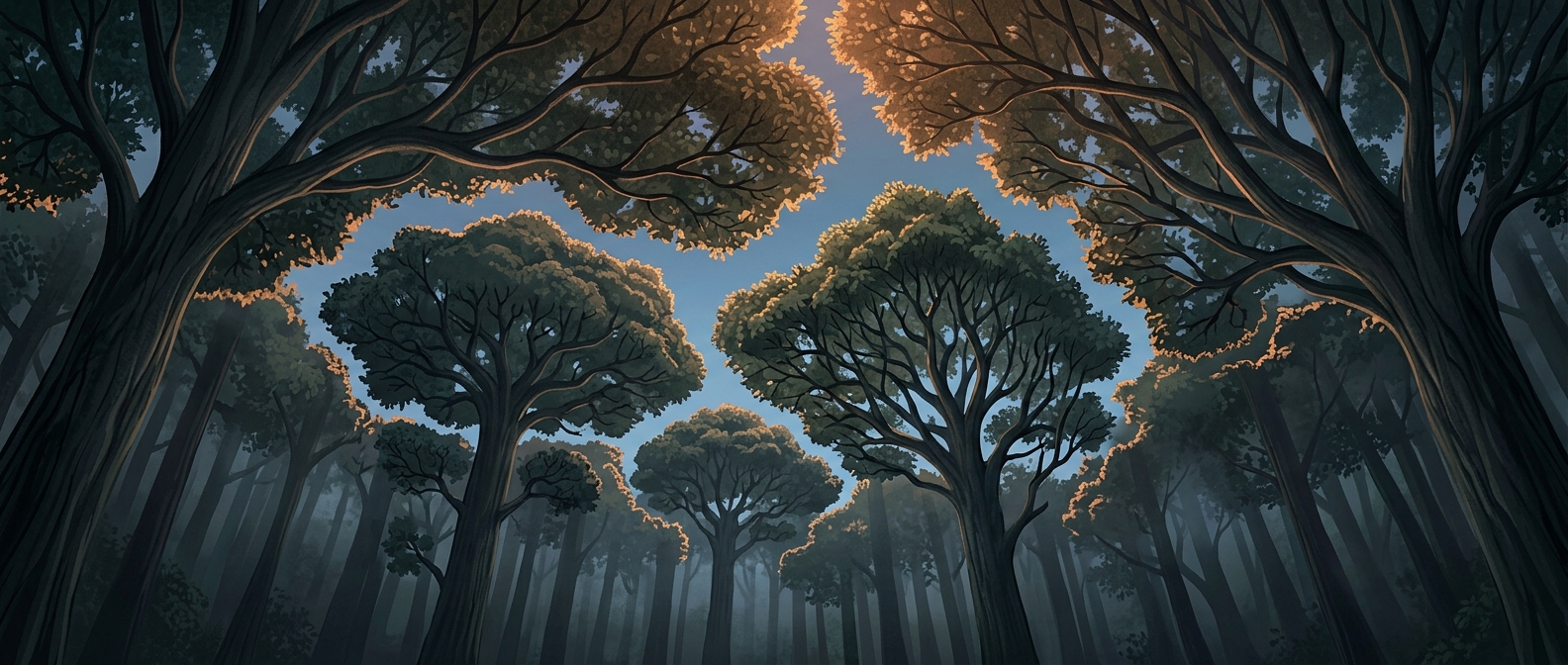
The puzzle-piece gaps between treetops are often called crown shyness. They form when the outer branches of nearby trees grow in ways that preserve narrow spaces instead of filling every opening in the canopy. The effect is especially visible where tall trees have fairly even crowns and stand close together.
“Actively avoid” describes the result, not a conscious choice. Trees continually adjust their growth to conditions around them, and repeated contact can damage tender buds and leaves. In windy forests, neighboring branches may sway into one another, scraping or snapping off new growth. Where that happens often, a branch has less chance to extend into the neighboring crown’s space.
Wind, light, and room to grow
Contact is not the only factor. A branch growing into shade may receive less light and develop more slowly, while exposed tips can keep extending. The balance varies with the tree species, the shape and height of its neighbors, and local wind conditions. Crown shyness is therefore not a precise, deliberate boundary; it is a pattern that can emerge as crowns grow and interact over time.
The resulting gaps let light and rain reach lower layers of the forest, though the amount depends on how broad and continuous the openings are. They also show that a canopy is not simply a solid roof assembled from separate trees: its outline reflects years of growth, weather, and repeated encounters between branches. A gust that makes the crowns sway can briefly close the seams, then reveal the same intricate borders when the trees settle apart.