How Orcas Turn a Shark’s Defense Against It
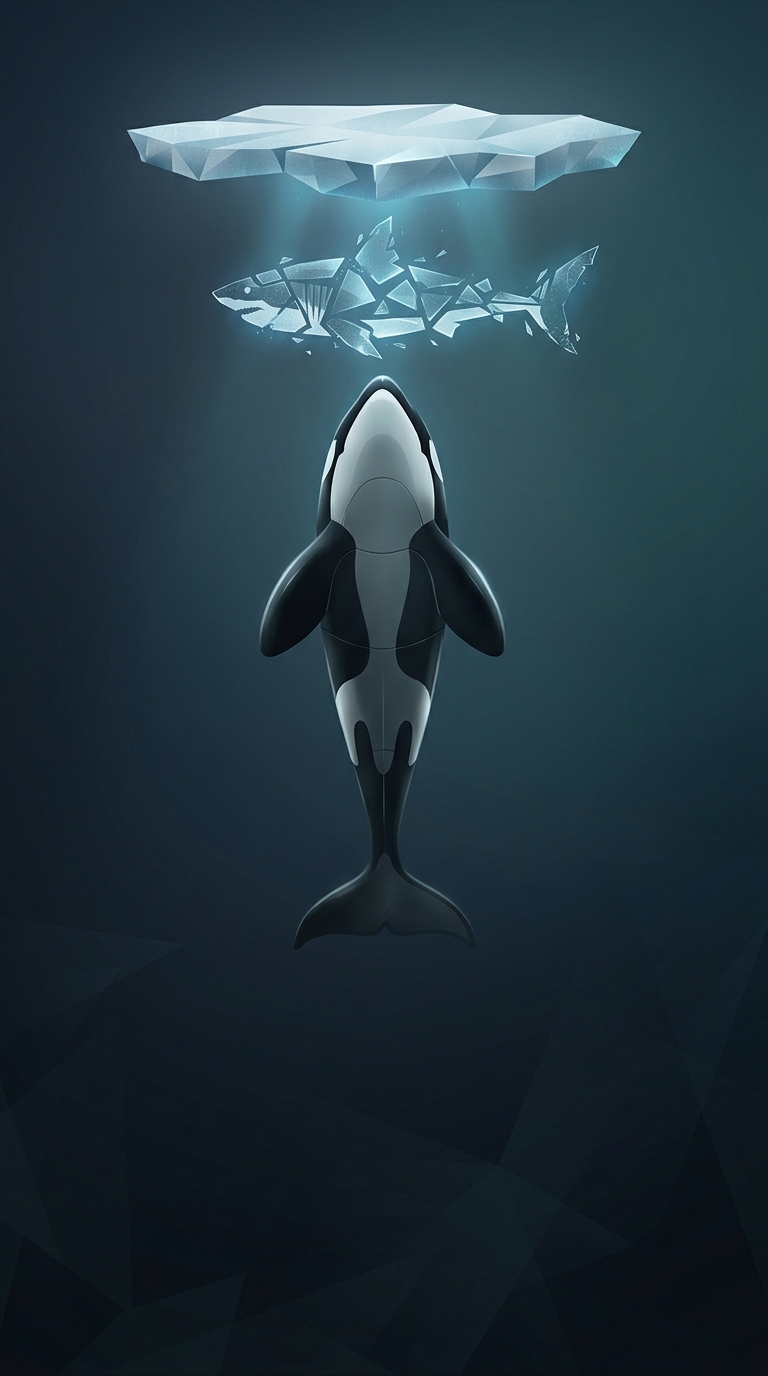
A great white is built to attack: its size, teeth, and speed make it a formidable predator. But an orca can change the encounter by forcing the shark into an unusual position. When a shark is rolled onto its back, it may enter tonic immobility—a temporary, involuntary state in which it becomes still and less able to respond. The exact response varies, but even a brief loss of control can give an attacker a decisive opening.
Orcas may work together to approach, ram, or maneuver a shark until it is upside down. This is not simply a contest of strength. It is a way to disrupt the shark’s ability to swim and defend itself, while letting the orcas control where and how they attack.
Why the Liver Is the Prize
Once the shark is incapacitated, orcas have been observed opening its body and feeding on its liver. A shark’s liver is unusually large and rich in energy-bearing oils, making it a concentrated food source. The rest of the carcass may be left behind, which is why some attacked sharks have been found with a distinctive opening in the body and the liver missing.
The behavior shows how a predator can exploit both anatomy and reflex: the shark’s temporary stillness creates an opportunity, and its energy-rich liver offers a high-value meal. It is a striking reminder that even a powerful hunter can become vulnerable when another animal knows exactly how to interrupt its defenses.