Why a thermal camera sees the window, not the person
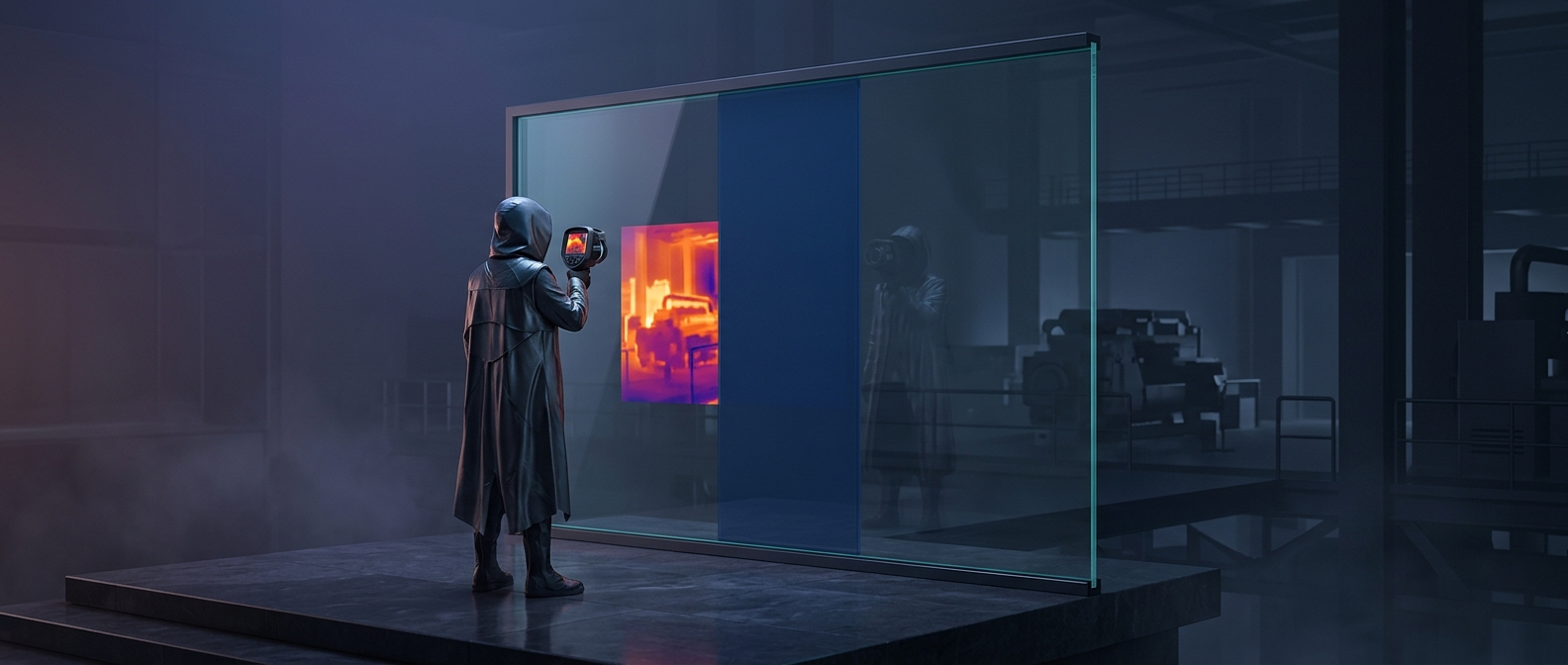
Most thermal cameras detect long-wave infrared radiation: heat energy emitted by objects at everyday temperatures. Ordinary window glass lets visible light through, but it blocks much of this infrared band. So the camera cannot simply look through a pane and read the heat coming from someone behind it.
Instead, it records infrared energy from the glass itself. The pane’s outer surface emits heat according to its own temperature and can also reflect infrared energy from nearby objects. The resulting image may show a warm or cool patch on the window, but it does not reliably reveal the body on the other side.
The glass becomes part of the scene
This is why a thermal image of a room viewed through a window can be misleading: the camera is measuring the pane’s surface, not mapping everything visible through it. A warm hand against the glass may affect the surface reading, while a person standing back from it can remain hidden. The camera’s view can also pick up reflections, much as a mirror does, though the reflected pattern is thermal rather than visible light.
The effect depends on the camera and the glass. Different infrared wavelengths behave differently, and some specialized equipment can detect bands that pass through certain materials better. But for common thermal cameras and ordinary window glass, the practical result is simple: a window can conceal a warm body even when the room is bright and clearly visible to the eye.
That difference matters in inspections and search work. A thermal camera aimed at a window may tell you about the window’s temperature and surroundings—not whether someone is standing behind it.