How Glass Keeps a Light Signal Intact
A fiber-optic strand guides information as pulses of light. Its glass does not need to be perfectly transparent in the everyday sense; it needs to absorb and scatter as little of that light as possible. Tiny impurities or flaws can interrupt a pulse, diverting some of its energy or turning it into heat.
That is why making optical fiber starts with carefully controlled glass chemistry. Manufacturers create a glass preform—a thick, rod-shaped piece with the same structure the finished fiber will have. They heat and stretch it until it becomes a hair-thin strand. Keeping contaminants out during those steps matters: even small amounts of unwanted material can weaken the signal over distance.
The Fiber Also Has to Keep Light Inside
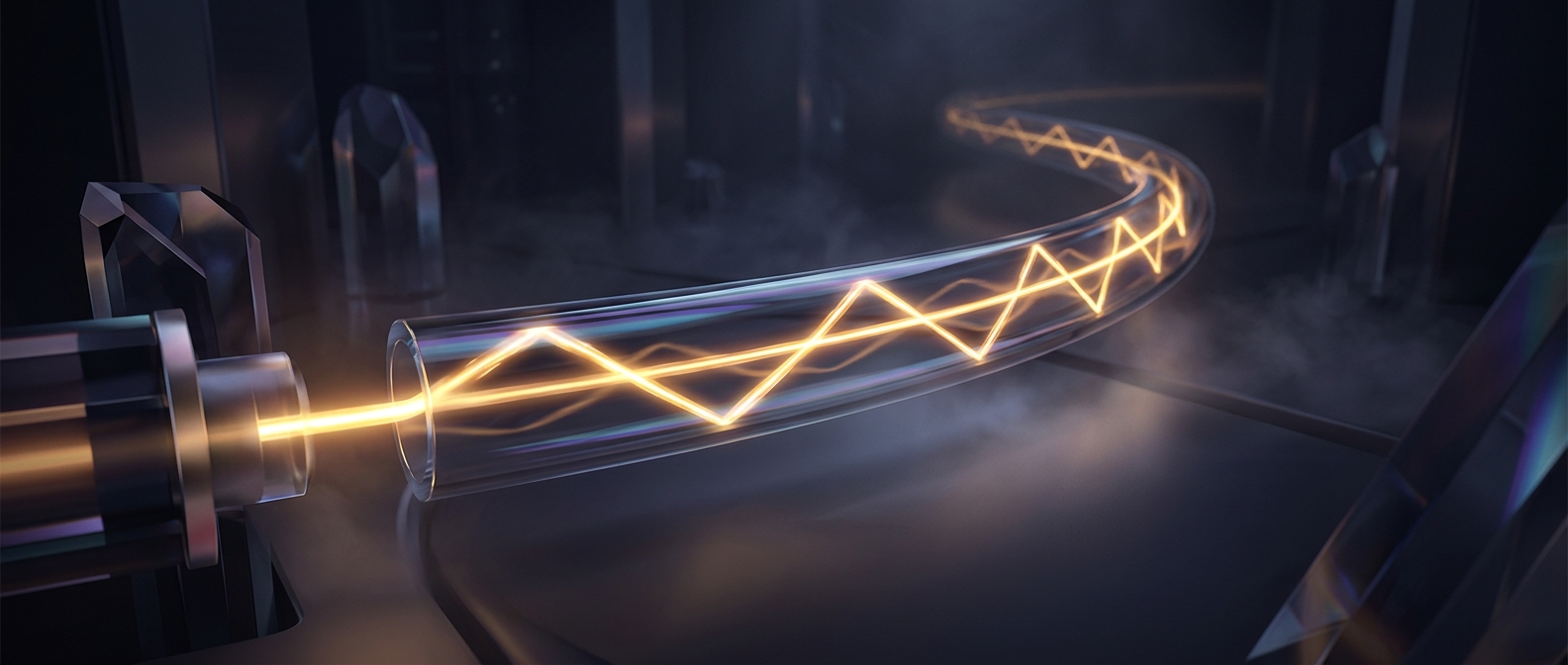
Purity is only part of the trick. A fiber has a central core surrounded by a layer of glass called the cladding. The two are made to bend light differently, so light traveling through the core is reflected back inward rather than escaping. This guidance lets a signal follow the cable, including gentle curves, instead of spreading into the surroundings.
Even with clean glass and a well-designed core, some light is lost along the way. For very long routes, equipment periodically boosts or regenerates the signal. The practical payoff is that a thin strand can carry light across long distances before that help is needed—making fiber a powerful backbone for communications.