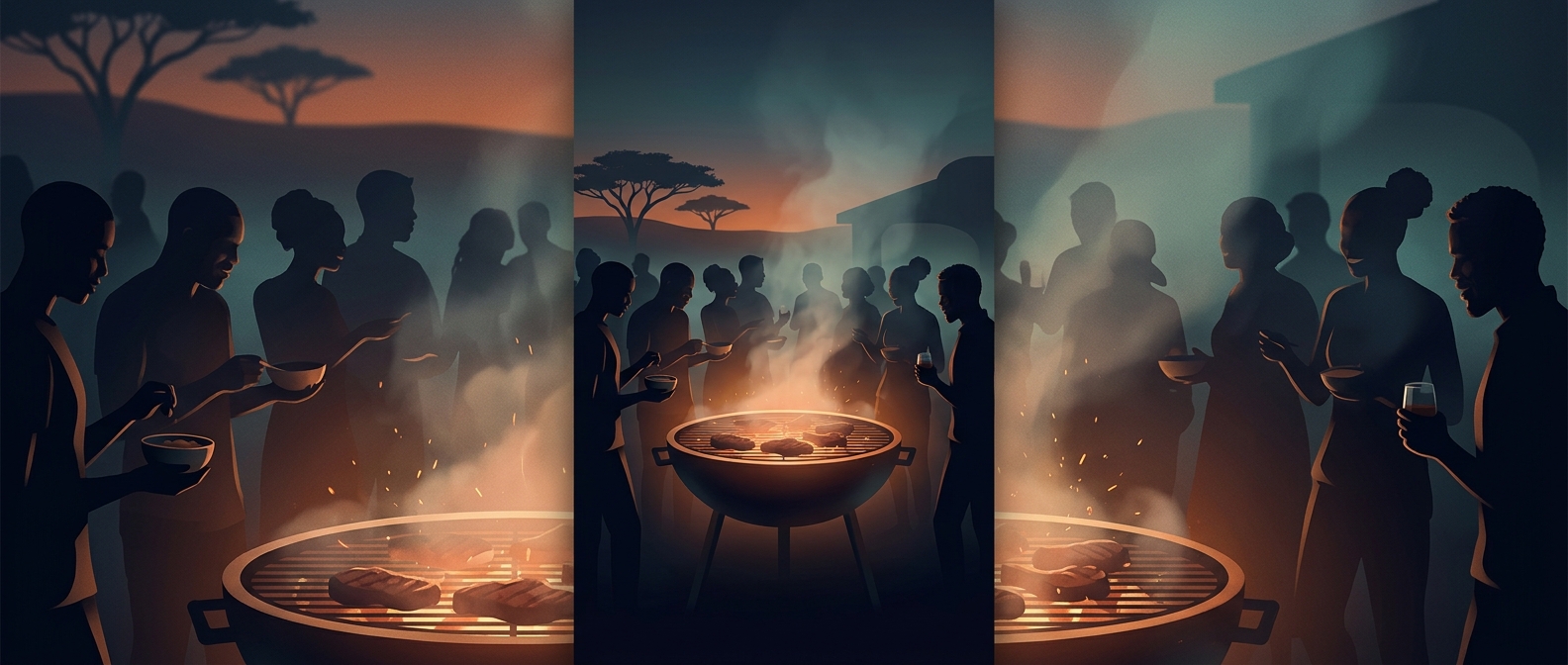
The fire sets the pace
At a braai, cooking begins well before the meat reaches the grill. Wood has to burn down into embers—glowing coals that give off steadier heat than open flames. Someone tends the fire, judging when it is ready and where the heat is strongest. That waiting is part of the occasion: the meal follows the fire’s timing rather than the quick start of a gas burner.
Cooking is only one part of the gathering
Because the fire takes attention over time, it gives people a place to gather. The person at the grill may turn meat and manage the heat while others talk nearby; food can come off in stages instead of arriving as one synchronized meal. The braai is therefore less a specific menu than a way of organizing a shared afternoon or evening around fire, food, and company.
Why the fuel matters
Wood and coals bring changing heat and smoke, and tending them makes the cook’s role visible. Gas can grill food efficiently, but it removes much of that process—the fire-building, the waiting, and the small decisions that keep the gathering going. That is why, for many South Africans, swapping coals for gas changes more than the flavor: it changes the experience people came to share.