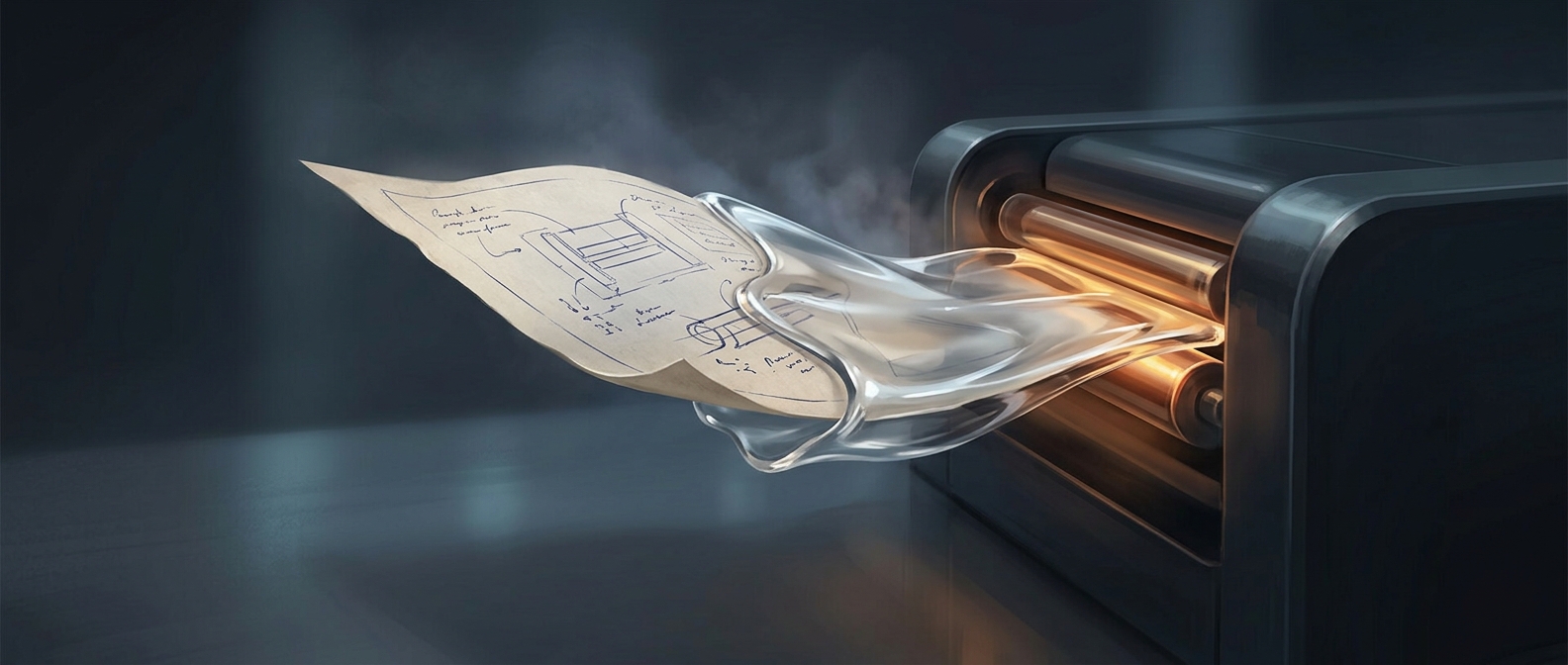
What the Heat Changes Inside a Laminating Pouch
A laminating pouch is more than a plastic sleeve: its inner surfaces carry a layer of adhesive that softens when heated. As the pouch passes between a laminator’s rollers, heat makes that coating tacky while pressure pushes it into close contact with the paper. The paper itself does not melt; the softened adhesive bonds the plastic film to its surface.
The rollers also help keep the layers flat and squeeze out gaps that could leave bubbles or cloudy patches. After the pouch exits, the adhesive cools and hardens again, holding the layers together. The result is a single, stiff covering rather than a loose sheet of plastic around the page.
Why the Seal Needs a Margin
The plastic film must bond to itself around the paper’s edges to make a continuous enclosure. That is why documents are usually placed inside the pouch with a narrow border of plastic left around them. If paper reaches the edge, the film may not seal there, leaving a path for moisture or dirt to get in.
The same heat that activates the adhesive can damage heat-sensitive materials, and a thick or uneven item may not bond consistently. For ordinary paper, though, the process turns a flexible sheet into a protected surface—and seals its edges in place.