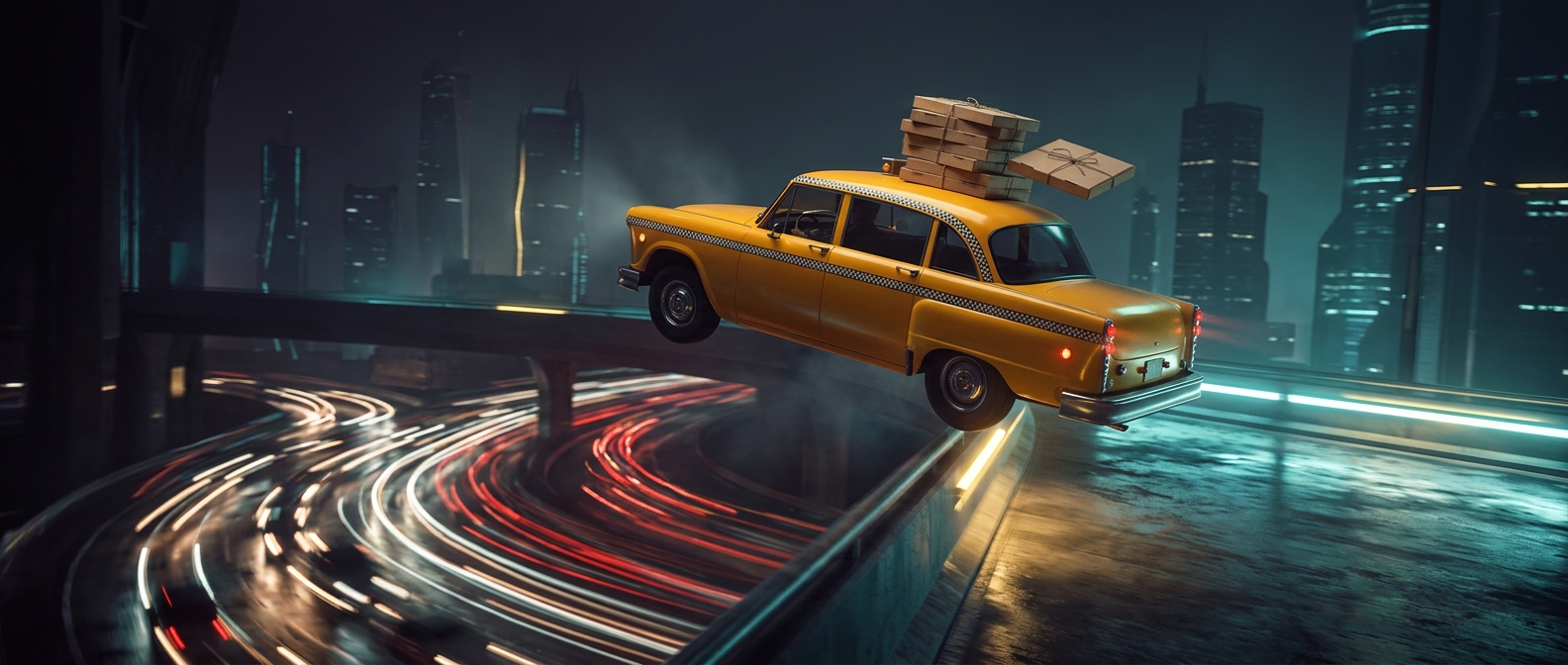
Crazy Taxi Made Bad Driving the Efficient Route
In Crazy Taxi, the fastest-looking road was not always the best-paying one. The game’s scoring turned daring maneuvers into a business decision: a close pass or a dramatic jump could add a tip, so players had reason to take risks rather than simply steer safely from pickup to drop-off.
A Delivery With Two Clocks
Each passenger had a destination and a time limit. The fare rewarded getting there, while the shrinking clock made every detour costly. Tips offered a way to make up ground: players could weave through traffic or use ramps to earn extra money, but a collision or a badly judged stunt could waste precious seconds. The challenge was not recklessness by itself; it was choosing risks that paid before time ran out.
That tradeoff gave the city a different purpose from a conventional racing track. Intersections, gaps, and ramps became opportunities to improvise a route, and a near miss could feel like both a narrow escape and a successful move in the same moment.
Why the Taxi Fantasy Worked
The cab gave the chaos a simple objective. Players did not need to win a race against a particular rival; they had to keep customers moving and the meter earning. Because risky driving could improve the payout while also threatening the delivery, the game made its central tension legible in seconds: drive boldly enough to profit, but not so wildly that the fare disappears.