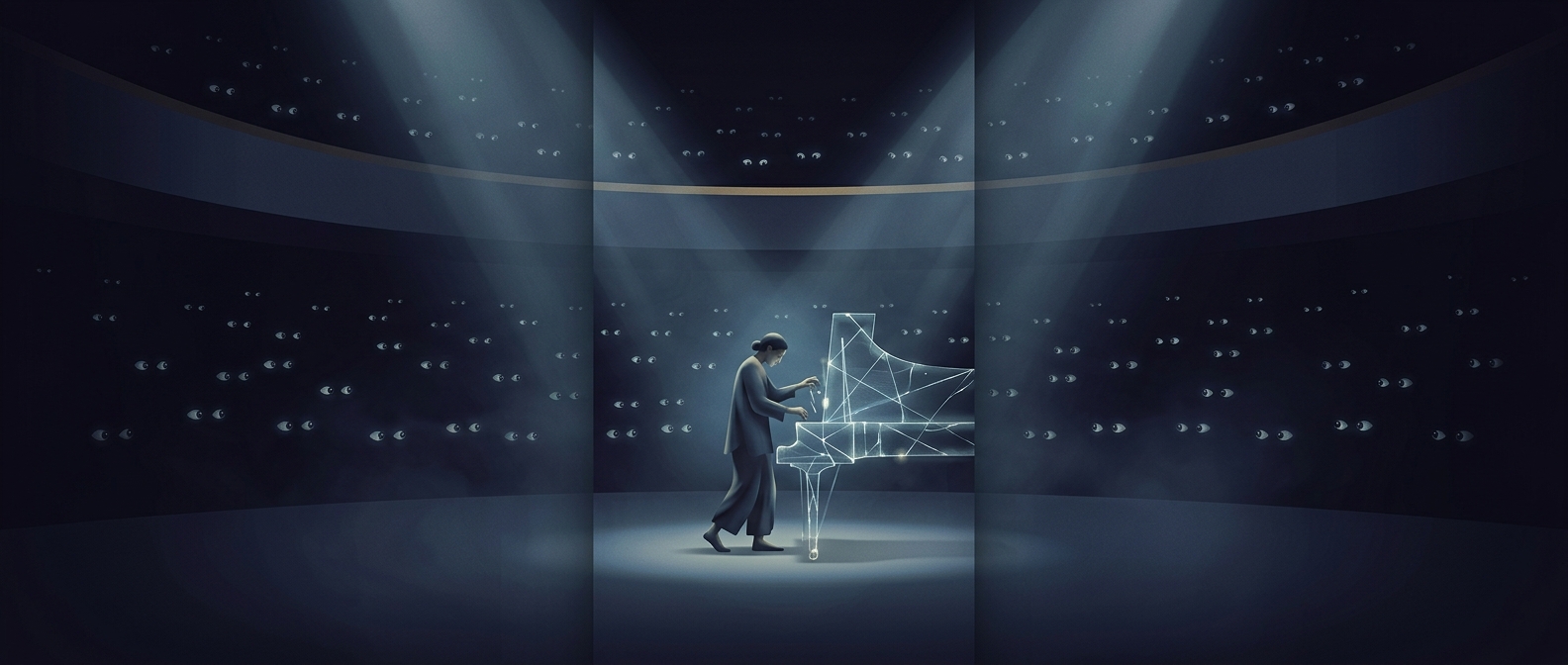
The mind uses nearby faces as a reference point
Attractiveness is not judged in a vacuum. When people assess a face, they draw on visual impressions already in mind, and a face seen moments earlier can become a quick comparison standard. If that earlier face seems especially attractive, the next one may receive a less favorable rating by contrast—even though neither face has changed.
Psychologists call this a contrast effect: a judgment shifts because of what came before or what appears alongside the thing being judged. It can happen with other qualities, too. A room may seem small after a grand hall; an ordinary price may seem low after a much higher one.
Why the comparison can matter
The brain has limited time to make sense of a crowded visual scene. Comparing nearby people is one shortcut: rather than evaluating every face against an abstract, fixed scale, a viewer can judge it relative to the faces currently in view. That makes perception sensitive to context. The same person might seem more or less attractive depending on who is standing nearby—or on whom the viewer has just seen.
The effect is not a rule that a more attractive person always makes everyone beside them look worse. Attention, personal preferences, familiarity, and the particular faces involved can all shape a judgment. Still, it helps explain why first impressions can feel surprisingly unstable: sometimes the “standard” is simply the person who happened to appear a moment earlier.