Why a print of a long-dead warlord could be dangerous
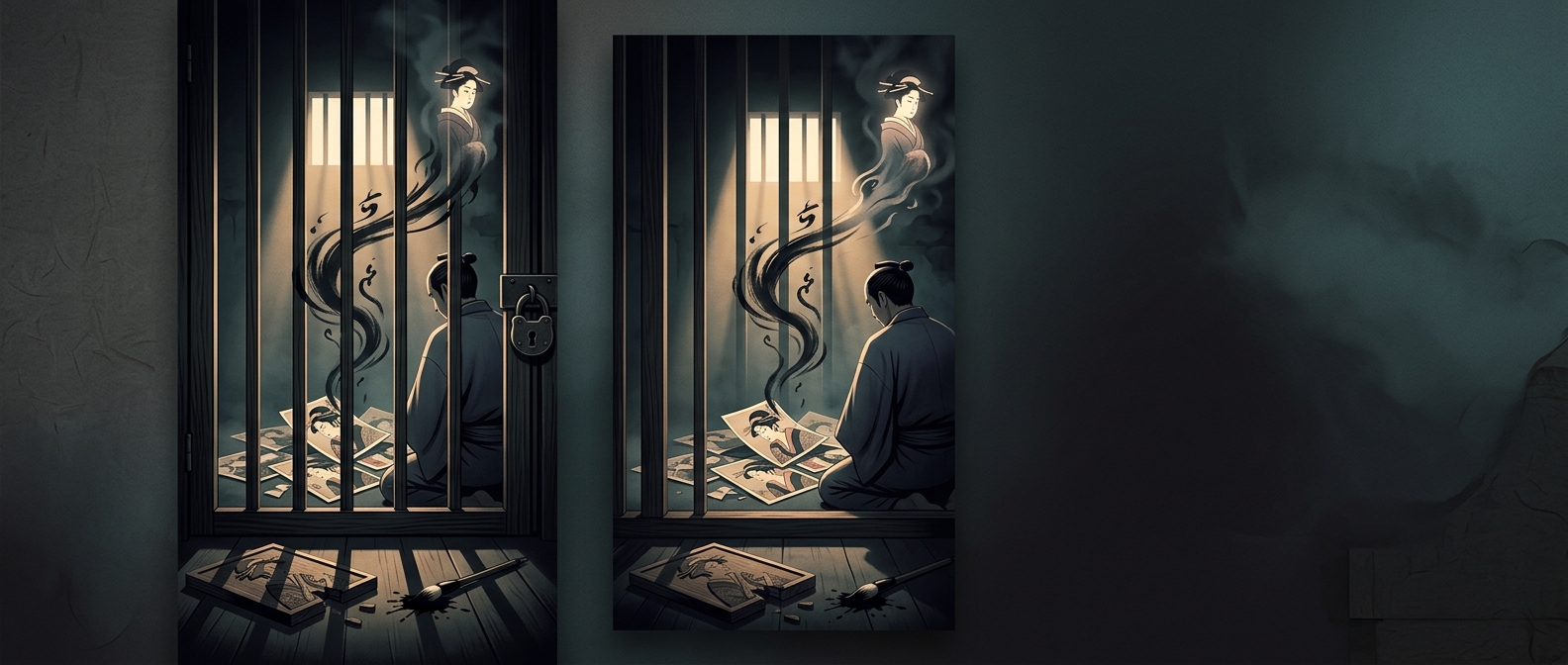
In 1804, the celebrated ukiyo-e artist Kitagawa Utamaro was punished for prints showing Toyotomi Hideyoshi, the warlord who helped unify Japan in the late 1500s. The subject was historical, but that did not make it politically harmless. Under the Tokugawa shogunate, authorities restricted images that could be read as commentary on power or government. A familiar episode from the past could carry a pointed meaning in the present.
The punishment is sometimes linked broadly to the censorship associated with the Kansei Reforms, but Utamaro’s case came in 1804, after those reforms. The broader issue was the shogunate’s ongoing effort to control what could circulate in print.
Censorship reached beyond the artist
Woodblock prints were made in collaboration: an artist designed the image, while publishers and specialists carved and printed it for sale. That process could spread an image widely, making prints both popular entertainment and a channel for ideas. Censorship therefore constrained what creators could depict and what publishers could risk producing.
Utamaro was sentenced to 50 days in shackles. The contrast is stark: officials could suppress the picture, but the punishment fell on the person who made it. His case shows how a historical image could become a present-day political problem—and how the state’s response could turn an artist’s body into the visible instrument of censorship.