A record attempt with no way to call the balloons back
In 1986, a charity event in Cleveland sent more than a million helium-filled balloons into the sky. The release was designed as a spectacle and a record-setting fundraiser: once the balloons were airborne, however, wind—not the organizers—determined where they went.
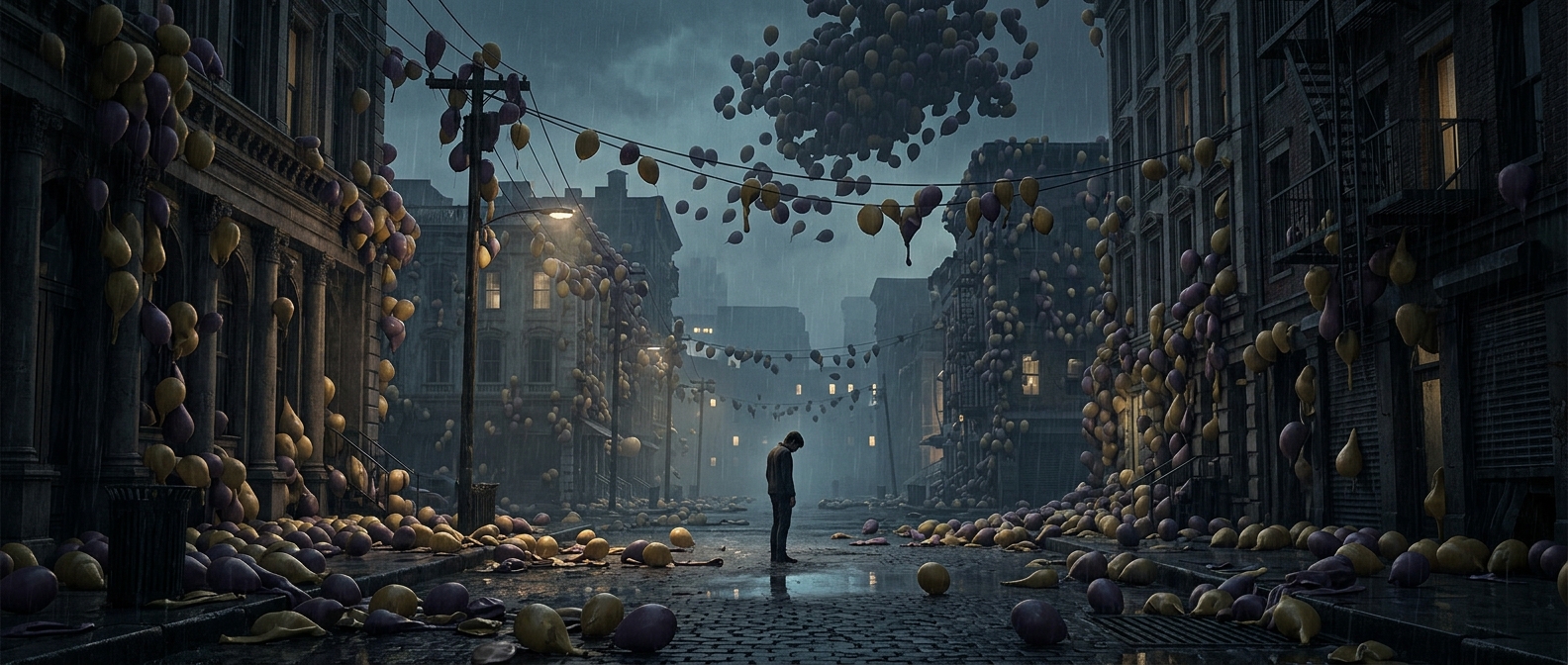
That was the event’s central logistical problem. A single balloon is easy to ignore; a million released together can spread across a wide area, drift into places where people and vehicles need clear visibility, and eventually come back down. The balloons did not disappear when they left the launch site. They became a moving, uncontrolled field of objects over the city and nearby Lake Erie.
When spectacle collided with daily operations
The mass of balloons disrupted air and ground activity. Flights were grounded, and traffic snarled as balloons descended and accumulated. For pilots and drivers, the issue was not simply an unusual sight: objects in the air or on the ground can interfere with safe movement and visibility, so normal operations may have to pause until conditions are manageable.
The release also complicated a Coast Guard search mission on Lake Erie. A search depends on being able to scan the water and coordinate activity over a defined area. A vast number of drifting balloons added clutter to that environment at a moment when rescuers needed to focus on finding people. The balloons did not cause the emergency, but they made an already difficult task harder to conduct.
The overlooked cost of a mass release
The event shows why a spectacular launch can have consequences far beyond its starting point. Organizers can choose the place and moment of release; they cannot control the balloons’ separate paths after that. Each one eventually becomes a cleanup problem somewhere else, while the combined mass can disrupt systems—from traffic to emergency response—that depend on clear space and attention.
In Cleveland, the celebration’s scale was also what made it hazardous: the city had to deal not with one runaway balloon, but with more than a million trajectories.