From Women’s Kabuki to a Stage Ban
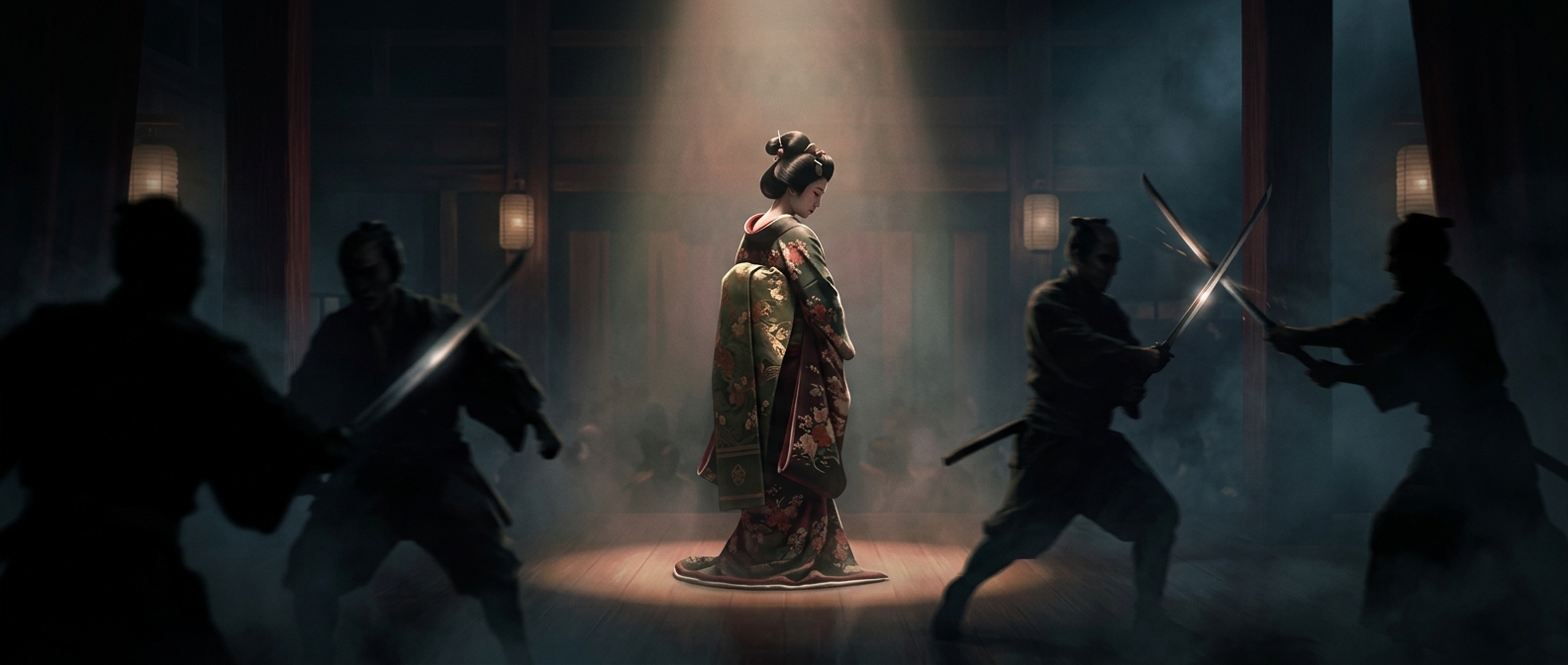
Kabuki began in the early 1600s with performances by women, whose dancing and acting drew large, enthusiastic audiences. The attraction could extend beyond the stage: some performers were associated with sex work, and rivalries among samurai patrons sometimes spilled into fights. For the Tokugawa shogunate, which governed Japan, the theaters had become a public-order problem as well as an entertainment venue.
In 1629, the government barred women from performing. The restriction did not end Kabuki. Instead, it changed who could appear onstage—and eventually what audiences expected from the art.
How a Workaround Became a Convention
Male performers took women’s roles. These specialists became known as onnagata, a term for men who perform female characters. Rather than simply copying everyday gestures, they developed controlled movements, vocal styles, costumes, and makeup that signaled femininity within Kabuki’s heightened theatrical style.
That approach made the role a craft in its own right. An onnagata’s performance depended on trained technique and theatrical convention, not on a claim that the actor was literally a woman. Audiences learned to read the stylized signs, just as they recognize conventions in other forms of theater.
The Ban’s Lasting Stage Legacy
The prohibition was meant to control the people and conduct surrounding performances. But by removing women from the stage, it also set Kabuki on a path where male actors played every role. The resulting tradition shaped how productions were cast and how female characters were performed long after the immediate concern over disorder had passed.
A government measure aimed at keeping theater under control thus helped create one of Kabuki’s most distinctive features: a female character whose presence is built, deliberately, through a male performer’s technique.