How Kabuki Makeup Makes a Face Read from the Stage
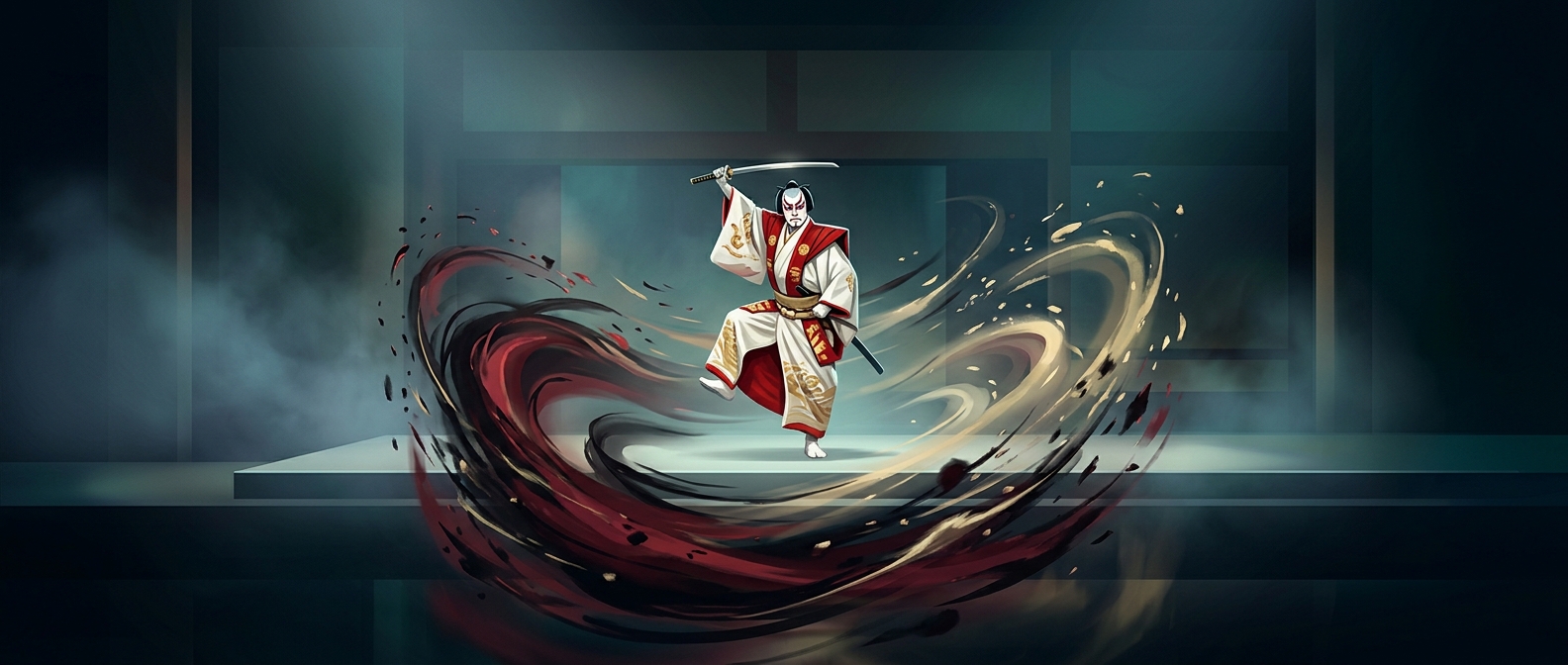
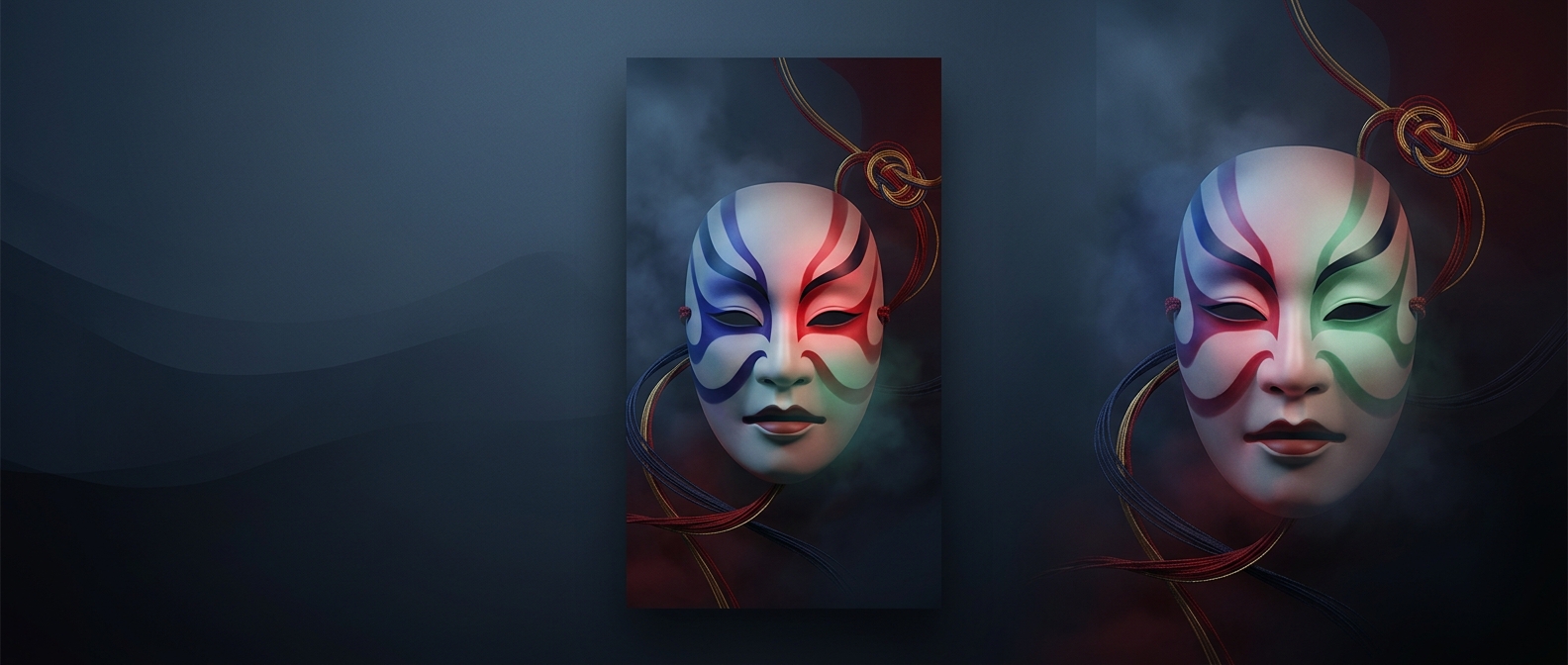
Kumadori is a highly stylized makeup used for certain Kabuki roles, especially larger-than-life heroes and villains. The actor begins with a pale base, then paints bold lines across the face. These strokes do more than decorate: they trace and exaggerate features around the eyes, cheeks, and brow, making an expression legible to spectators watching from far away.
The colors work as part of a shared theatrical vocabulary. Red commonly marks a forceful, righteous hero; blue is associated with a villain or other threatening character. The lines’ shapes and placement also matter, so the effect is not simply a color code in isolation. Together, color and pattern tell the audience what kind of presence to expect before the character has a chance to explain himself.
A Convention, Not Everyday Makeup
Kumadori is not worn by every Kabuki character. Its boldness suits roles that are deliberately heightened: the face becomes a visual extension of the performance’s broad gestures and intense poses. In a theater, where subtle expressions can be difficult to see at a distance, painted lines help turn a small shift of the eyes or brow into a striking signal.
The convention also lets an actor make a role recognizable quickly. Once spectators know the visual language, they can interpret the character’s moral and emotional force almost immediately. The makeup does not replace acting; it gives the performance a head start, making the face itself part of the storytelling.