How an Oil Lamp Became an Eyeliner Tool
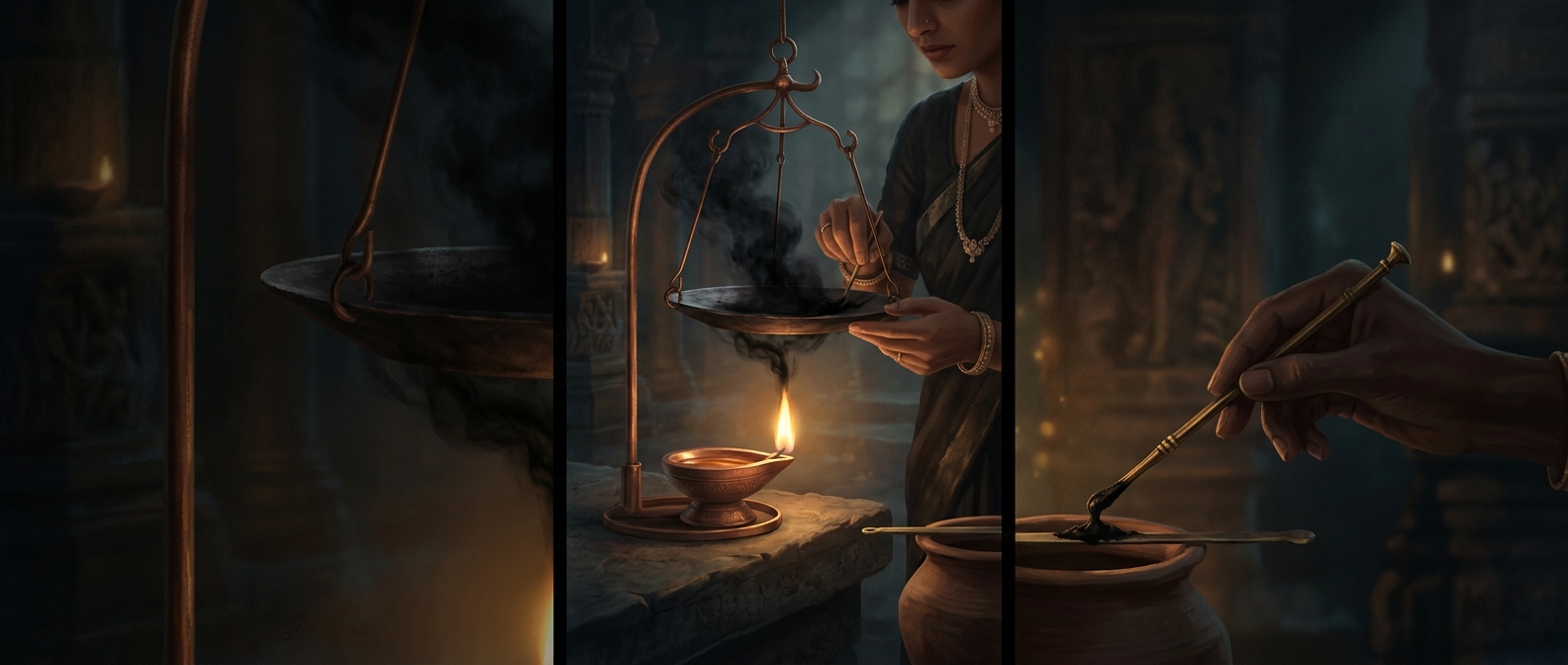
Before factory-made cosmetics, a household lamp could supply the dark pigment used around the eyes. As oil burned, it released fine black soot. Holding a metal plate above the flame let that carbon-rich residue collect on its underside, where it could be scraped off for use.
The soot was not usually applied loose. It was blended with a cooling or binding substance—often an oil, fat, or other paste—to make surma or kajal, names used for dark eye cosmetics across parts of South Asia and the Middle East. The mixture could be stored and spread along the eyelids with a small applicator. Its smoothness and staying power depended on the ingredients and how finely the soot was prepared.
A Household Material, Made Useful
The method turned an unavoidable by-product of burning fuel into a portable cosmetic. The lamp supplied light, while the plate captured pigment that would otherwise have drifted away or blackened nearby surfaces. That made production possible with ordinary domestic equipment rather than a specialized workshop.
Surma and kajal have varied across regions and periods, so lamp soot was one way to make them, not a single universal recipe. The practical transformation is the striking part: smoke from an everyday flame could be caught, mixed into a paste, and used to draw a dark line around the eye.