From Egyptian fields to Rome’s streets
Rome could not feed its enormous urban population from the farms around the city. Grain had to arrive by ship, and Egypt became a vital supplier after Rome took control of it in 30 BCE. Harvests grown along the Nile were shipped across the Mediterranean to Italy, then carried up the Tiber toward the capital.
The voyage was only one link in a fragile chain. Officials had to secure grain, move it through ports and warehouses, and keep supplies flowing despite storms, delays, or poor harvests. A shortage in the city could quickly mean higher prices and hungry crowds.
Food distribution as a tool of government
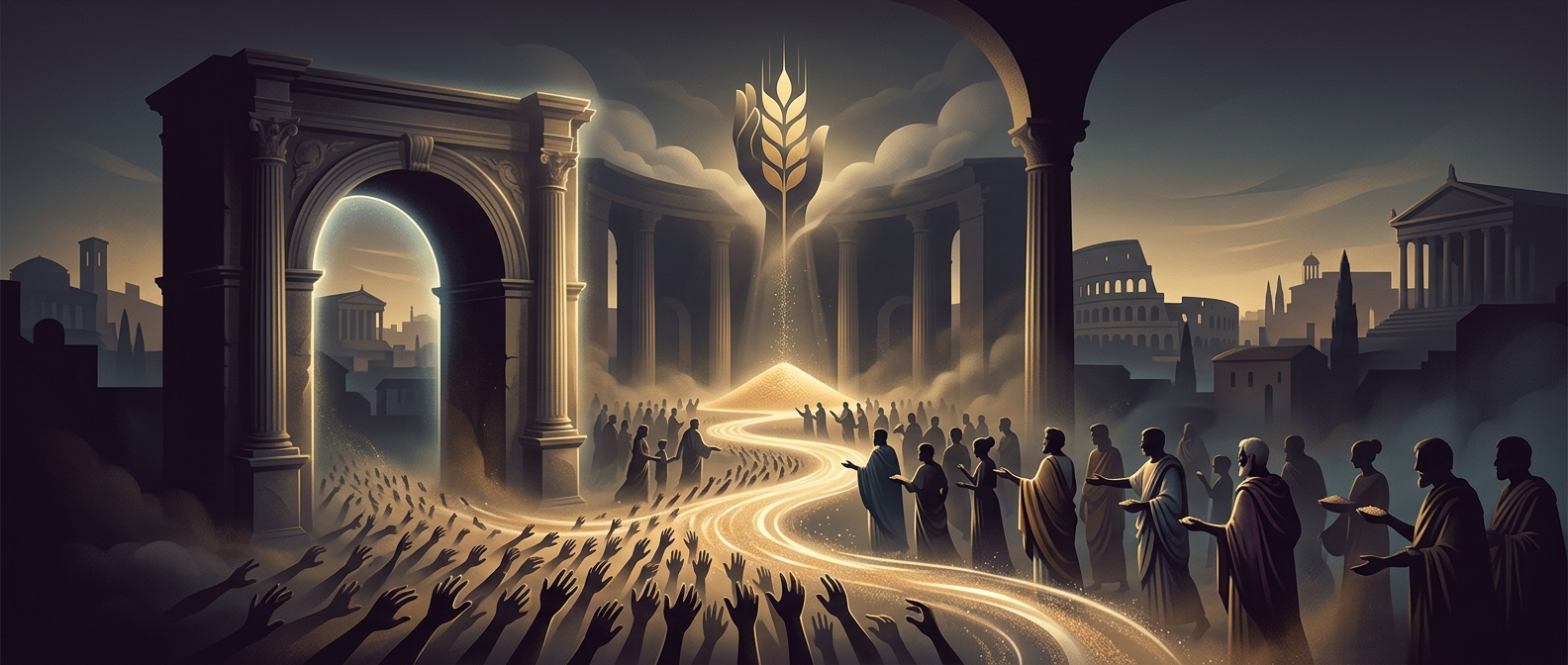
The state distributed grain to eligible residents at no charge. The system helped people who could not reliably afford food, but it also served a political purpose: keeping bread available reduced the risk that hunger would erupt into unrest. Roman leaders therefore treated provisioning as a responsibility of governing the city, not merely as private charity.
The familiar image of free bread reflects a system that changed over time. For much of the empire, recipients received grain rather than finished loaves; later reforms made bread itself part of the distribution. In either form, the benefit depended on an immense supply network linking distant farms to Roman households.
The consequence of a long supply line
Rome’s food security rested on harvests far beyond its walls. A loaf in the capital embodied ships, ports, storage, and state administration—and showed how a government could use reliable provisioning to make a crowded city more governable.