An Olympic victory that outran the finish line
In 67 CE, Nero entered the Olympic Games during a tour of Greece, where he also performed as a singer and actor at major festivals. The Olympics were not simply a local sporting meet: winning brought prestige to the victor and to his city. An emperor appearing in the arena therefore put the judges in an awkward position. They were judging a contest, but also facing the ruler of Rome.
The race Nero did not finish
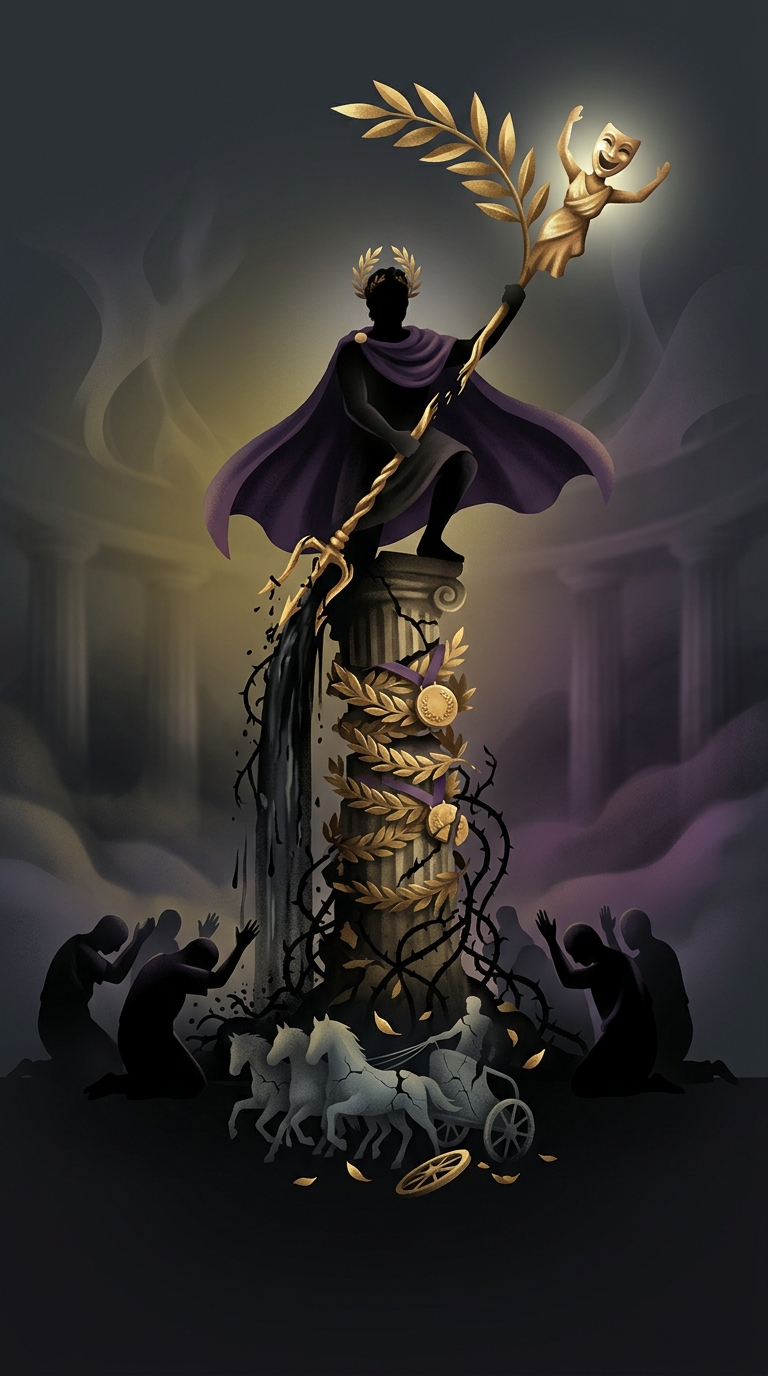
Nero chose a chariot race with ten horses—a demanding spectacle even for an experienced driver. Ancient accounts say he was thrown from the chariot and failed to complete the race. Yet he was proclaimed the winner. The story is a sharp example of how imperial power could bend a competition whose authority depended on judges applying its rules.
Accounts of Nero’s Greek tour describe him using money and influence to secure honors. The precise mechanics of each award are not clear, but the larger imbalance was plain: officials could award a crown to a powerful visitor, while refusing him carried consequences. The Olympic prize was an olive wreath, not a purse of cash; its value lay in public recognition.
A crown with political weight
Nero’s victory was not just an athlete’s disputed result. It turned a Greek festival into a stage for Roman authority—and made the judges’ announcement part of the spectacle. The memorable detail is not merely that Nero fell: he could lose control of the chariot and still control who was called the winner.