Why mud feels different from a generic rumble
A conventional controller often creates vibration with a small off-center weight: as it spins, the weight makes the whole device buzz. That can signal impact or urgency, but its broad, fairly uniform shake has limited nuance.
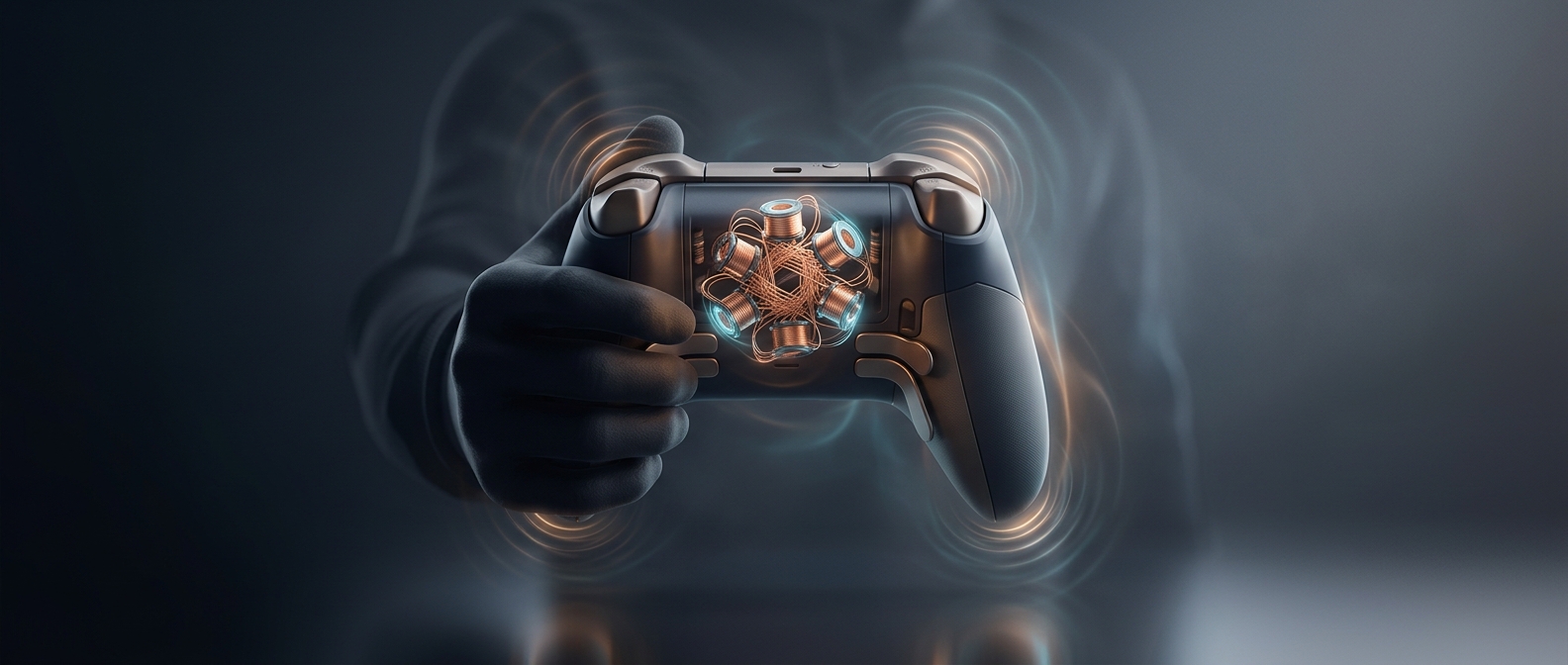
Miniature speakers in some controllers work differently. They turn an electrical signal into low-frequency vibrations that travel through the controller and into the player’s palms. Because the vibration can be shaped rather than produced by one spinning weight, the feedback can suggest a particular texture or rhythm—in this case, the heavy, dragging sensation of trudging through mud.
The game’s movement becomes a tactile pattern
The controller is not reproducing mud itself. It is translating the game’s idea of moving through mud into a physical cue the hands can feel. Low, weighty vibration gives each step more heft than a sharp, uniform buzz would; repeated as the character trudges, it can help make the movement feel resistant.
That distinction matters to game designers. A controller has limited ways to communicate touch, so the vibration must carry an impression without distracting from the player’s grip or overwhelming other cues. A textured signal can make an action feel more specific than simply making the device shake harder.
The result is a small but useful illusion: the player’s hands feel a designed pattern of vibration, and the brain reads it as effort and resistance—not as actual mud, but as a more convincing step through it.