How rooftop power becomes a neighborhood exchange
A solar panel produces electricity when sunlight reaches it, but a household’s demand rarely matches that output minute by minute. On a bright afternoon, panels may generate more than the home is using; next door, someone may be charging an electric bike or running appliances. That mismatch creates an opportunity to share value.
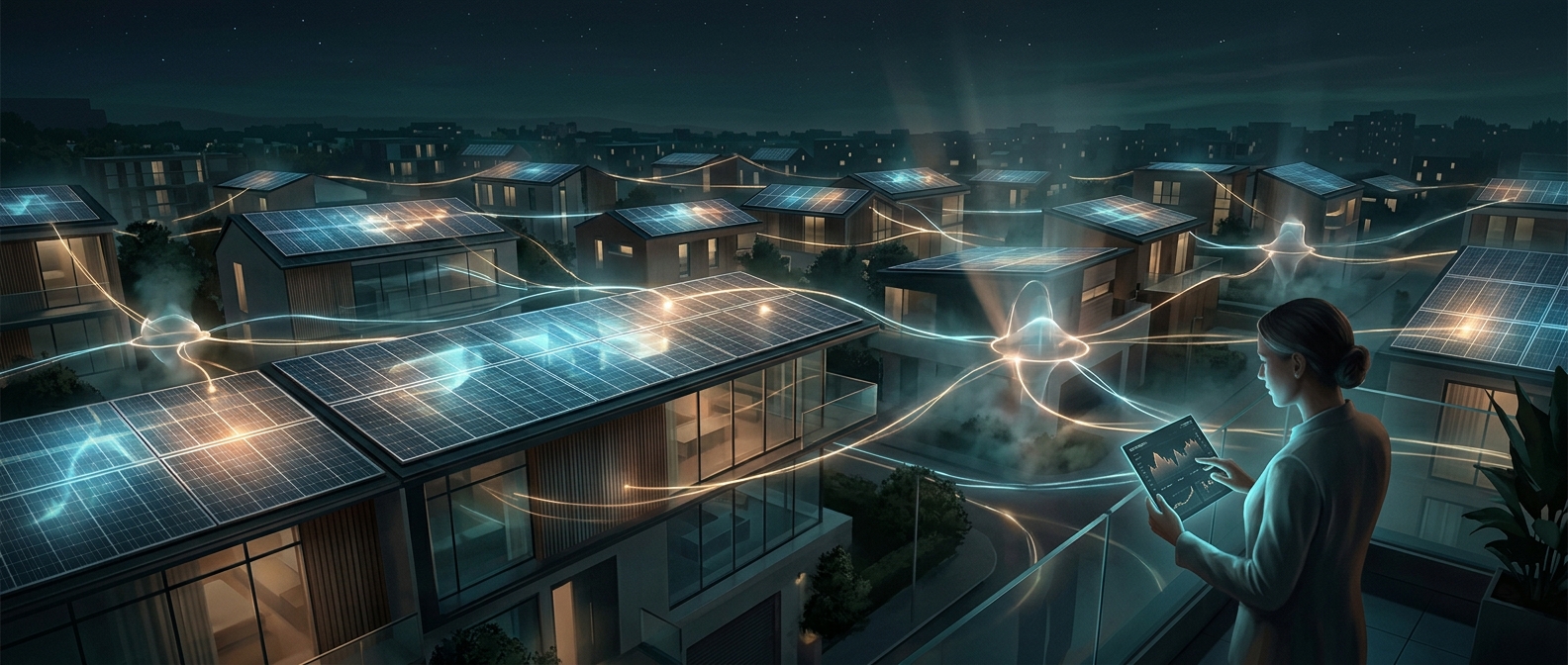
The electricity generally does not travel along a dedicated wire from one roof to the neighboring home. Both homes are connected to the local grid, which carries power where it is needed. Sharing is usually about tracking and settling who contributed energy and who used it, through arrangements that may involve meters, a utility, or a local energy-sharing program. The grid handles the physical flow; the agreement handles the accounting.
From kilowatt-hours to favors
In a formal program, participants can receive credit or otherwise benefit when local solar generation is matched with nearby use. The details depend on the program and local rules, so “trading” does not always mean neighbors directly pay one another for particular units of electricity.
The exchange can also be informal. A household might help a neighbor charge a bike, then receive vegetables from a garden or a favor in return. In that case, the electricity may still be managed through the ordinary grid and utility system; the neighbors are choosing how to recognize its value between themselves.
The arrangement makes surplus power feel more tangible: instead of being only an export or a line on a bill, it can become a reason to coordinate with someone nearby. A sunny afternoon can end with a charged bike—and a neighborly exchange that continues after the panels stop producing.