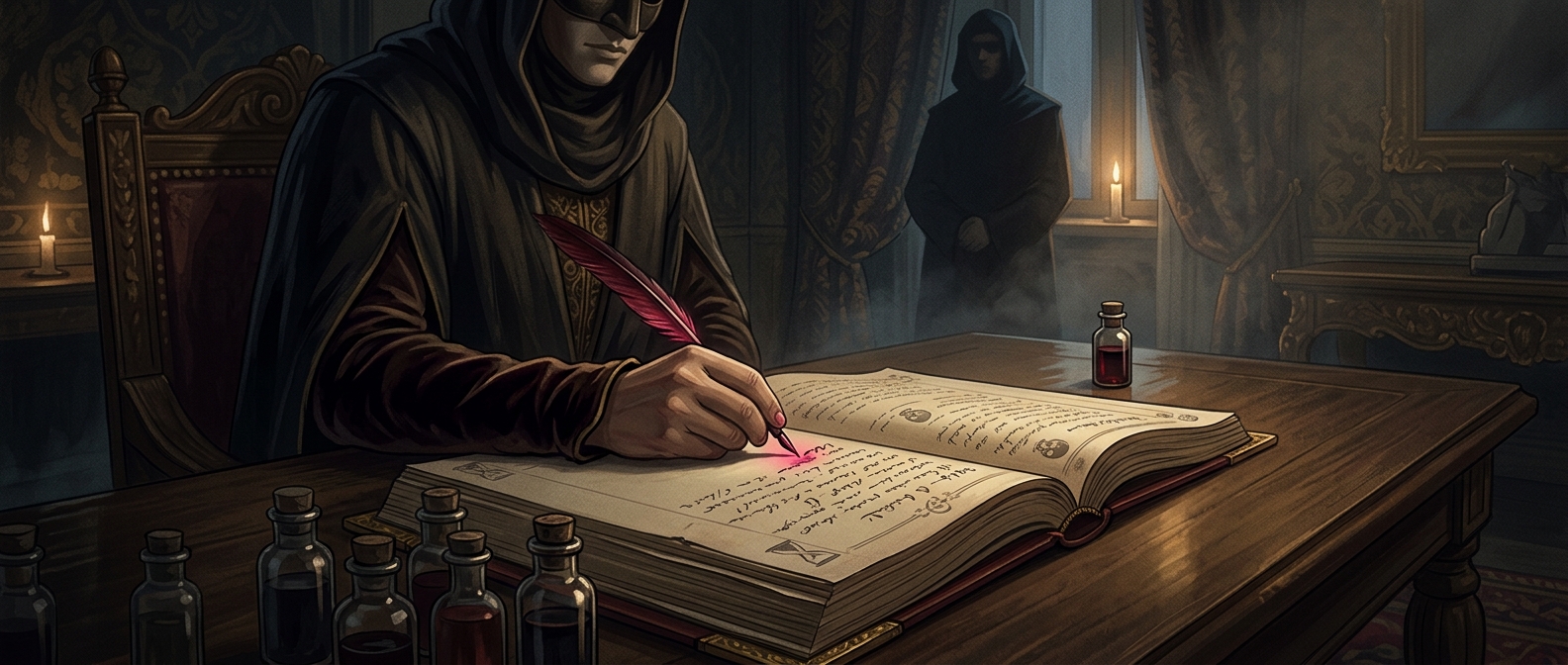
Venice’s Secret Police Kept a Paper Trail
The Council of Ten was a governing body charged with protecting the Venetian state. Its work included investigating threats and organizing covert action—activities that could involve surveillance, informants, and assassination. When officials documented poisonings, they turned clandestine violence into an administrative problem: who was tasked with a plot, what means were considered, what it cost, and whether it worked.
That record-keeping did not make murder lawful or routine. It made secret operations legible to the officials who authorized and managed them. A failed attempt could matter as much as a successful one: the council needed to know whether an agent had carried out instructions, whether a target remained alive, and whether further action might be needed.
Why Keep Records of a Crime?
Covert operations still require coordination. Money must be allocated, intermediaries tracked, and results reported. Written accounts could help officials compare plans, monitor agents, and preserve information beyond the memory of any one participant. In a government that guarded its security through secrecy, paperwork offered a way to control actions that could not be openly acknowledged.
The records also reveal a sharp contrast at the heart of Venetian power: the state’s public order rested, in part, on confidential decisions and hidden violence. Even an assassination plot could generate a file—not because it was ordinary, but because the government wanted to manage its consequences.