A pedigree was the product, not the dog
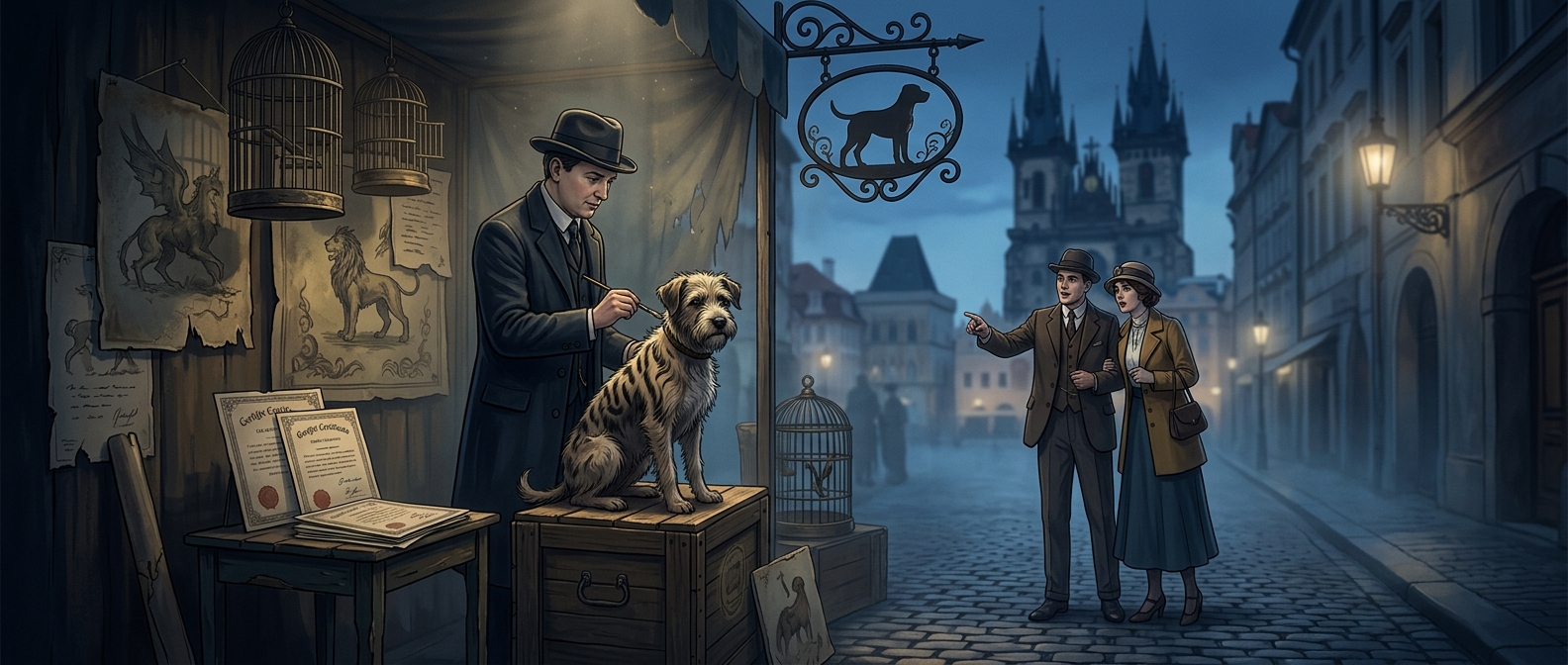
The Czech writer was Jaroslav Hašek, later famous for The Good Soldier Švejk. Short on rent, he turned stray dogs into supposedly valuable hunting hounds by pairing them with forged pedigrees—the documents meant to record a dog’s ancestry and establish its breed.
That paperwork did the crucial work. A buyer could see a dog’s appearance, but could not easily verify its family tree. A convincing certificate supplied the missing story: this was not an ordinary stray, but an animal supposedly bred for generations to hunt. Hašek’s trick depended on selling that claim along with the dog.
The paper trail made the con plausible
Purebred status mattered because hunting dogs were valued for inherited traits, such as a breed’s expected build or working ability. A pedigree gave buyers a reason to trust that those traits had been selectively passed down. Forging one let Hašek present an unknown animal as the result of deliberate breeding, without the lineage that would make the claim true.
The scheme also reveals the weakness of a system built on records: when buyers could not check the ancestry themselves, official-looking documentation could stand in for evidence. Hašek was selling not just a dog, but confidence in its supposed past—and the forged papers were more pedigreed than the animal they described.