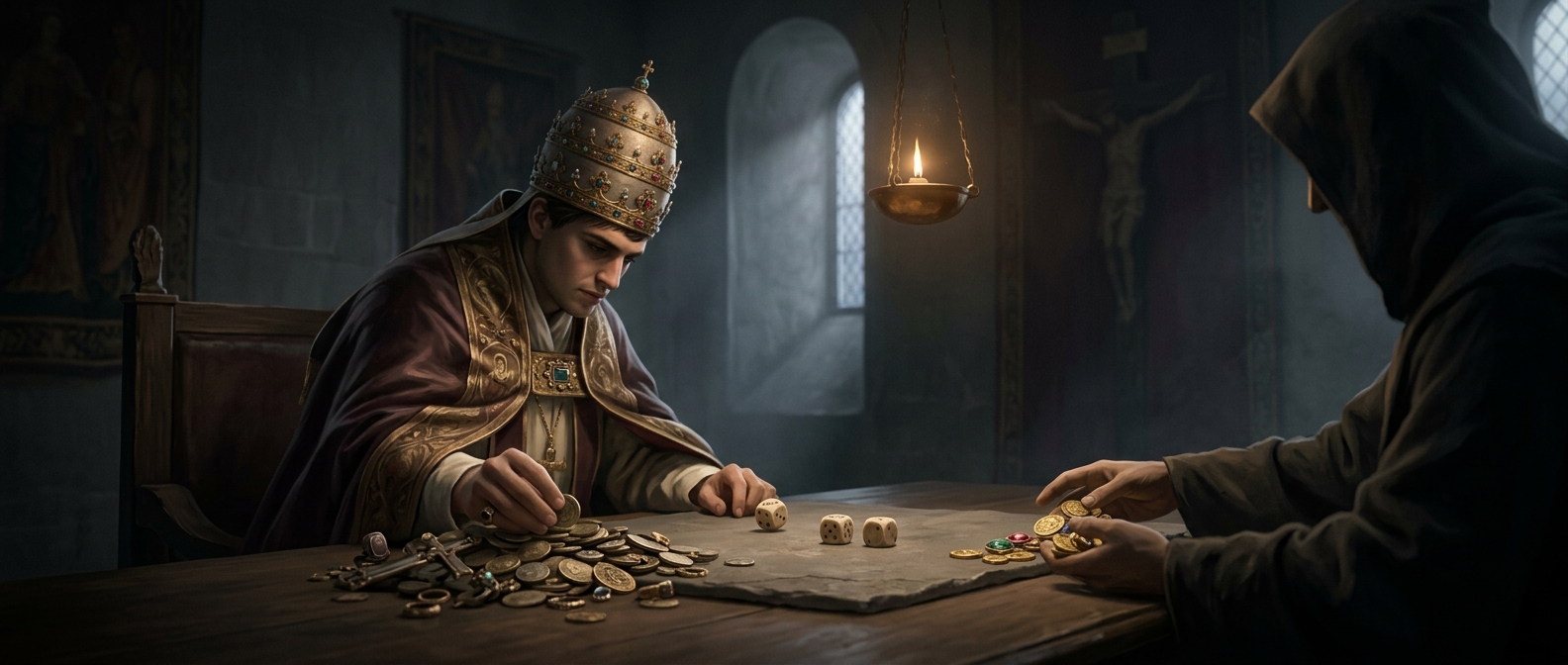
When Church Offerings Became a Private Stake
A donation made to a church was not simply spare cash. It was entrusted money, given in a religious setting and understood to support the Church’s work. Using offerings to fund personal gambling therefore crossed a boundary: money associated with worship became a private stake in a game of chance.
The setting made that boundary harder to see. A pope’s palace was both a residence and the center of church government, so personal life and institutional business unfolded under the same roof. That proximity did not make the offerings the pope’s personal money; it made the use of those funds especially consequential.
Why Dice Made the Misuse Plain
Dice games turn money into visible risk. Players wager, luck decides who wins, and the money changes hands—unlike an expense that might be presented as serving the institution. When church offerings bankroll the game, the faithful effectively bear the cost of a private pastime without having chosen to support it.
The episode is striking not merely because a pope gambled, but because it exposes the tension between religious authority and control over money entrusted to the Church. The game may have been private; the source of its stakes was not.