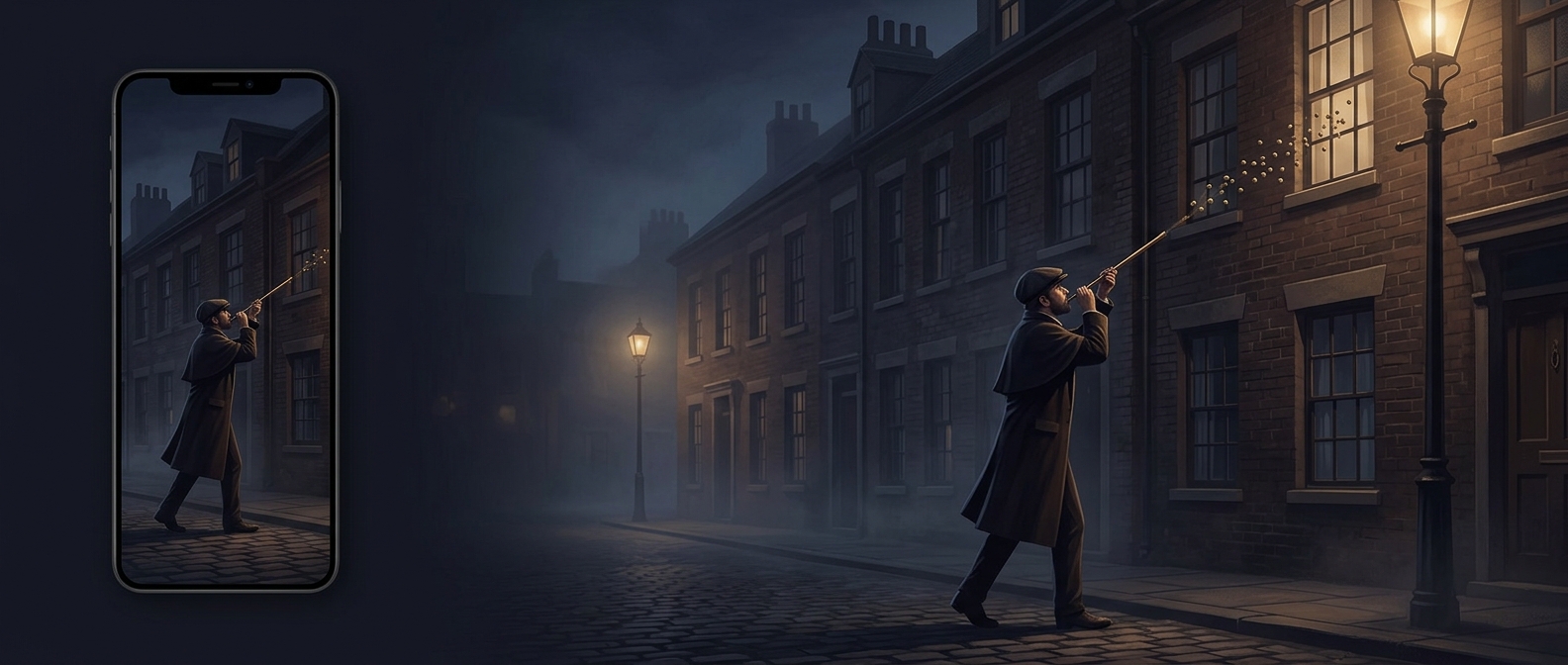
How a knocker-upper reached a bedroom window
Before alarm clocks became common and affordable, waking up on time could be a service someone performed for you. In industrial towns, knocker-uppers walked routes before dawn, carrying long poles or peashooters. They tapped on an upstairs window until a customer appeared or otherwise signaled that they were awake.
The job answered a practical problem: factory work began at fixed hours, and arriving late could cost a worker wages or even a position. A household without a reliable timepiece still needed a dependable way to start the day. A knocker-upper could serve several clients along one street, turning a personal chore into a small local business.
A human alarm clock with a route to keep
The service depended on knowing where and when to knock. A worker might arrange a regular wake-up time, and the knocker-upper had to reach that window early enough for the customer to get dressed and make the journey to work. Long poles let the caller reach high windows from the street; a peashooter could send a small pellet against glass when a pole could not.
It was a modest but revealing piece of industrial life: factory schedules made punctuality essential, while affordable household technology had not yet caught up. The person at the window was, in effect, the final link between a worker’s bedroom and the factory whistle.