A second kind of close reading
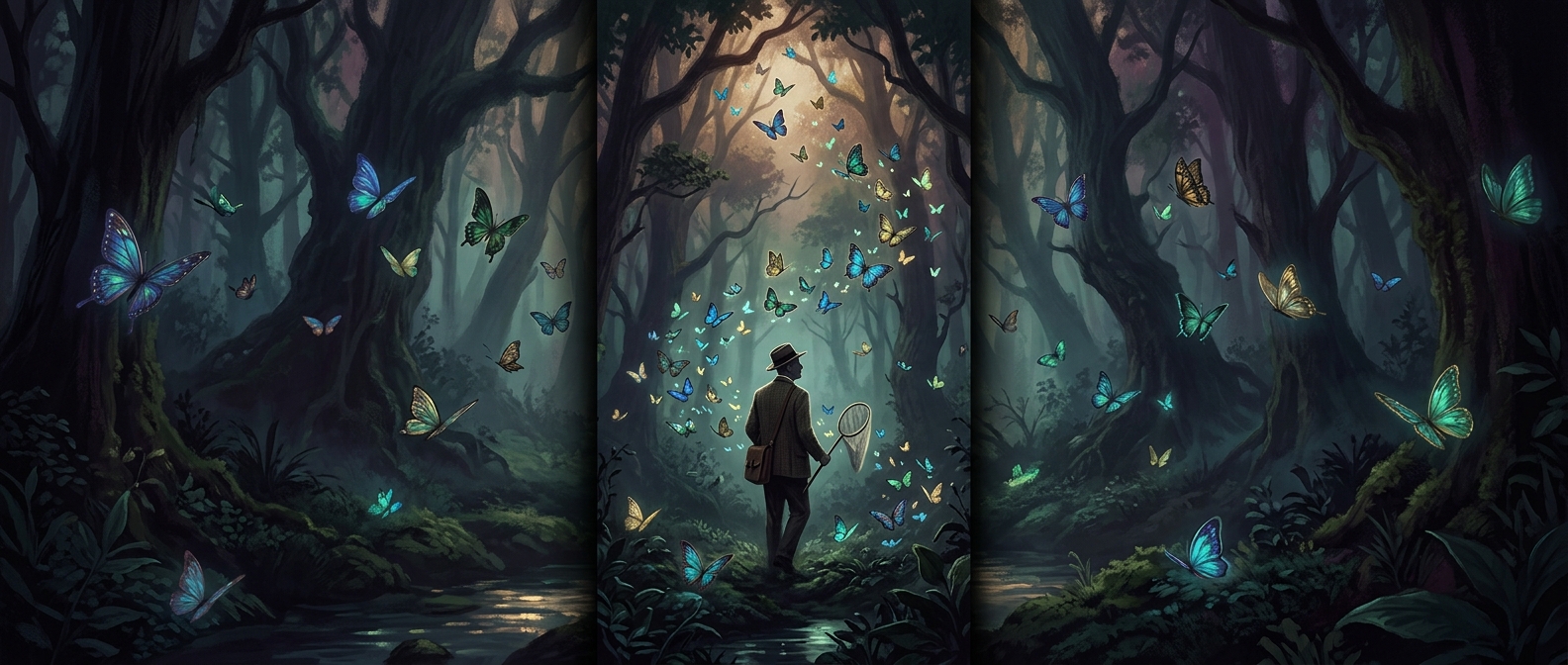
For Vladimir Nabokov, butterfly study was not simply a pastime squeezed between books. It demanded the same kind of sustained attention as writing, but directed at living specimens and their minute physical differences. A collector might hike for hours to find a butterfly, then preserve it, label where and when it was caught, and compare its markings and anatomy with related specimens. Those details could help determine whether a specimen belonged to a known species or represented a distinct one.
That work depended on patience in the field and precision back at the desk. A net could bring a butterfly within reach; careful examination was needed to make its significance clear.
From collecting to classification
After emigrating to the United States, Nabokov joined the staff of Harvard’s Museum of Comparative Zoology, where he studied butterflies professionally. His research focused especially on blue butterflies in the family Lycaenidae. He compared specimens across collections and examined small anatomical features, including the structures of the male reproductive system, which can help distinguish closely related species.
This was taxonomy: the work of identifying, naming, and organizing living things. It often turns on differences too subtle to notice in a casual glance. A butterfly’s color may vary, for example, while other structural features offer more dependable clues to how specimens are related. Nabokov’s published scientific work shows that his interest extended beyond collecting attractive insects; he was trying to make sense of their relationships and classification.
Why the field hours mattered
A museum collection makes comparison possible, but it begins with specimens gathered from particular places. Fieldwork connects an insect to its landscape and gives researchers material to examine later, alongside specimens collected elsewhere. For Nabokov, the hours spent hiking with a net were therefore part of the scientific method, not a break from it.
The same habit of noticing fine distinctions could serve both pursuits, though the aims were different: a novelist shaped details into imagined lives, while a lepidopterist used them to sort and understand real ones.