A king at the workbench
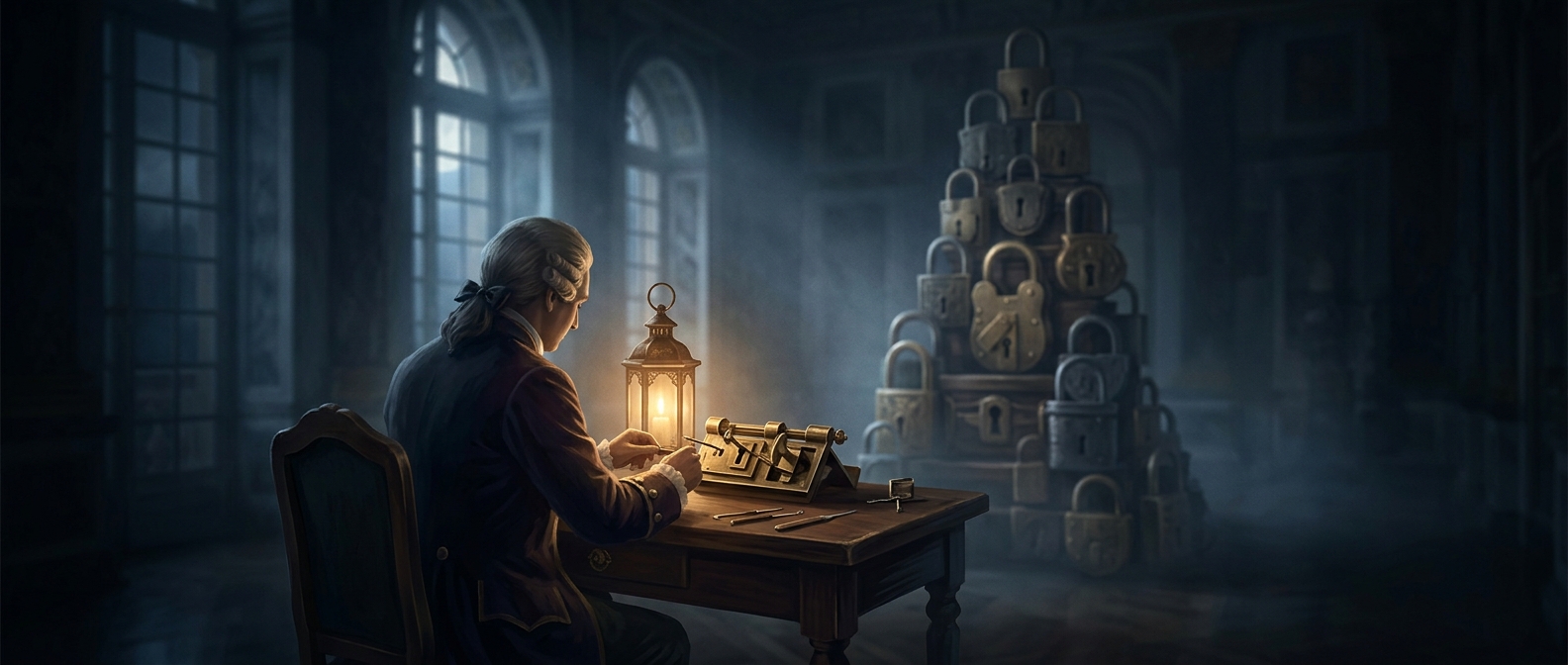
Louis XVI’s interest in locks was more than a passing curiosity. At Versailles, he kept a workshop where he could handle tools and work on mechanical devices, including locks. The appeal was practical: a lock is a small puzzle made of moving parts, and it will open only when those parts fit and respond in the right sequence.
That kind of work offered a king something court life rarely did: a problem with a tangible answer. A mechanism could be examined, adjusted, and tested. The satisfaction came from getting the pieces to work—not from issuing an order and waiting for other people to carry it out.
Precision in the workshop, pressure in the kingdom
The contrast with France’s political crisis is striking, but it should not be mistaken for a simple explanation of Louis’s rule. His workshop did not make him indifferent to government; it was one part of a life that also involved the burdens of monarchy. Still, intricate craft rewarded patience and control, while the crisis demanded political choices amid conflict among the king, representatives, and the public.
A lock can be taken apart and put back together within the reach of one pair of hands. A kingdom cannot. The workshop’s lasting image is that gap between a problem with a mechanism and a crisis with no single part to adjust.