A display of strength at close range
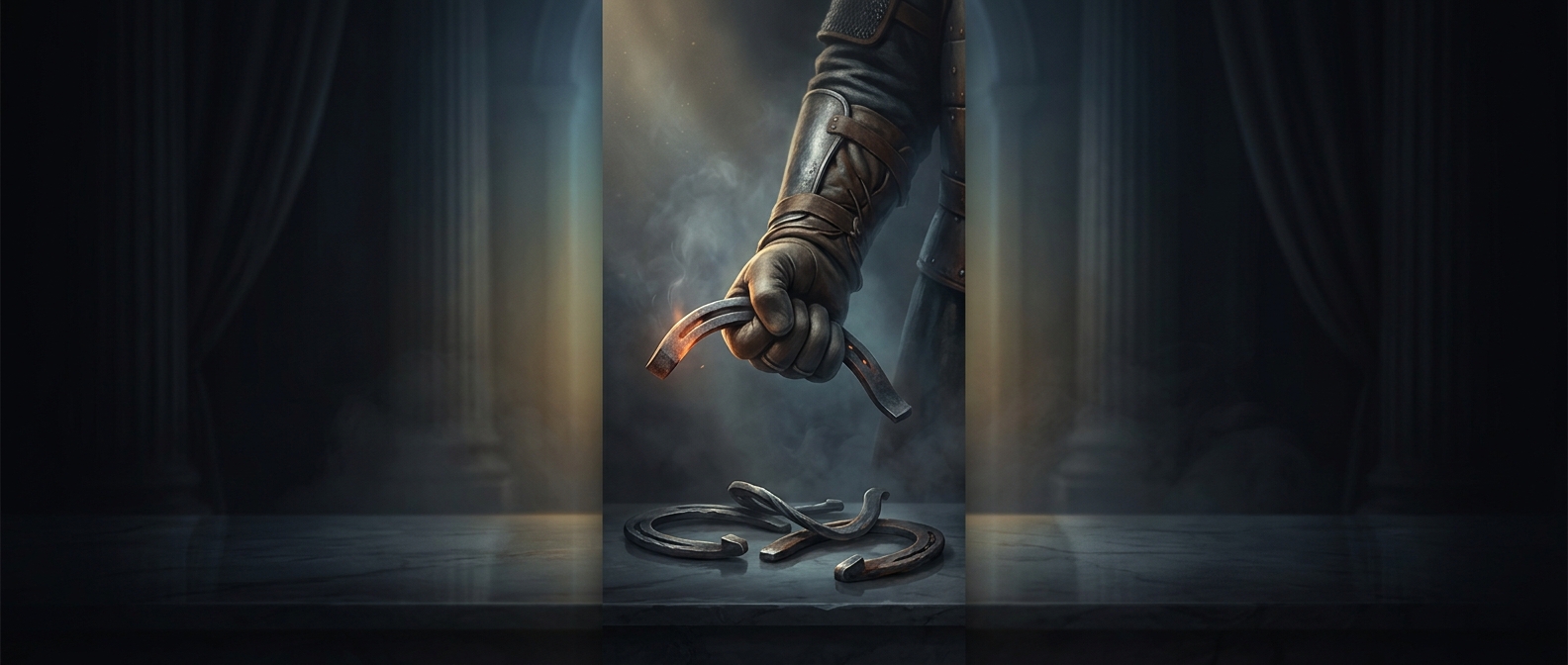
A horseshoe is not simply a strip of iron: its curved shape and thickness make it difficult to bend with bare hands. To deform it, a person must apply enough force to push the metal past its elastic limit—the point at which it stops springing back and stays bent. A card deck presents a different challenge: tearing it depends on grip, hand strength, and how the cards are held. Neither feat is a precise measure of strength, but both would have been easy for banquet guests to see and understand.
More than a party trick
In a room where ordinary guests were expected to observe the ruler, a physical demonstration could make authority feel immediate. Alexander III’s reported feats offered a vivid contrast between the tsar’s body and the objects in his hands: metal yielded; a tightly packed deck split. The gestures could entertain, while also making the gathering feel less like an equal social occasion.
That does not establish that he performed them to threaten anyone. The same act could be remembered as amusing, impressive, or intimidating, depending on who watched and what they already believed about the ruler. Its force came partly from that ambiguity: guests could laugh at a stunt and still be reminded that they were in the presence of a monarch whose power was not merely ceremonial.