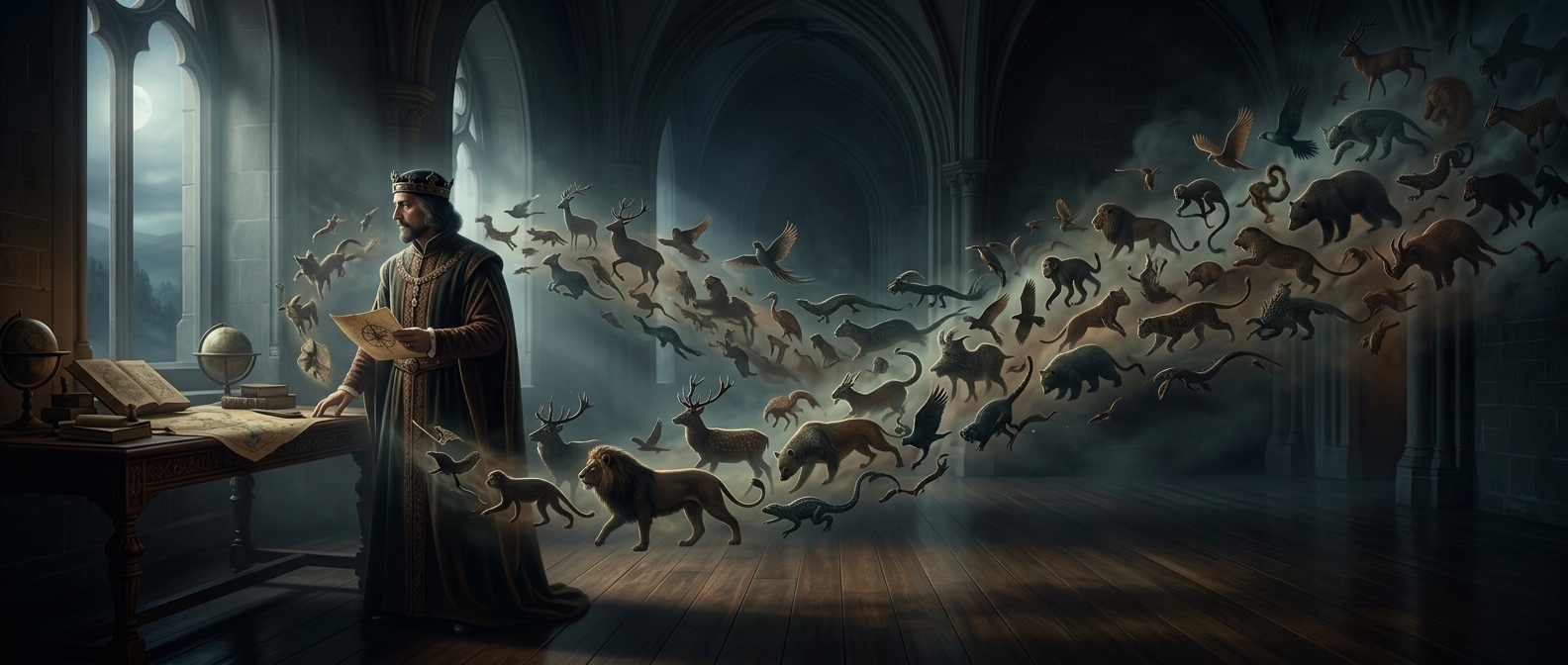
A menagerie turned a castle into a costly spectacle
Ostriches and camels were not ordinary household animals in a French castle. Bringing them in from elsewhere meant paying not just to acquire them but to transport and keep creatures with very different needs from those of familiar farm stock. The collection was an ongoing expense, not a one-time display: animals needed food, space, and people to tend them.
That expense helped make the menagerie a statement of status. A noble who could obtain unusual animals displayed wealth and connections in a form visitors could see. The castle became part residence, part living exhibition, with the animals themselves demonstrating how far its owner’s resources could reach.
Prestige had a practical cost
A castle was designed to house people and defend a stronghold, not necessarily to manage a crowded collection of animals. The more creatures gathered there, the more their care affected daily life. Hundreds of small rodents could be difficult to contain, while large animals needed room and regular attention. Waste and bedding added to the burden—and to the smell.
The barnlike odor was therefore more than an eccentric detail. It was the physical consequence of maintaining an extravagant display in a place not built to function as a zoo. The noble’s wealth could bring rare animals through the gates; it could not make their upkeep invisible to everyone living inside.