A sea monster with no bones
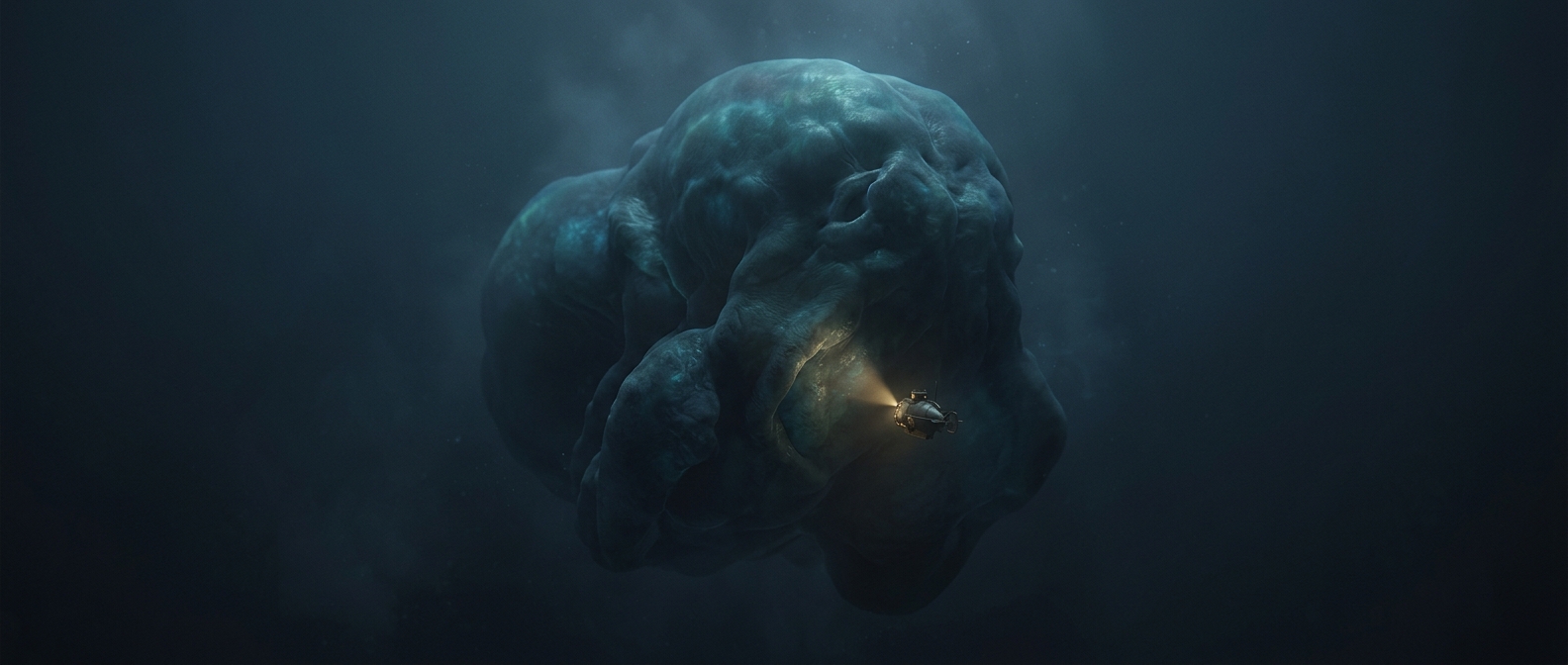
In 1896, a huge, pale mass washed ashore near St. Augustine, Florida. Its shapeless body seemed so unlike a familiar animal that some observers proposed it was an enormous, perhaps prehistoric octopus. The name “St. Augustine Monster” turned an unexplained carcass into a creature of legend—but the mystery began with a basic problem: a decomposing body can lose the features that normally identify it.
What the tissue revealed
The mass had been altered by time in the sea. Soft tissue swells, tears, and loses its original outline as it decomposes, while waves can further break it apart. Without a clear head, limbs, or other recognizable anatomy, its appearance offered little reliable evidence about what animal it came from.
Later examination under a microscope focused on the tissue itself. Its collagen—the tough protein fibers that help support skin and other connective tissue—matched the structure of whale blubber. That pointed to a whale, not an unknown giant cephalopod. The specimen is generally identified as sperm-whale tissue.
Why the monster seemed plausible
The first guess was understandable: a strange, boneless-looking mass invites comparisons to animals with soft bodies, and the ocean leaves plenty of room for speculation when a carcass is badly damaged. But resemblance is not the same as identification. Microscopic structure can preserve clues that the animal’s overall shape no longer does.
The St. Augustine Monster’s lasting lesson is less about a hidden sea creature than about how easily decay can disguise familiar life. What looked like an impossible animal was whale tissue, stripped of the anatomy that would have made its source obvious.