How a “ghost” could appear in a photograph
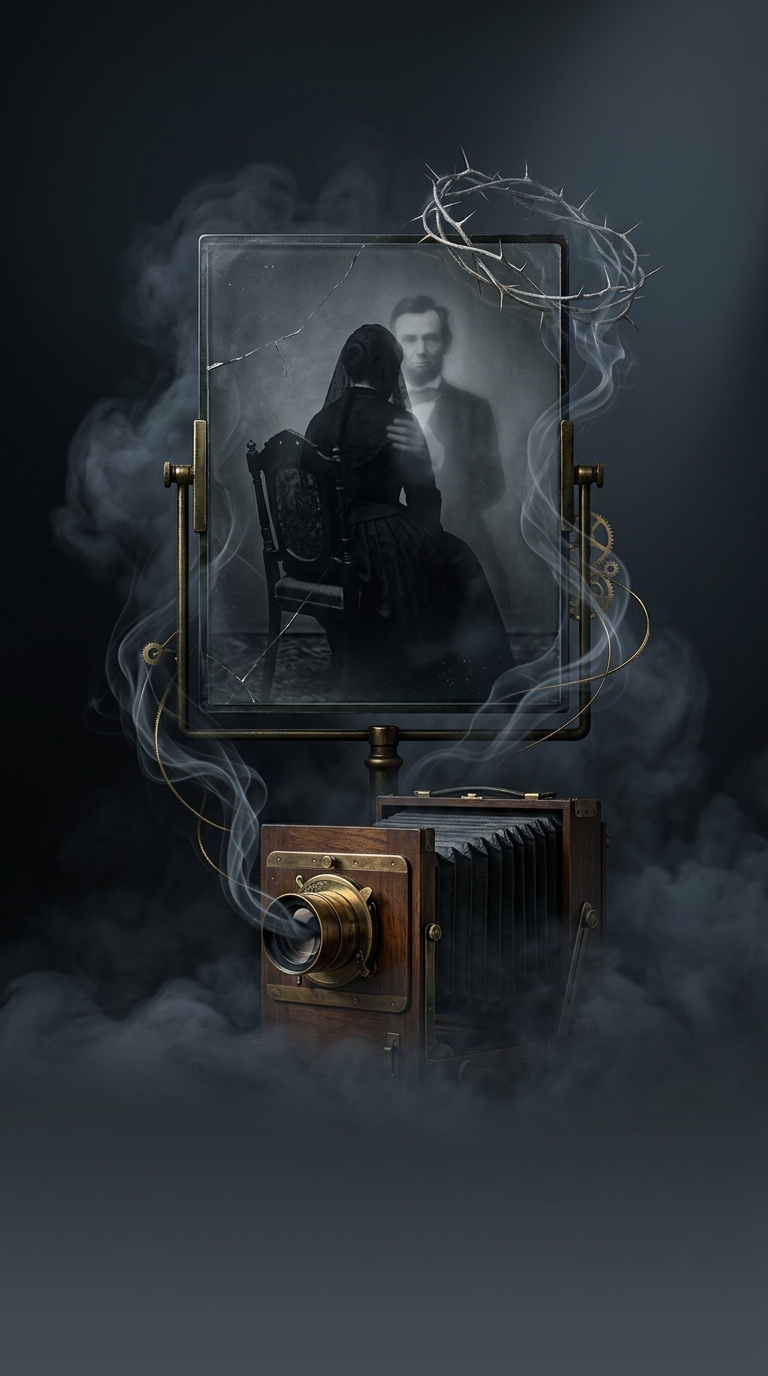
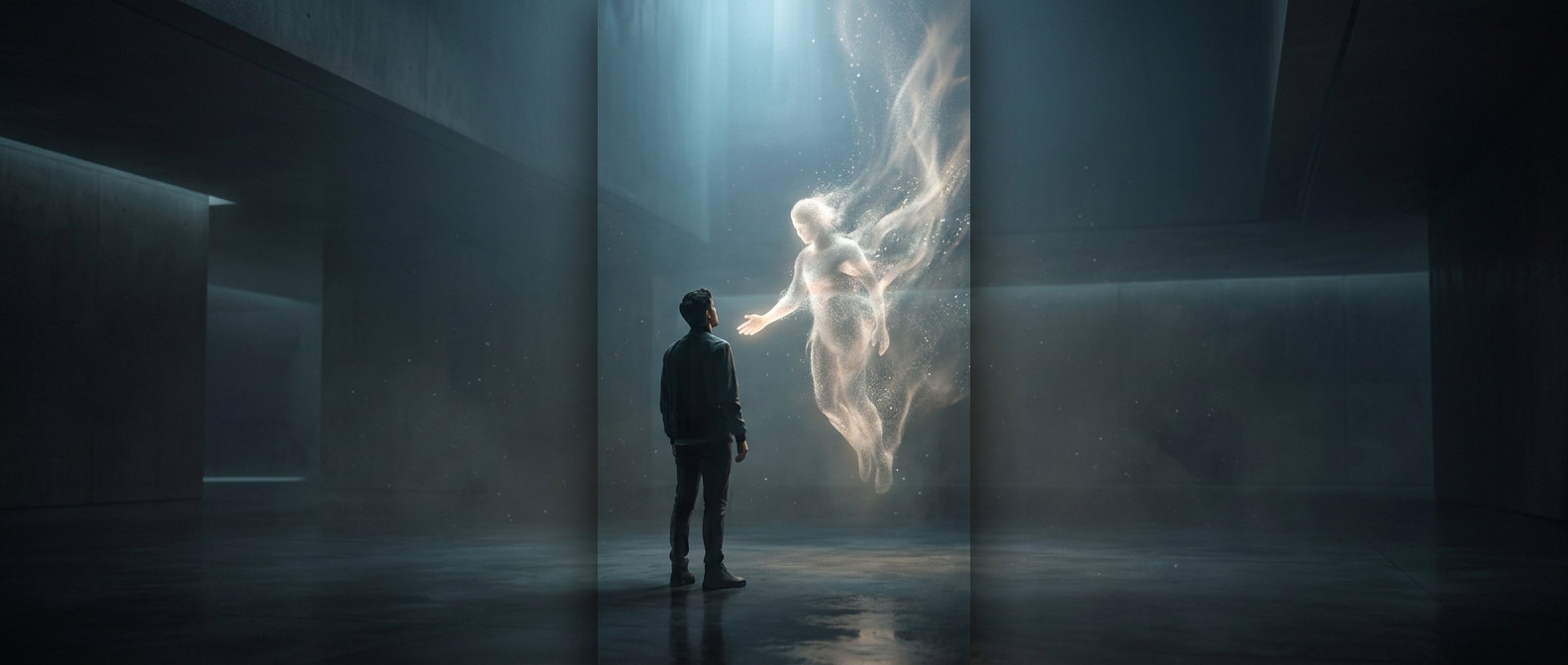
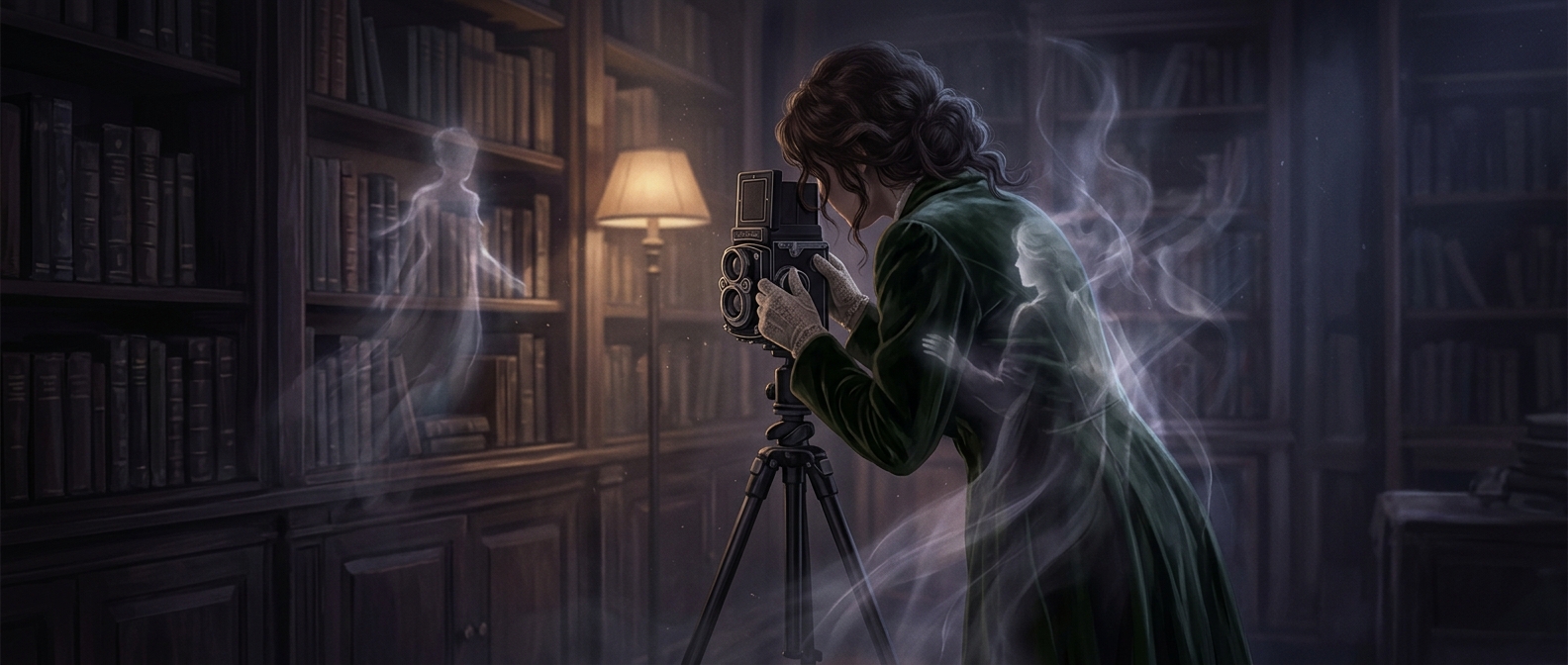
In the early days of photography, a picture was made by exposing a light-sensitive plate or sheet of film. If it received light twice before the image was fixed, the two scenes could overlap in one photograph. A person who appeared during only one exposure might look pale, transparent, or oddly blended with the background—a visual effect that could be presented as a spirit.
Making the figure seem otherworldly
A simple setup could produce the effect. The photographer made one exposure with the room empty, then another with a person standing in the frame, or combined the images during printing. Because the person registered in only part of the final image, the surroundings showed through. Loose white cloth could soften the outline and conceal ordinary details such as clothing or facial features, making the figure harder to identify.
The result depended on controlling the camera and timing. Movement between exposures could create smears or mismatched edges, while a carefully positioned figure could appear to float in a familiar room. A photograph seemed like a fixed record of what had been in front of the lens, so an unexplained shape could carry persuasive force even when the process behind it was staged.
A photograph was not proof by itself
Spiritualists used such images as evidence of communication with the dead, but the photographic effect did not require anything supernatural. Double exposure offered a way to put an absent-looking figure into a scene using ordinary photographic methods. The unsettling part was not that the camera had captured a ghost, but that a convincing ghost could be made to look captured.