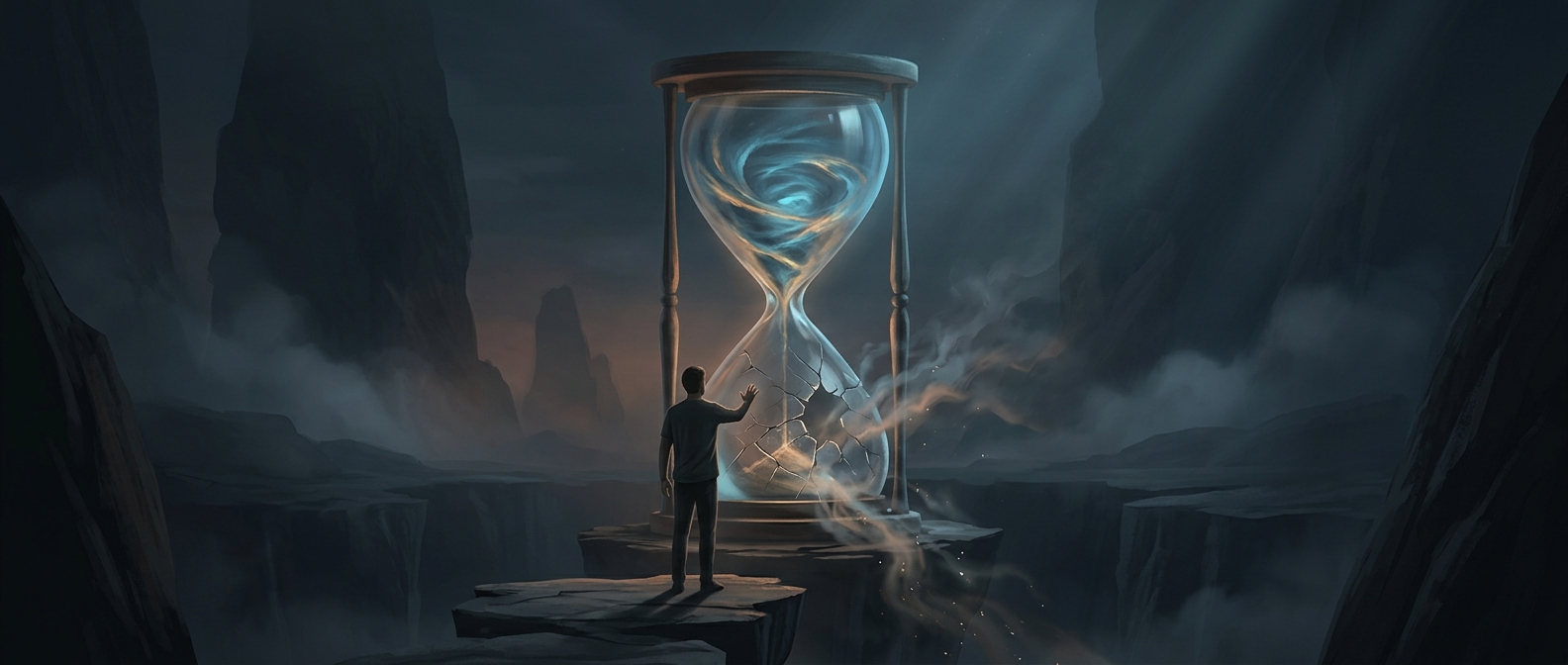
Why the next objective can eclipse the apocalypse
A collapsing world is enormous, but “open the door” is specific. The player can see what to do, try an action, and quickly learn whether it worked. That tight loop—goal, attempt, feedback—makes a nearby task easier to hold in attention than a vast threat with no obvious response.
The contrast is familiar outside games. A looming problem can feel paralyzing when its causes are complex and its solution unclear; a small task offers a clear first move. In a game, that clarity is built into the interface and level design. Markers, dialogue, and locked routes direct attention toward the next actionable step.
Games train attention through action
Immediate objectives also give the player a sense of agency: their choices appear to change what happens next. The apocalypse may set the stakes, but rescuing a teammate or reaching a shelter supplies the short-term purpose. Because progress is visible, the player can stay engaged even when the larger crisis is too broad to solve in one move.
This is not simply a failure to notice the disaster. The game often makes the catastrophe meaningful through the people and tasks directly in front of the player. A threatened world becomes playable when it is translated into a sequence of concrete problems.
The crisis becomes a chain of manageable steps
That structure has a tradeoff. Focusing on the next objective keeps play moving, but it can make the world-ending threat feel like scenery between missions. The player may remember the door they forced open or the teammate they saved more vividly than the abstract scale of the disaster—because those were the moments where attention, action, and consequence met.