Why Checkpoint Charlie’s booth is a replica
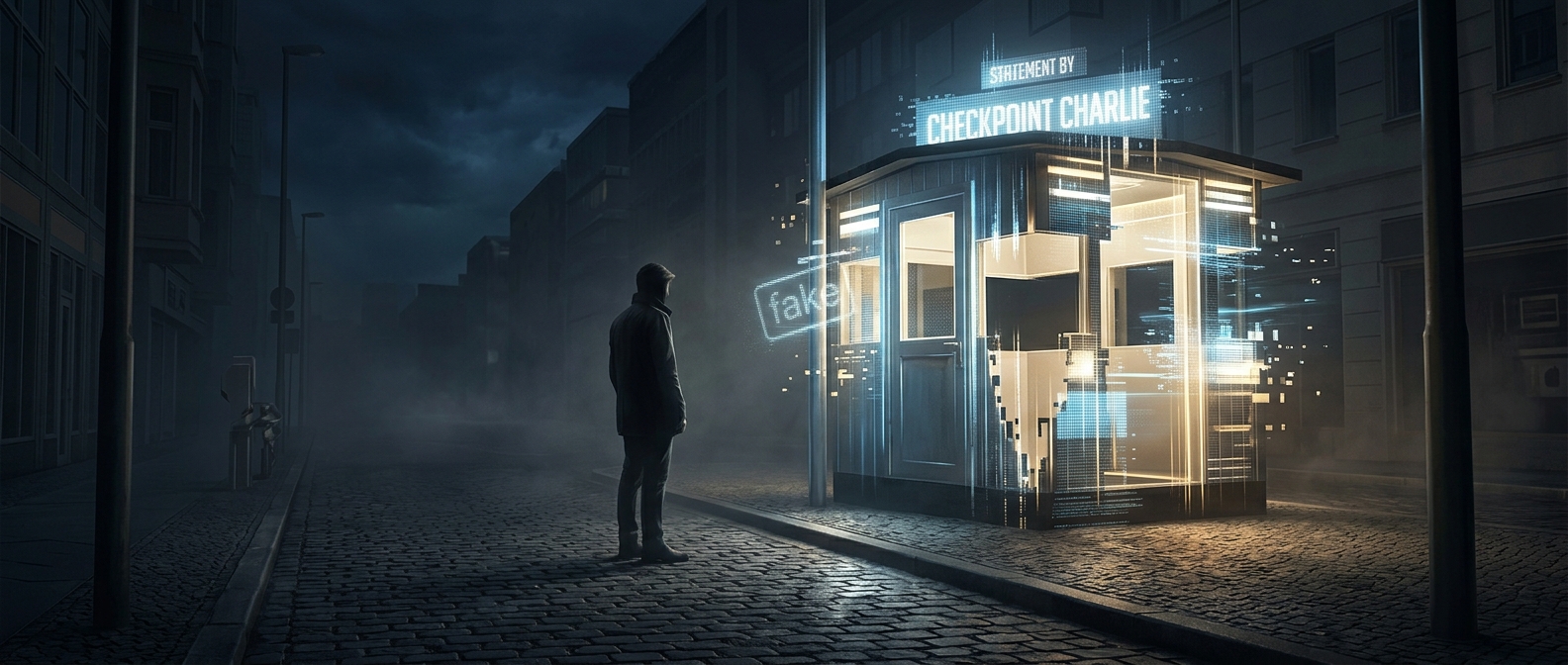
The familiar wooden guardhouse at Checkpoint Charlie is not the one that stood at the crossing during the Cold War. The original was moved to a museum, and a recreation took its place. That distinction matters because the booth many visitors photograph is a later stand-in, while the checkpoint itself was a real border post in divided Berlin.
A crossing built for a divided city
Checkpoint Charlie was one of the places where people could pass between East and West Berlin under tightly controlled conditions. Its name came from the Allied phonetic alphabet: “Charlie” designated the letter C, following checkpoints Alpha and Bravo. The crossing became a potent symbol of the boundary between the Soviet-controlled east and the western sectors.
The small guardhouse gives that history a human scale: a single booth set in the middle of a city split by political power. But preserving the original wooden structure in a museum separated the artifact from its street setting. The recreation lets the crossing remain visually legible where it stood, even though it cannot serve as the original physical evidence.
What visitors are actually seeing
At the site, the replica helps evoke the checkpoint’s appearance; the original survives elsewhere as a museum object. The difference is a useful reminder that a famous landmark can be authentic in location and meaning without every visible piece being original. Here, the place marks a former border, while the booth on display is a carefully recognizable substitute.