How London Bridge ended up in the Arizona desert
The bridge at Lake Havasu is not a replica: its granite blocks once formed the 1831 London Bridge over the River Thames. But moving a bridge across an ocean was only part of the challenge. It also had to make sense in a place with no river to cross.
In 1968, developer Robert P. McCulloch bought the bridge from the City of London. London was replacing it because the old crossing could no longer handle the demands of modern traffic—not because it was about to sink. For McCulloch, the structure offered a striking centerpiece for Lake Havasu City, his developing Arizona community, and a reason for travelers to visit.
From numbered stones to a new crossing
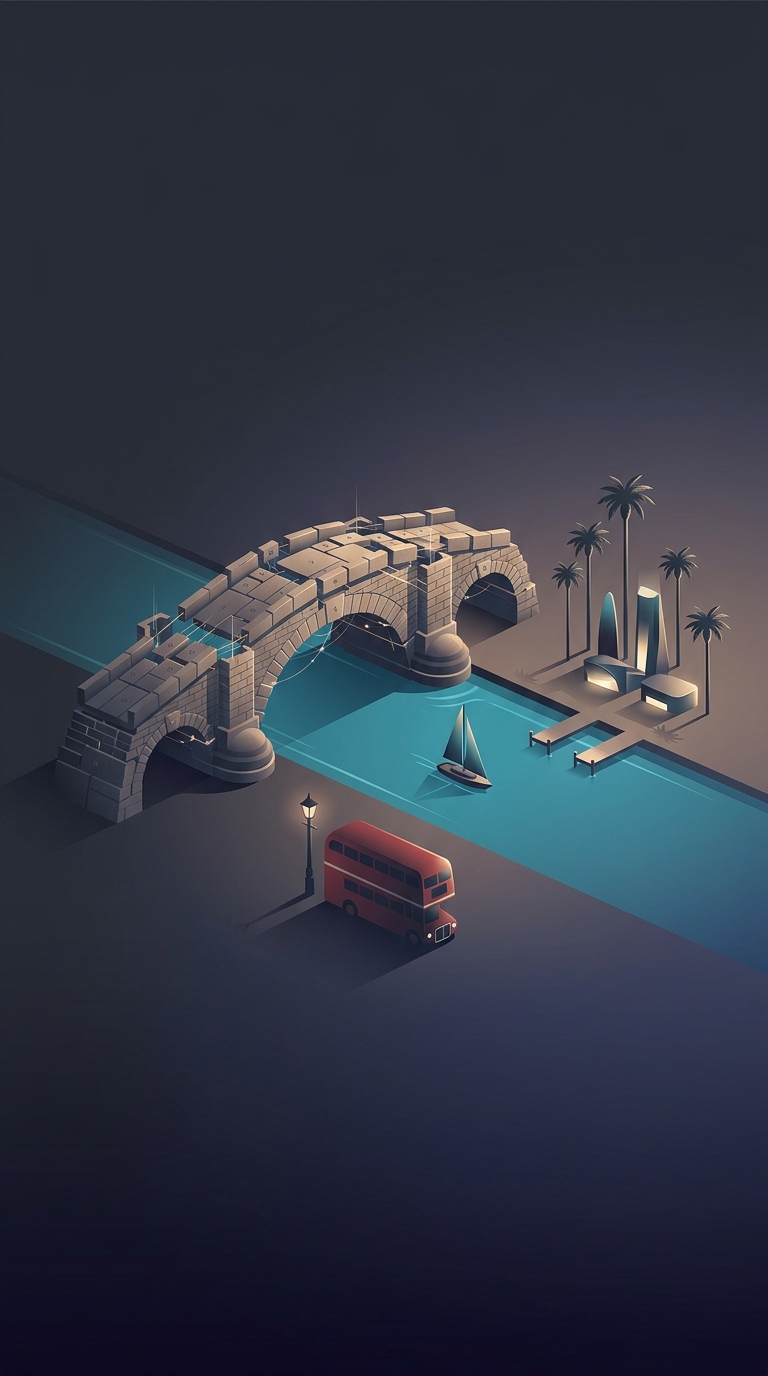
Workers marked the stones so they could be identified and put back in the right order, then dismantled the bridge and shipped the pieces to Arizona. At Lake Havasu, crews built a canal through the desert and reconstructed the arches across it. The original masonry was incorporated into a bridge designed for its new setting, rather than simply being dropped intact onto the canal.
That careful numbering turned a seemingly impossible move into a vast assembly project: each block had a place in the bridge’s pattern, and the sequence had to be preserved across thousands of miles.
A landmark that also sells a city
The canal gave the bridge a practical job, but its larger purpose was to make a new desert town memorable. A piece of historic London architecture could draw visitors—and give prospective residents a reason to look twice at a development far from Britain.
Today, the contrast is the attraction: an old English bridge spanning a man-made waterway in Arizona. Its journey shows how a landmark can be both a surviving piece of infrastructure and a tool for building a place’s identity.