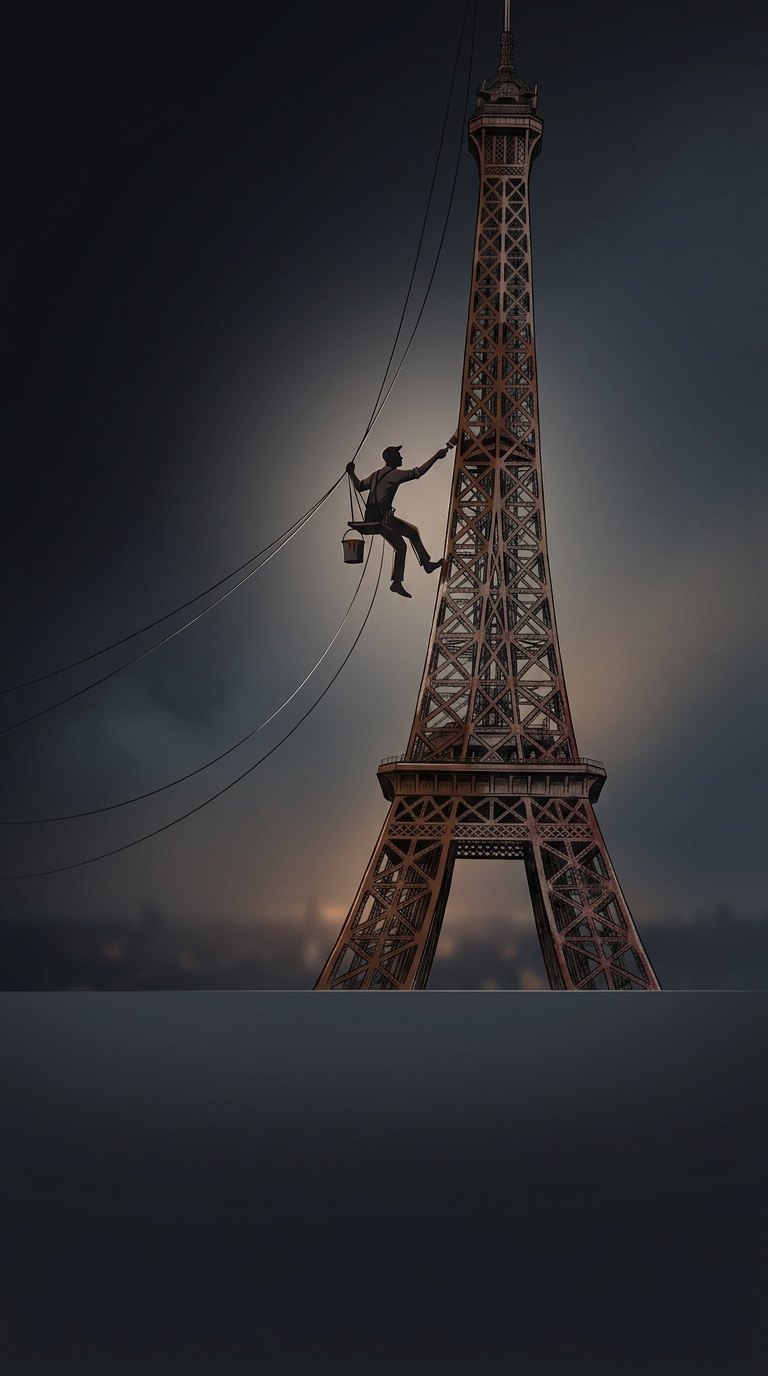
Why the Eiffel Tower Needs a New Coat
The tower’s iron does not rust simply because it is old; rust forms when iron reacts with oxygen and moisture. A continuous paint coating slows that reaction by keeping water and air away from the metal. Where the coating cracks, peels, or wears thin, the protection weakens, so repainting is part of preserving the structure—not just refreshing its appearance.
A Complicated Surface to Protect
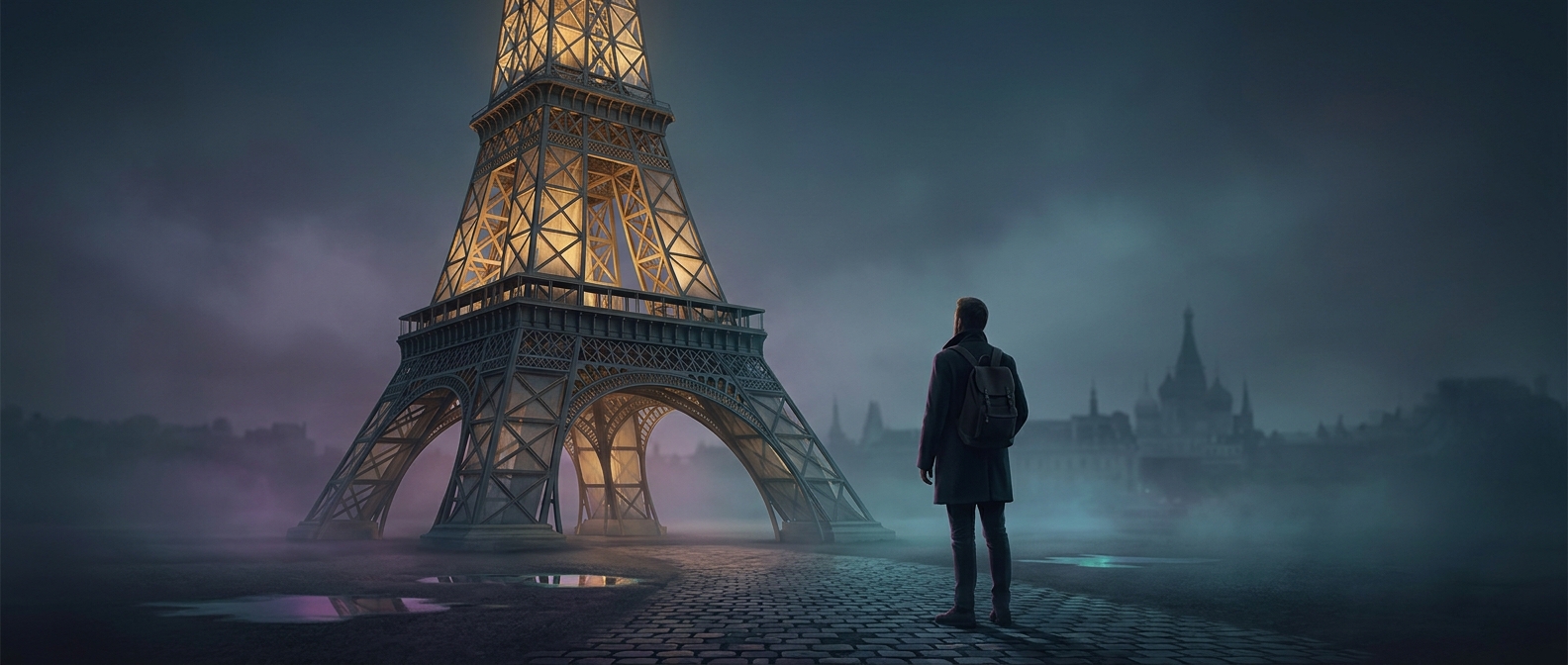
The tower is an open lattice of iron beams, braces, and riveted connections rather than a smooth wall. Its many edges and joints make it difficult to coat evenly, and missed spots can become starting points for corrosion. Painters therefore work directly on the structure, preparing the surface where needed and applying paint carefully across its intricate framework. The job has to be organized in stages so workers can reach different sections while the work proceeds around a structure that remains in use.
That maintenance is a recurring tradeoff: the tower’s airy design lets wind pass through it, but it also leaves a vast, irregular metal surface exposed to the weather. The familiar brown finish is a protective layer, renewed piece by piece to keep the iron beneath it sound. A repainting campaign is thus less like painting a building façade than tending a giant, exposed framework whose smallest unprotected joints matter.