A bell that had to be remade before it could ring
The Liberty Bell’s early history was less smooth than its later fame suggests. The bell was cast in London and shipped to Philadelphia in 1752, but it cracked during an early test. Philadelphia founders John Pass and John Stow melted it down and recast it. The replacement bell cracked again, so they recast it once more, adjusting the metal mixture in an effort to make the bell sound better and hold together.
That history matters because the famous fissure is not simply the original shipping-era crack. It developed in the bell that Philadelphians eventually used for decades.
Why repeated ringing could damage it
A bell makes sound by vibrating: when its clapper strikes the inside, waves travel through the metal and produce a resonant tone. Casting leaves a bell vulnerable to flaws or uneven stresses, and repeated impacts can worsen a weak spot. Once a crack forms, each vibration can flex its edges, gradually extending the damage.
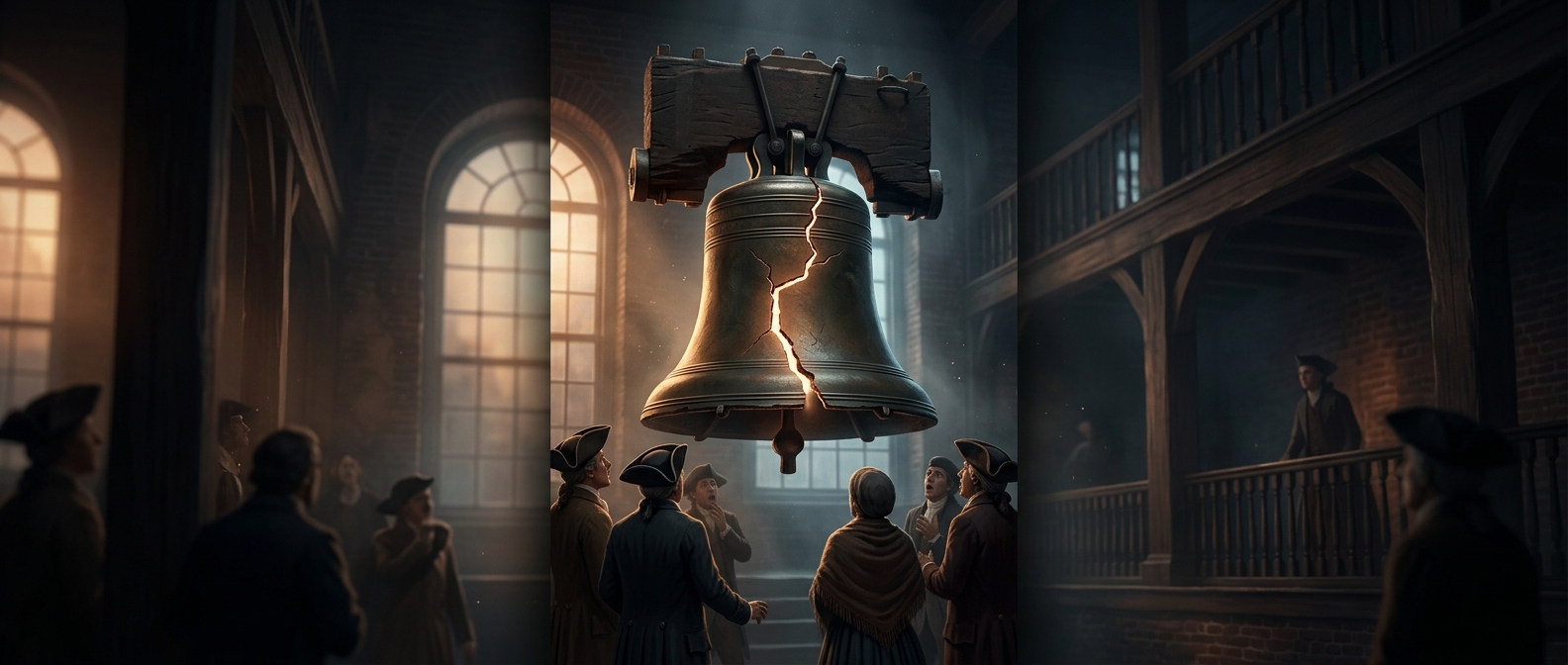
The Liberty Bell was used for civic occasions and public announcements, not kept as a display object. Its ordinary work—being struck again and again—helped turn a small weakness into a visible split. The familiar wide fissure became more pronounced over time, and an attempted repair in 1846 did not restore the bell to dependable use. It was no longer rung after the crack worsened.
From working bell to national symbol
The bell’s later importance came to outweigh its practical purpose. Its crack became part of its identity: visitors could see the physical mark left by years of use, rather than just read about the bell’s role in Philadelphia’s public life.
That is the striking reversal: the damage that ended the bell’s working life helped make it instantly recognizable. Today, the fissure is not merely a flaw in the metal; it is also the feature that lets visitors see how a frequently used object became a monument.