When Certainty Falls Away
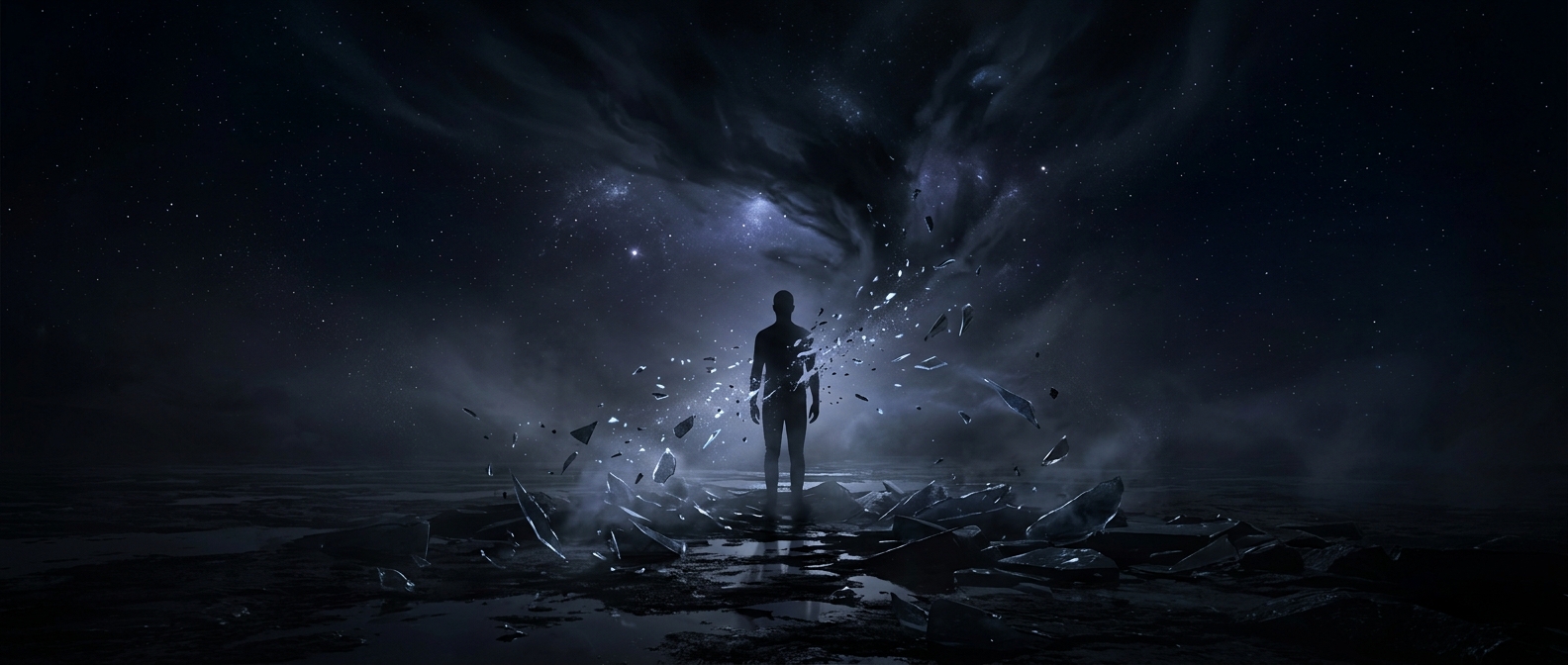
In some esoteric traditions, a “dark night” names a period when the beliefs, hopes, or sense of purpose that once held a person together no longer feel convincing. The image of the ego breaking into fragments describes the unraveling of a familiar self-story: the roles, ambitions, and assumptions through which someone has understood who they are.
That collapse can feel less like insight than disorientation. A person may lose confidence in old answers without yet having new ones. The spiritual interpretation is not that distress is pleasant or that every crisis signals awakening. It is that the loss of certainty may expose how much identity depended on ideas that can no longer be taken for granted.
A Crisis, Not a Certificate of Progress
Within this view, the darkness matters because it interrupts the urge to restore the old self at any cost. What follows, if anything, is not simply a return to the same beliefs with greater confidence. It may be a more modest relationship to identity and certainty—one less dependent on a fixed image of who one must be.
The metaphor therefore holds two possibilities together: a person can feel profoundly undone, while a tradition reads that undoing as potentially meaningful. It does not prove that enlightenment is occurring. Its distinctive claim is about interpretation: a broken sense of self can be treated as a passage through uncertainty, not automatically as evidence that the journey has failed.