From public lottery to number game
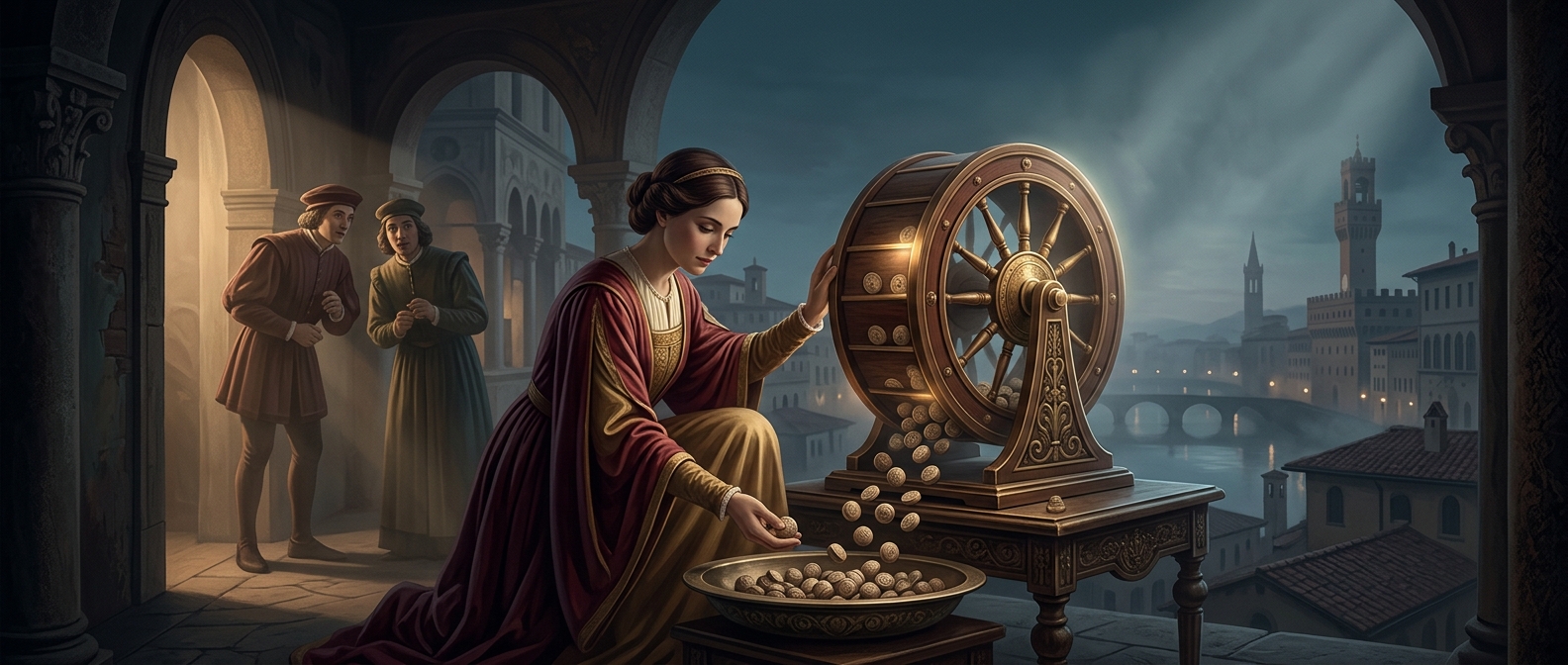
The ancestor of bingo was not a room full of players marking cards. In 16th-century Italy, lotteries turned chance into a public event: numbers were drawn, and people could wager on which would appear. One early system grew out of the practice of selecting officials by lot in the city of Genoa. As the selection process became a lottery, the draw itself became the center of the game.
That shift supplied bingo’s essential structure. A caller reveals random numbers, and players watch for matches on their own cards. The Italian lottery did not use the familiar bingo cards and rules, but it established the simple, suspenseful pattern that later games could adapt.
The important link was the format
Over time, lottery-style number draws spread and changed. Later versions paired drawn numbers with printed cards, making it possible for several people to follow the same draw and recognize a winning pattern. That combination—shared draw, individual card, visible match—made the activity playable as a group game rather than only as a wager on a lottery result.
So the Italian system is best understood as bingo’s structural ancestor, not as modern bingo under another name. Its lasting contribution was a format that could travel easily: the numbers changed from draw to draw, while the excitement came from watching a card move closer to a match.