Why Early Color Sets Turned Into Hot Houses
Color cameras needed far more light than black-and-white cameras to record a rich image. In many early color processes, the film had to capture separate color information through filters or layers. That reduced the light reaching the image-making emulsion—the light-sensitive coating on the film—so cinematographers compensated with powerful carbon-arc lamps.
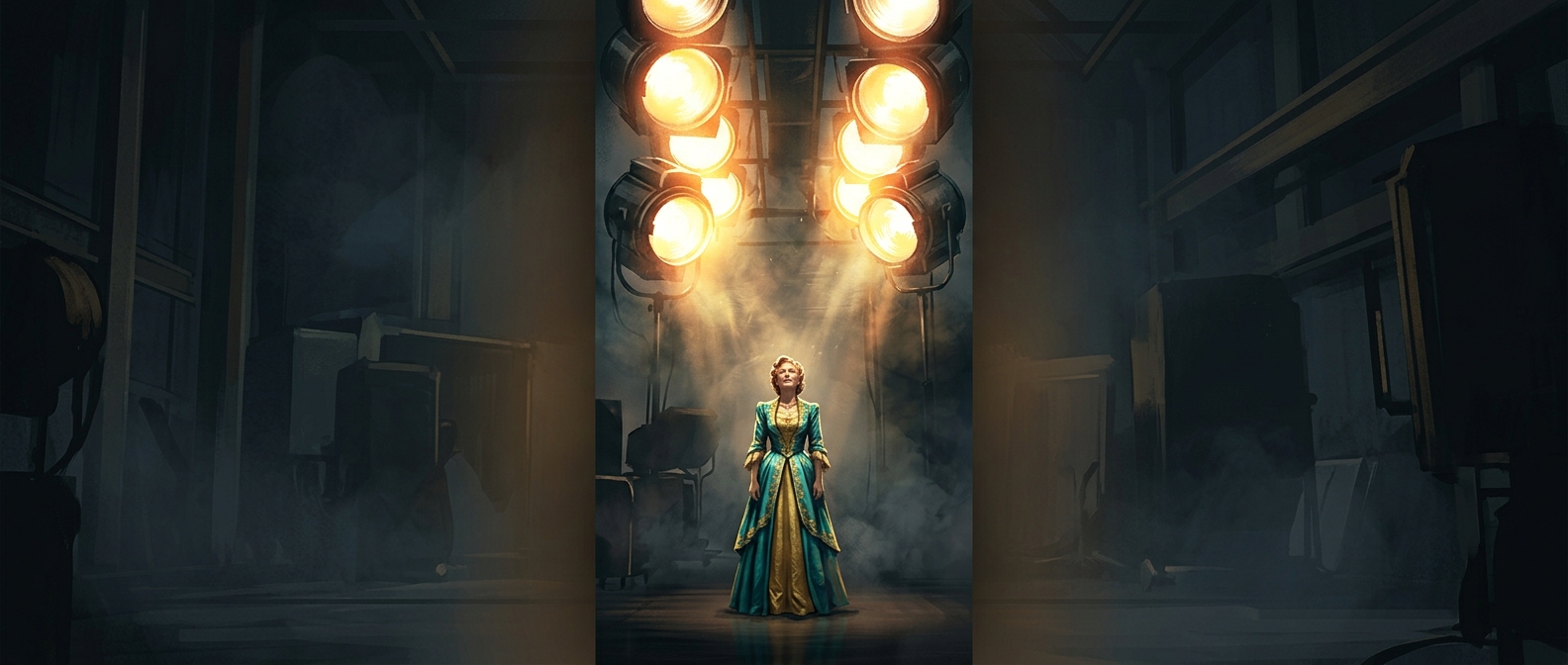
An arc lamp makes light by sending electricity across a gap between carbon rods. The brilliant beam helped expose the film, but the lamp also poured heat onto the people and objects in its path. On a soundstage, where lamps were packed around a set and could not simply be aimed at the open sky, the warmth accumulated. Makeup softened or ran, and actors had to perform under conditions closer to a heat wave than ordinary indoor lighting.
The Light Was Part of the Production Design
The challenge shaped how scenes were staged. A lamp had to illuminate the set strongly enough for the camera while staying out of the frame; its angle also affected whether colors appeared clear and balanced. Moving a performer or changing a camera position could require the lighting crew to rearrange heavy equipment and restore the look of the scene. Color was therefore not just a choice made in the camera: it influenced the physical setup of a shoot.
As film stocks and lighting technology improved, cameras could work with less intense illumination, easing some of that burden. But in the early color era, vivid hues came with a literal cost: the machinery that made color visible could make the set punishingly hot for the people creating it.