Why lockers cluster around everyday stops
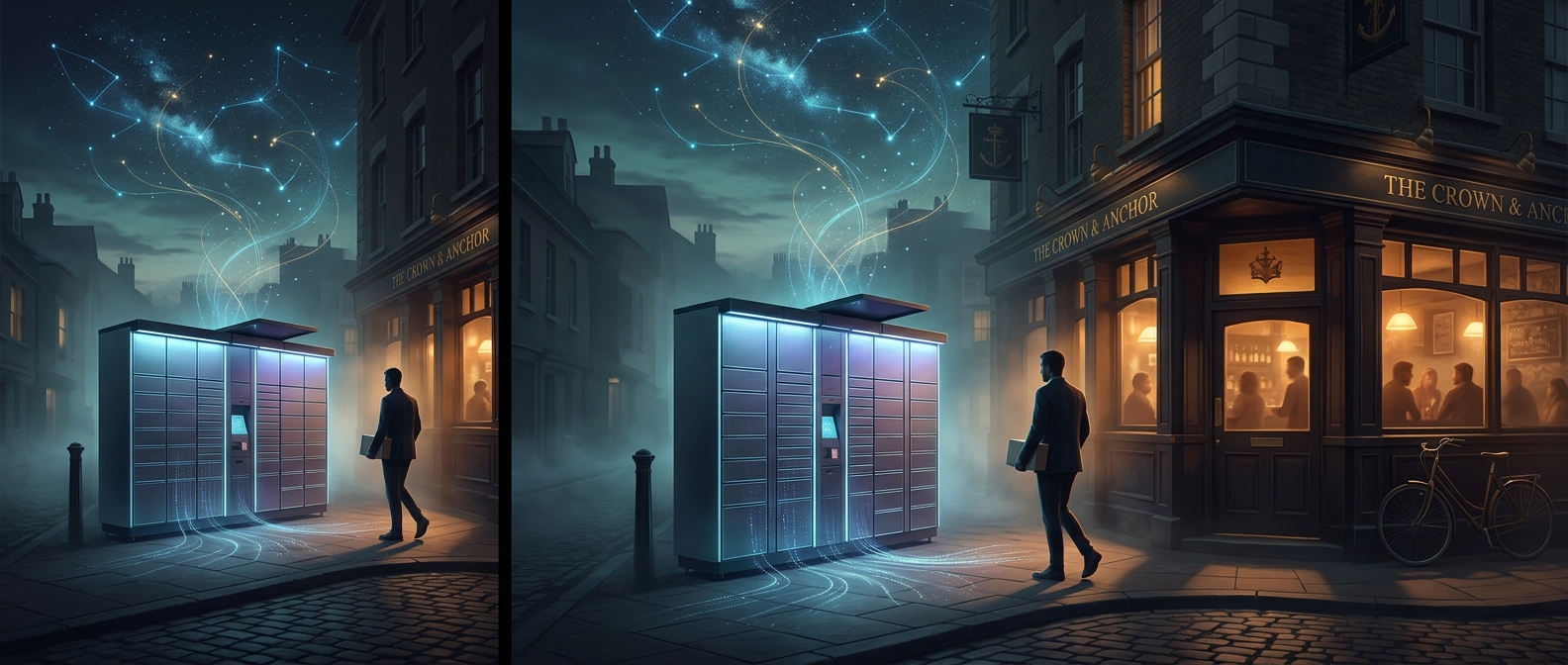
A parcel locker is useful only if it fits into a customer’s routine. Shops, transit hubs, and other busy locations already draw people for reasons unrelated to delivery, so collecting a package can be folded into a commute or a grocery run. That convenience makes a locker more likely to be used than one placed somewhere customers must make a special trip to reach.
The same locations also help carriers. Instead of driving to many separate homes, a driver can leave multiple parcels at one stop. The site needs enough space, reliable access, and a way for customers to reach their packages; a shop’s opening hours can provide a staffed alternative, while an outdoor locker may allow collection beyond those hours.
The tradeoff behind the location
Siting is a balancing act. A locker close to where people live is convenient, but it must also be reachable by delivery vehicles and able to handle a steady flow of parcels. A central spot may serve more customers, yet be awkward to reach or crowded at busy times. Shops can benefit from the extra visits, while customers gain a pickup point that does not depend on being home when a driver arrives.
Lockers do not eliminate the last leg of delivery: parcels still have to travel from the carrier’s network to the pickup point, and customers must travel the remaining distance themselves. Their advantage is combining many deliveries into one stop and letting collection happen on the customer’s schedule. That is why the most practical locker is often not hidden in a depot, but placed somewhere people already pass.