Why Shibuya Is Hard to Navigate
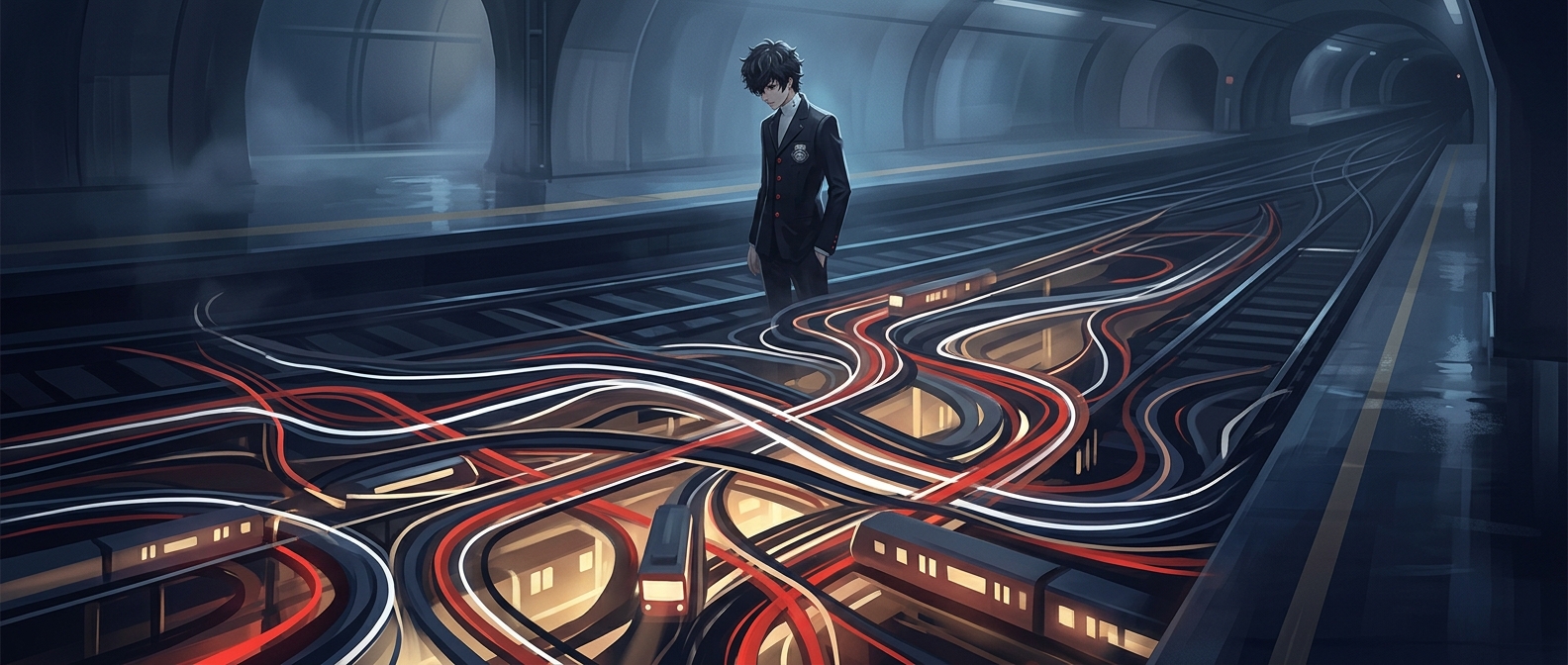
A major Tokyo station is not simply a platform with a few exits. It is a layered public space: rail lines, passageways, staircases, ticket gates, and underground connections funnel people through different levels. A transfer that looks nearby on a map may require following a particular corridor or changing floors. Shibuya’s crowded, intersecting layout gives Persona 5 a setting where getting from one place to another can feel like a small task of its own.
Turning a Real Maze Into a Game Space
The station’s complexity does more than provide scenery. It gives the player a familiar urban problem—working out where to go—inside the same everyday environment as the characters’ school and social lives. That makes travel feel grounded in Tokyo rather than like an invisible jump between locations. It also creates a practical tension: the player is trying to get somewhere while the game’s world continues to impose its own routes and delays.
The design has to balance recognizability with playability. A real station serves thousands of journeys and can be confusing even when every sign is accurate; a game location must also remain legible enough to explore. Persona 5 leans into the disorientation, making a routine transfer feel like part of inhabiting the city. A virtual commute can therefore cost more than a button press: it can cost the player time they meant to spend elsewhere.